Skip to content
27 April 2026

Latest news from FE Week

New minister backs construction industry’s double levy

The construction industry will not be released from the “double whammy” of levy charges it currently pays, the new skills minister has revealed.  

The government will continue to back the Construction Industry Training Board, which is part-funded by its own levy on employers in the sector – even though the Confederation of British Industry has complained that the fee is being charged alongside the wider apprenticeship levy on all employers which have a payroll of more than £3 million.

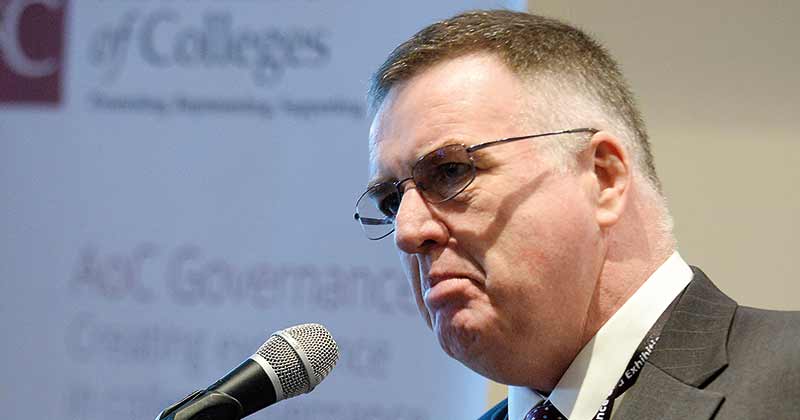
Anne Milton (pictured above) has now backed the arrangement in a letter to the CITB chair James Wates, which was published today ahead of the full results of a government review into industry training boards which is due in the autumn.

On the same day that she confirmed government support for the separate Engineering Construction Industry Training Board, the minister wrote that “colleagues in the industry will want to know when they cast their votes whether or not the government is likely to conclude that CITB should continue with levy-raising powers.

“We are therefore writing to confirm that, having reviewed the options for making sure that the construction industry has the skills it needs, we have concluded that the CITB should be retained.”

The letter, co-signed by minister for housing and planning, Alok Sharma, and senior peer Lord Prior, also suggested that if the industry rejects proposed reforms to the CITB  and opts not to support the levy, “the CITB may have to close”.

Acknowledging that “there is concern across the industry about the effectiveness, efficiency and responsiveness of the CITB”, she also warned that the government’s ongoing support for the construction body would be dependent on its current reform programme being “seen through”.

CITB chair James Wates

Mr Wates (pictured right) said he appreciated Ms Milton’s “confirmation that the CITB should be retained, provided industry supports it”. 

“Rest assured that CITB has listened – and will continue to listen – to concerns of industry,” he said.

The CITB recently sold its awarding body, Cskills, to NOCN, to enable it to focus on its primary function as an industry sector skills council, and to remove any conflict of interest as it develops skills standards for the sector.

The body, which supports training in the construction industry, is in the middle of consulting on its levy proposals – a statutory requirement that takes place every three years.

The government’s consultation into the future of both the CITB and the ECITB was launched in February.

According to Ms Milton’s letter, while the full report had been due in the spring, publication has been put back until the autumn due to the general election.

Both bodies charge firms a levy to support training in their industries – but grave doubts have been raised about the sense of maintaining these levies alongside the apprenticeship levy, introduced in April.

The CBI warned in 2015 that “it’s important that employers are not hit by a double-whammy”.

The apprenticeship levy was launched in April, and affects all employers with a payroll of more than £3 million.

Ms Milton’s letter acknowledges that some construction employers had “expressed concern” about the affordability of paying two levies.

“But the purpose of the apprenticeship levy is quite different from the industry training levy: it is specifically to support and incentivise investment in apprenticeships,” she said.

Ms Milton wrote separately to the chair of the ECITB, Shirley Watson, to confirm the government’s continued support.

“We have therefore concluded, and have decided to confirm now, that the ECITB should be retained,” she wrote.

Chris Claydon, ECITB’s chief executive, said: “We welcome the minister’s recognition of the importance of engineering construction to the economy, the need to continually drive skills growth in our industry, and the role of the ECITB in delivering this.”

Exclusive : Taylor review into ‘Modern Working Practices’ calls for more flexible training

A hotly anticipated government review of employment practices is to call for apprenticeship and loan funding to be made available for “modules” and “flexible” courses, FE Week can reveal.

Matthew Taylor, the chief executive of the Royal Society of Arts, was asked by the prime minister to “develop proposals to improve the lives of this country’s citizens” through the workplace.

His final report is due out tomorrow, but FE Week has seen an advanced copy.

It raises concerns about the large numbers of “atypical workers” – particularly those from smaller businesses – who are missing out on state-supported training due to heavy policy focus on the apprenticeship levy.

Mr Taylor recommends that from 2020, which is the deadline the government set in 2015 to reach three million apprenticeship starts, the levy should be used for more flexible off-the-job training other than just apprenticeships.

The report stresses that “in-work learning is about more than apprenticeships”, and that employers regularly suggest in surveys that “modules of learning can be more valuable and flexible than full qualifications”.

“Following the delivery of the three million apprenticeships that it is committed to,” it adds, “the government should consider making the funding generated by the levy available for high-quality, off-the-job training other than apprenticeships.”

It does recognise the number of apprenticeships starts as “important”, but adds: “We should consider the total amount of training that employers do and who gets what training.”

The review, written with the help of a panel of experts, also finds that “concerns have been raised about ensuring sufficient public resources are available for apprenticeships and workplace training in small and medium-sized enterprises, and the impact the levy might have.

“SMEs are more likely to have workers in atypical employment arrangements, so it is important that there is sufficient focus on non-levy apprenticeships,” it says.

The levy is only paid by employers with a payroll of more than £3 million, and while training needs for such large employers is covered from that pot, concerns have been raised that training with smaller employers is being neglected.

FE Week reported in April on the “derisory” government funding providers will receive to deliver apprenticeships to non-levy payers between May and December, which left many providers fearing for their futures following cuts of more than 80 per cent compared with the previous year.

The panel heard concerns about “the inability of atypical workers to benefit from the apprenticeship levy, which is a key plank of the government’s skills policy”, because apprentices “have to be employed and commit to the programme for a minimum of 12 months”.

And “whilst there have been recent welcome changes to allow apprenticeships to be completed part-time, substantial issues remain”. For example, “apprenticeships are prescriptive about how the 20 per cent of off-the-job training requirement training may be delivered”.

The report also discusses the perceived lack of flexibility with FE loans, saying: “While work has become more flexible, too often learning and skills does not match this. For example, advanced learner loans, which require some people to take out university-style loans for training, are only open to full qualifications.

“Since their introduction, learning covered by these loans has fallen by one third and the budget has been consistently underspent”.

In addition, it warns that funding rules mean that someone who has worked for much of their working life, but who now needs to retrain, is unlikely to get much help or support.

Mr Taylor recommends that lessons should be learned from the “failings of Individual Learning Accounts”. This scheme was scrapped in 2001 after abuse by unscrupulous providers led to a reported £67 million fraud – with poor planning and risk management by the government cited as to blame.

However, the report claims: “The government should explore a new approach to learning accounts, perhaps with an initial focus on those with a long-working record, but who need to retrain and those in receipt of Universal Credit.”

Halfon hands out ladder flyers in bid to chair education select committee

Former skills minister Robert Halfon has been handing out flyers to MPs, illustrated with his favourite ladder of opportunity, as he bids to chair the House of Commons Select Committee for education.

The Harlow MP sacked in June as minister for apprenticeships and skills, used the metaphor on numerous occasions during his short time in the post – including during his speech at the Association of Colleges annual conference in November – to explain how FE boosts learners’ life chances.

He even had special ladder badges made up for apprenticeships.

FE Week showed his successor Anne Milton taking down a ladder poster off the ministerial offices’s wall in an affectionate farewell cartoon published last month, three weeks before we exclusively revealed that  he was standing for election as chair the House of Commons Select Committee for education.

And Paul Waugh, Executive Editor, Politics, HuffPost UK, tweeted today: “@halfon4harlowMP is handing out his own flyers in Members’ lobby.  It works when he does it outside Lidl in Harlow  he says.”

It comes after Mr Halfon recently criticised his party’s general election campaign and argued the Tory tree symbol should be replaced by a ladder to suggest self-improvement.

Mr Halfon was re-elected an MP in June’s general election, but was forcibly returned to the backbenches during a reshuffle just days later, after less than a year as minister for apprenticeships and skills.

He subsequently denied to FE Week that he was seeking vengeance, and insisted to FE Week that he had “massive respect” for his former boss, education secretary Justine Greening.

“I think she’s a really good minister. She’s passionate about education, passionate about FE,” he said.

“I’m doing it because I want a role in education and I think I can – with the committee members – do some good for our country, and in terms of scrutiny,” he added.

But he did say he would be keeping a close eye on Ms Milton.  “The whole job of the committee is the scrutiny, that’s the whole purpose of it – that’ll be my job,” he said.

Nominations for chair of the committee, which scrutinises the Department for Education’s policy, administration and spending, officially opened on July 5, with elections taking place on Wednesday (July 12).

Another former skills minister, Nick Boles, is reportedly standing, along with Dr Dan Poulter, the MP for Central Suffolk and Ipswich, Rehman Chishti, the MP for Gillingham and Rainham, Tim Loughton, the MP for East Worthing and Shoreham, and Stephen Metcalfe, the MP for South Basildon and East Thurrock.


The apprentice voice improves quality

It is apprentices who will pay the price for bad decision making – so involve us, says Poppy Wolfarth

The apprentice panel atthe Institute for Apprenticeships recently had an invitation to present to the IfA board withdrawn until October. On the face of it, this may seem like a small inconvenience but unfortunately, when you’re an apprentice, it’s just another instance of people making decisions that directly affect your education without deeming your opinion worthwhile.

I’ve thought about why this occurs time and time again – and only managed to come up with two possible reasons: fear and arrogance. Fear of losing the power that decision makers already have, fear of apprentices having an element of control, or even fear of irrelevance. Or maybe it’s arrogance: the arrogance of not needing the whole picture, the arrogance of thinking they know what’s best, or just the arrogance of reaching a level of authority where your word and decisions are rarely questioned or challenged.

It’s just another instance of people not deeming our opinions worthwhile

Three things make up an apprenticeship: a training provider, an employer and an apprentice. So why is it that our sector spends a lot of time listening to training providers and employers but spends little or no time talking to apprentices?

In other areas of education, the learner voice is taken seriously and is a fundamental part of quality. In the workplace, employee voice is taken seriously and trade unions play an important role. In business the customer is listened to and is meant to come first. So why not in apprenticeships?

Better decisions are made when more information and perspective is available. Apprentice voice is about having a legitimate seat at the table, not about taking over. We want to be listened to and we want to be taken seriously, not only to make sure that decisions are made after the fullest picture is drawn but also to safeguard our futures. At the end of the day, it is apprentices who will pay the price for bad decision making.

The argument for apprentice voice doesn’t just stop at the quality of decision-making. There are many benefits to apprentice voice that go further than the meetings we are or aren’t invited to.

How many times have we heard business leaders talk about our education system not producing people with the skills that business needs? Confidence, public speaking, rational thought, civic responsibility, knowledge of governance structures and interpersonal relationship-building are all examples of skills that apprentices can easily access through voice at all levels of decision-making. Without these, businesses are in danger of making decisions that put our futures at risk.

Apprentice voice improves the quality of apprenticeships

I can see why some people might look at this problem and wonder why apprentices are kicking up a fuss about something that looks like a relatively small problem. But that’s mainly because these people may never doubt their right to be around the table, never experience a fight to have their voices heard or have to argue their legitimacy in a sector that’s about them.

The validity of our voice is something we will always take seriously and will continue to speak out about. Apprentice voice improves the quality of apprenticeships. Apprentice voice means better informed decisions. Fear and arrogance are never sufficient reasons to maintain the status quo.

Poppy Wolfarth is part of the NSoA leadership team and is on the Institute of Apprenticeships apprentice panel

Association of Colleges restructure plans approved

The Association of Colleges has approved restructuring plans designed to help prevent a £1 million overspend in 2017/18 – which include terminating long-running agreements with associate bodies to run three regional offices.

Word first emerged of a consultation on proposed changes in early February, when chief executive David Hughes discussed a revamp of membership fees, and said the current nine regional offices could be reduced to “five, maybe six”.

AoC has now reported back to its members on decisions made by board members, taking into account responses to the consultation.

The new structure will maintain nine regional networks of colleges, allowing principals, chairs, other senior staff to communicate within their own areas, with nine regional committees supporting the work.

But current arrangements with three third-party organisations – Emfec, the Association of Colleges in the Eastern Region, and the Association of South East Colleges – to run AoC’s east Midlands, eastern and south-east regions on its behalf, will be phased out.

There will also be a new staffing structure, with local support overseen by seven area directors.

“This will mean moving to a new relationship with ACER, AoSEC and Emfec and a transition plan to be agreed with each during 2017/18,” the report added.

The restructure will result in a lower headcount when it is completed, which will reduce costs overall

Paul Eeles, the chief executive of the Skills and Education Group, which oversees Emfec, told FE Week: “I can confirm that the relationship where Emfec ran the regional office for the AoC, for the last 17 years, will come to an end in the new year.

“It is one of those things that AoC has decided to change how it is doing things, but I’m quite pragmatic on this. Emfec will still have a bright future and we’re committed to maintaining a good working relationship with AoC.”

AoSEC boss Pam Lumsden said her organisation was working closely with AoC over a transition year to “maintain a high quality service for our members”.

“In due course, a decision will be taken by the AoSEC board about the future of the organisation,” she added.

Keith Middleton, operations manager at ACER, said his organisation was also looking to maintain the associate arrangement until next July.

Mr Hughes said the restructure would “align our staff and resources with the services and activities that our members want – to advocate on their behalf and provide local and specialist support”.

He added: “The restructure will result in a lower headcount when it is completed, which will reduce costs overall. This will allow AoC to continue to offer value for money fees for membership and in turn, to maintain very high levels of membership among eligible colleges.”

AoC insists that the changes are needed to help balance the books, because membership numbers will drop after forthcoming, wide-scale college mergers. AoC currently has 308 members.

The consultation document conceded that the current organisation was “not affordable” on its current fee levels, and “rolling forward as we are” would lead to a £1 million overspend on £6 million budget in 2017/18.

Board members have now agreed to reduce the “number of colleges within the membership fee cap to compensate for fewer and larger colleges due to merger”.

A plan to set subscriptions at 0.1 per cent of college-audited accounts has been cleared, with fees set for the next three years to “help with financial planning”.

The “largest 22 per cent of colleges in the country” will have their fees capped at £38,500, although this “will reduce to the largest 18 per cent in 2018-19 and 15 per cent in 2019-20”.

Decisiveness and clarity needed on T-Levels

As reported last week, the new Skills Minister Anne Milton is seen as a fixer, brought in to sort out the stumbling apprenticeship reforms.

And this week we have revealed how DfE plans for T-Levels appear in trouble, so its little wonder Ms Milton (who is also responsible for them) has already spent so much time with her civil servants.

Where the former minister Robert Halfon was keen to be out on the road visiting colleges, so far she has only toured one provider (Carshalton College) after 18 days in the job.

We understand Ms Milton is knee-deep in paperwork and civil servant briefings, rapidly getting up to speed on policy developments.

This bodes well for quick decision making, something the sector has sorely missed since Theresa May’s administration first took office a year ago.

It is clearly too early to judge if they will be good decisions, but decisiveness and clarity is badly needed.

And I don’t think if apprenticeship and T-Level reform gets back on track, Ms Milton will have it easy.

Does anyone have the faintest idea how to implement devolution of the adult education budget from next year?

Ofsted watch: Independent provider slumps two grades to inadequate

An independent training provider has slumped two grades to inadequate, in an otherwise mostly positive week for FE and skills providers.

Matrix Training and Development Limited was awarded grade four across the board in a report, published July 5 and based on an inspection carried out in May.

Leaders were slammed for failing to provide “effective strategic direction to develop the quality of the provision” and for the lack of a “strategy for the development of English and mathematical skills”.

Governance at the Telford-based apprenticeship provider, the performance management of staff and “assessors’ tracking and monitoring of apprentices’ progress” were all deemed to be “weak”.  

In addition: “The planning of learning is insufficient to ensure that the most able apprentices are challenged to extend their learning and all apprentices develop skills over and above the technical element of their qualification.”

Meanwhile, another independent learning provider, Partnership Development Solutions Ltd, was awarded ‘good’ across the board in its first ever report, published July 3 and based on an inspection in June.

Apprentices at the Wiltshire-based provider “benefit from good teaching, learning and assessment from well-qualified and experienced assessor-coaches” and “achieve high-level technical and business skills from very well designed and implemented programmes”.

“Almost all” apprentices stayed employed after completing their apprenticeship, with many developing “positive working relationships with managers and colleagues at work” as a result of the “exemplary” behaviour.

Two more independent learning providers were awarded grade two this week, both up from grade three.

Cardiff-based T2 Business Solutions, which delivers training in south west England, was praised for its “outstanding employability provision on study programmes” in a report published July 5 and based on an inspection in June.

“Most learners and apprentices acquire excellent personal and employment skills and make good progress in English and mathematics,” inspectors noted, while “trainers and assessors are particularly good at giving learners and apprentices personalised support to overcome most barriers to learning”.

Employers were said to be “impressed” at how quickly learners at Nottingham-based Academy Transformation Trust Further Education “acquire new skills”, in a report published July 3 and based on an inspection in June.

“The standard of learners’ and apprentices’ work is good and they develop good vocational skills,” the report noted, while “tutors have high expectations for learners and apprentices, plan lessons well and make learning interesting and enjoyable”.

Also going up one grade from three to two this week was adult and community learning provider Sefton Metropolitan Borough Council, in a report published July 3 and based on an inspection in June.

Senior officers and governors at the council were lauded for having “thoroughly reviewed the service” and “successfully realigned it in order to meet the needs of the local community”.

“Managers and tutors are highly committed to providing high-quality adult learning, particularly for those who are socially disadvantaged, long-term unemployed or have limited educational attainment,” inspectors found.

Peterborough Regional College slipped one grade from ‘good’ to ‘requires improvement’ in a report published July 4 and based on an inspection in May.

Governors were criticised for being “slow to challenge leaders to reverse the sharp decline in achievement for learners and apprentices”.

While inspectors found that the college’s new leadership team was “beginning to improve performance” they were “not yet ensuring good standards in teaching, learning and assessment across all subjects”.

Provision for learners with high needs was rated good, with these learners benefiting “from tailored learning programmes with carefully planned, high-quality support which prepares them well for adult life and work”.

Elstree UTC failed to improve on its previous grade three rating, in a report published June 30 and based on an inspection in May.

Provision in the 14 to 19 institution’s sixth form “requires improvement”, the report said.

“The good progress students make in their vocational learning is not yet matched in a range of other academic subjects,” inspectors noted.

Adult and community learning provider The Wiltshire Council was found to be making reasonable progress in three areas and insufficient progress in one area, in its second monitoring visit report following last December’s inadequate rating.

Two providers – Barking and Dagenham College, and adult and community learner provider Royal Borough of Greenwich – both kept their ‘good’ ratings following short inspections this week.

And Grimsby Institute’s report, which rated the college ‘outstanding’, as previously reported by FE Week, has now been published.  

GFE Colleges Inspected Published Grade Previous grade
Peterborough Regional College 23/05/2017 04/07/2017 3 2
Grimsby Institute for FE and HE 04/05/2017 03/07/2017 1 2


Independent Learning Providers Inspected Published Grade Previous grade
t2 Business Solutions 06/06/2017 05/07/2017 2 3
Matrix Training and Development Limited 17/05/2017 05/07/2017 4 2
Partnership Development Solutions Ltd 06/06/2017 03/07/2017 2
Academy Transformation Trust FE 06/06/2017 03/07/2017 2 3


Adult and Community Learning Inspected Published Grade Previous grade
The Wiltshire Council 19/06/2017 06/07/2017 M M
Sefton Metropolitan Borough Council 06/06/2017 03/07/2017 2 3


Other (including UTCs) Inspected Published Grade Previous grade
The Elstree UTC 24/05/2017 30/06/2017 3

3


Short inspections (remains grade 2) Inspected Published
Barking and Dagenham College 23/05/2017 30/06/2017
Royal Borough of Greenwich 17/05/2017 05/07/2017

How we achieved Ofsted outstanding for 14-16

Ofsted recently lauded the Grimsby Institute Group’s outcomes for 14- to 16-year-old learners as ‘outstanding’. Paul Thundercliffe, headteacher of the school they opened in 2015, explains how they approached the challenge

As 2012 drew to a close, the DfE announced that from September 2013 colleges rated good or better by Ofsted would be able to recruit 14-to 16-year-olds directly, without the need for a written agreement with a school or local authority.

The Grimsby Institute of Further and Higher Education always had good 14-16 provision in collaboration with schools. But although outcomes were strong, GIFHE never reaped the benefit of having those cohorts on roll.

Plans were drawn up, with two very important decisions made immediately. One, that the 14-16 provision would have its own secure site. Two, it would also have its own identity: thus, the Academy Grimsby was born.

Labour market data suggested that engineering and healthcare were the two main areas of growth, in an area scoring high on all key measures on the government’s indices of multiple deprivation.

We took a concept and ran with it

I took over as head in the January of 2015 and the first two terms were hard. We were running at a loss but slowly the 29 students who greeted me on my first day grew to 35, and then we recruited for the year after.

We had put a lot of stock in big, bold open events, but quickly learned word of mouth was a bigger seller.

One reason I took the job was the new performance measures. Progress 8 enables schools to focus their curriculum on individuals, playing to their strengths. In order to open a 14-16 direct entry provision, colleges had to offer maths, English, science, RE and vocational options. That hit seven out of the eight baskets immediately. Adding an experienced history teacher filled the lot.

The next thing GIFHE got absolutely right was offering the same pay and conditions as schoolteachers. If we were going to run it as a school then we needed to attract the right professionals for the academic aspect. The vocational side would be taught by lecturers from Grimsby Institute.

In September 2015 we added geography, Spanish and as a pathway digital and media.

What was most interesting was the spread of ability – students with high prior attainment were taught in the same engineering group as those who had struggled through school. Yet they all made progress and accessed the curriculum.

Our focus on inclusion, small class sizes and personalised teaching enabled TAG to achieve a Progress 8 score of +0.24 in 2016, the third highest in the LA. Indeed our maths Progress 8 score was the highest locally and in the top five per cent nationally.

But these outcomes are only part of the story. We took a concept and ran with it, evolving all the time. We listen to the students and their parents and give them the education they want.

September 2016 saw 160 new year 10s enter 13 new classrooms and labs, with performing arts now added to the BTEC roster. This cohort is as bright as any I have worked with, their appetite for good teaching and expansive learning is huge. We have another 200 starting in September.

I’ve realised that parents don’t just want academic guarantees or a vocational option. They want their children to have the currency of both. In an uncertain world, the more keys a young person has the more doors they are able to open.

So what is the secret? There isn’t one, but these are some of the key things we have got right that have helped us achieve our ‘outstanding’ rating:

  • Employing staff on teachers’ pay and conditions
  • Employing staff with more than one subject specialism
  • Having one dedicated site
  • Involving the stakeholders in everything you do
  • Running vocational and academic qualifications in tandem
  • Small classes (no more than 18 for core classes) – a personalised approach

As a Grimsby boy, being in charge of the only ‘outstanding’ school in the centre of the community it serves is very special.

I’m very proud of what we have achieved but most proud of our young people. Their attitude, their desire to do well and to prove that choosing this new, untested school was right for them is mind-blowing.


Paul Thundercliffe is headteacher of the Academy Grimsby

Quick-fix approach to SEND is poor strategy

There has been a marked increase in refusals to assess young people for education, health and care plans. Fixing this will require a shift in attitude from government, says Pauline Bayliss-Jones

The latest government figures about learners with special educational needs and disabilities (SEND) make for sombre reading.

In 2016 the number of requests for education, health and care plans refused by local authorities rose by of 35 per cent from the previous year.

Yet the figures still don’t tell the human cost of a system that is struggling and, in the end, letting down some of our most vulnerable young people.

The Children and Families Act, which still remains aspirational in its objectives, became law in 2014. It introduced EHC plans – legal documents that would represent the realistic ambitions, aspirations and needs of young people aged between 0 and 25.

To get that extra help in education – i.e. the funding – you need an EHC plan. But the figures released by the Department for Education revealed that 10 local authorities refused more EHC needs assessments in 2016 than they actually carried out.

In total, local authorities turned down 14,795 requests for an assessment – an increase of more than a third on 2015. Just 56 per cent of assessments were carried out within the required 20-week timeframe.

This leaves many vulnerable young people in limbo

This leaves many vulnerable young people in limbo – young people who may not have the cognitive understanding of the delays and how to manage their anxiety. Many do not find out if they are successful in their funding until August or even September. One National Star student found out that her funding application had been successful a week before college began.

That was after her request had been rejected two by local authority panels, she had been rejected by her local mainstream college and her family had hired a lawyer. The process took six months and that young woman found the uncertainty of her future so stressful that she required prescribed anti-depressants.

Last year National Star supported 11 students who went to tribunal in their battles to get funding. Ten were settled before the hearings were held – often on the day of the hearing when the barristers met in a room to talk.

Since the introduction of the Children and Families Act there has been a marked national increase in the number of tribunals for post-16 students.

And when it comes to post-16 and post-18, the SEND reforms are not sufficiently robust. An Ofsted thematic report last year found that too many young people with SEND are poorly prepared for adult life.

Nicki sustained a brain injury at the age of 17; when she arrived at National Star she could not safely cross a road on her own or go out independently.

Following a period at a specialist college she is living independently, and has just finished two years of mainstream college.

But in order for her to access specialist education, her parents were faced with the decision of refusing to allow her to move back home following the accident. They had to prepare a 107-page document and the process took months.

Enabling young people with SEND to achieve their aspirations is what the Children and Families Act was meant to be all about. This will only happen when the government learns that value for money should mean more than just this year’s bottom line.

Until then local authorities will continue to struggle with the increased demand for ECH plans and extra funding, with the real losers being the vulnerable young people we should be protecting.


Pauline Bayliss-Jones is the principal of National Star College