Skip to content
1 July 2026

Latest news from FE Week

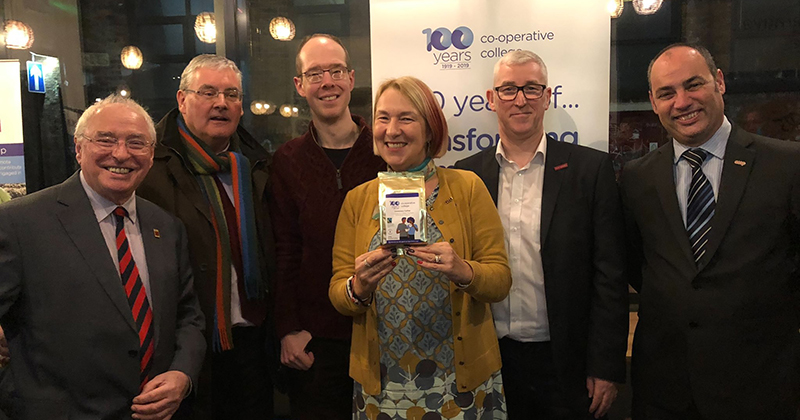
Festive foodbank campaign relaunches as part of Good For Me, Good for FE

Colleges are getting in the Christmas spirit with the relaunch of #FestiveFEFoodbankFriday, donating items to local foodbanks facing “high demand”. 

The FE sector’s foodbank drive was started by London South East Colleges during lockdown and collected 20,000 items and raised £47,000 between March and December 2020. 

It has now been brought under the umbrella of the Good for Me, Good for FE volunteering campaign, which has 120 colleges signed up. 

The campaign’s joint leader, Sam Parrett, LSEC’s group principal, said foodbanks are “continuing to experience high demand. Encouraging our partner colleges to support these is an important part of our campaign. Christmas is a difficult time for many, and we are delighted that so many colleges are re-launching their festive foodbanks.”  

‘Vital’ colleges play leading role in helping foodbanks

volunteering
Sam Parrett

Colleges will be encouraging staff and students to donate single items or create hampers for people in need. 

There will be a series of other fundraising activities taking place in 50 days until Christmas to support the campaign, including Santa Dash running events and Christmas lunches for care leavers. 

Parrett’s fellow joint leader, Loughborough College principal Jo Maher said it was “vital” colleges play a “leading role in helping vulnerable local families and people in need this Christmas”. 

She was “pleased” the campaign was relaunching the drive, so “we can continue providing that incredible support to people who need it the most. 

“It never fails to amaze me how generous and selfless staff and students in our sector are.” 

Her sentiment was echoed by the campaign’s other joint leader, East Coast College principal Stuart Rimmer, who said: “It will be wonderful to see every college getting involved and using our sector’s collective power to support a happier Christmas in all our communities.”  

Campaign has produced nearly £100k in social value

volunteering

Good for Me, Good for FE has a goal of raising £1 million in social value – which involves colleges recording how much volunteering staff and students undertake. 

This is then put through a “social value calculator” to figure out how many volunteering hours have been contributed in monetary terms to social goals, such as increasing access to employment and skills, helping the environment and growing businesses. 

The campaign says, so far, nearly £100,000 of social value has been generated. 

T Level placements CAN be done remotely, DfE announces

Students who started a T Level in 2020 and 2021 can complete a chunk of their industry placement remotely, the government has announced today.

Ministers and sector leaders have become increasing worried about convincing enough businesses to host students for the 315-hour or 45-day placements, a concern exacerbated by Covid-19.

A Department for Education spokesperson said officials have waited “as long as possible” to see if the impacts the pandemic has had on employers’ working practices “resolve themselves” in time to enable all students in the first cohorts to have a “100 per cent in person placement”.

But recent feedback has shown that providers are still experiencing difficulties in securing placements in some areas.

Several temporary flexibilities have now been applied to the first two waves of learners studying the flagship new post-16 technical qualifications.

For 2020 starters, students can spend a maximum of 40 per cent of their placement hours remotely, new guidance published today has revealed.

Learners starting in 2021 will be allowed to spend a maximum of 25 per cent of their placement hours not in the workplace.

This approach can be applied to students taking T Levels in the digital, construction and health and science routes, but not education and childcare.

The DfE said this was because education and childcare “cannot be delivered in a blended way and must continue as 100 per cent in person to reflect the level of competence in knowledge and skills that students need to be demonstrate in the workplace, to meet the early years educator criteria”.

David Hughes, chief executive of the Association of Colleges, said this new flexibility “allows colleges some space to ensure that every placement is a high-quality experience” in the face of “changes in working practices”.

The DfE said the remote element must take place at either the provider’s site, a training centre or simulated working environment run by the employer.

Students should not complete this remote working element of their placement at home, the guidance adds.

It continues: “Providers and employers will need to agree which elements of the placement and which learning objectives can be realistically achieved remotely.”

Additionally, students who are studying the health, healthcare science and science T Levels will be able to complete a placement at “pathway level if a placement at specialism level can’t be sourced”.

Around 1,300 young people started T Levels last year. Figures for this year’s enrolments have not yet been released.

Providers of the early years educator T Level told FE Week last January they had postponed placements to keep students and the workplaces safe.

In response, the DfE cut the minimum hours for placements for level 3 early educator qualifications, including the T Level, from 750 hours to 415 because of the pandemic during 2020.

The department has now extended this flexibility to education and childcare students starting in 2021.

Providers have been told to continue to plan to deliver placements of 750 hours for education and childcare students who started their T Levels in 2021, but “in situations where they are not able to do this, students can still complete their placement if they do a minimum of 415 hours and are able to demonstrate competence against the early years educator criteria”.

Today’s flexibilities come after the DfE announced in May it would temporarily increase the cash incentives for employers running T Level industry placements to £1,000.

Employers running placements in 2020/21, the first year of the flagship qualifications’ roll-out, were gifted £750 for every student they placed, up to a maximum of ten students.

Firms are now able to claim for a new maximum of 20 students on T Level programmes until July 2022.

Three T Levels were rolled out last September, and a further seven started this autumn.

UCU claims victory over staff pay at 5 London colleges

Staff at five London colleges have landed improved pay offers following strikes.

They include salary increases of up to 5 per cent, increased annual leave and workload “protection”.

University and College Union general secretary Jo Grady claimed this as a “fantastic win” for their members and urged employers who are “refusing to negotiate on pay” to follow suit or face further industrial action.

Staff at Croydon College took to the picket line for seven days this term but have now voted to accept an offer.

The deal includes a backdated 2 per cent pay increase for all staff, 5 per cent for lower-paid members in learning support roles and a minimum salary for qualified teachers of “around £30,000”.

There are “additional commitments around workload protection, a four-week summer leave period and simplified pay progression”, a UCU spokesperson said.

South Thames Colleges Group, which includes South Thames, Merton, Kingston and Carshalton colleges, has offered a 2 per cent consolidated pay award for all staff. This increases to 2.25 per cent for staff who earn less than £23,000.

The offer also includes a “commitment to review and level up terms and conditions across the group including lecturers’ contact hours and holiday arrangements, as well as a new pay and grading structure”.

UCU members in the South Thames Colleges Group are voting on whether to accept the offer in a ballot that closes on Monday. Staff had previously taken one day of strike action.  

Staff at fifteen colleges had voted to take strike action over pay demands in July this year. The latest offers mean ten of the colleges have now received improved pay offers.

The UCU has been demanding a pay increase of greater than 5 per cent to “close the school-college pay gap” which currently stands at £9,000, and after more than a decade of below inflation FE pay increases.

The union said its dispute with Capital City College Group remains unresolved. The group has seen ten days of strike action this year.

Jo Grady

Roy O’Shaughnessy, chief executive of Capital City College Group, previously said he was “very disappointed” that the strike has continued because his lecturing staff “are already paid more than other further education lecturers in London”.

He added that the sector’s “ongoing lack of funding is precisely the reason why we cannot afford to pay the 7 per cent increase in pay that the union is demanding”.

Grady said today: “This is a fantastic win for all our members at Croydon, Carshalton, Kingston, Merton, and South Thames colleges. By taking industrial action they have won long overdue improvements to their pay and terms and conditions, which will particularly benefit lower paid staff. 

“Employers that are refusing to negotiate on pay, such as Capital City College Group, need to follow the example of Croydon College and South Thames Colleges Group and agree to improvements in staff wages, otherwise they risk further disruption.”

Croydon College and South Thames Colleges Group were approached for comment.

DfE finally finds chair for new Skills Reform Board

A former Deloitte partner has been appointed as the first chair of the Department for Education’s Skills Reform Board, ending a wrought-out search for the new board’s leader.

Rebecca George OBE, who led accounting giant Deloitte’s public service practice until May this year, has been appointed chair of the board for a three-year term starting on October 19, 2021.

FE Week previously reported the DfE had to extend the application window for the role from May to June 2021.

This was so they could “ensure that we have the best possible selection of candidates available,” a spokesperson said.

Skills reform chair comes with £400 a day remuneration for expenses

The board, created last March, is made up of civil servants and provides oversight of the delivery of commitments made in the Skills for Jobs white paper, which is currently being put into law by the Skills and Post-16 Education Bill.

It assures the delivery of key aims and advises on decisions which cannot be resolved between civil servants.

Until George was appointed by the education secretary, the board had been chaired on an interim basis by the DfE’s lead non-executive board member, former Co-Operative Group chief executive Richard Pennycook.

The DfE described George’s role as “voluntary, with expenses remuneration of £400 a day for an estimated time commitment of 12 days a year”.

Prior to her 15 years at Deloitte, she spent 20 years at IBM and was previously non-executive chair of the DfE’s T Level Reform Programme Board and was a member of the education secretary’s business engagement forum.

She was made an OBE in 2006 for work she did for the government on sustainable communities.

Level 2 business admin apprenticeship replacement ‘some distance off’, warns quango chief

The proposal for a level 2 business administration replacement is “some distance off” the quality bar for apprenticeships, a senior Institute for Apprenticeships and Technical Education official has said.

Chief operating officer Robert Nitsch told today’s Association of Employment and Learning Providers’ autumn conference he would not commit to giving the proposed standard a “rubber stamp at all”.

The institute has “had a look” at the proposal and while his quango is “not casting off” the trailblazer group, they will need to change it substantially to meet the quality threshold.

Following his speech, a spokesperson for the trailblazer group said it was “very disappointing” to hear Nitsch’s comments as “our direct contacts within IFATE have been nothing but supportive”.

They added that they “welcome the opportunity to continue working with them on this vitally important entry level standard”.

A “public sector organisation administrative assistant” standard at level 2 was put forward by a group of employers, including the NHS, earlier this year. It came after repeated bids for a level 2 business administration apprenticeship standard to replace the old-style framework were rejected.

Nitsch said today: “We’ve had a look at it and think there are some challenges with the proposition against the criteria we apply to an apprenticeship.

“We’ve suggested to the trailblazer that if they want it to come into the portfolio of apprenticeships it needs to be revisited.”

Challenged on whether the institute should meet the trailblazer in the middle considering the decline in 16 to 18 apprenticeships and level 2, Nitsch hit back: “I completely disagree with the pretext of that question.

“The idea is that there is a quality bar at which the apprenticeship entry starts and I do not think it is a question of meeting in the middle, that is the quality bar and any delivery needs to be above that.

“I think it is really important that we ensure there is a threshold at which quality marks out our apprenticeship system. Were we not in a place a few years ago where that eroded and fell away to the complete detriment to everybody in the system?”

Asked how much off the quality bar the trailblazer group was and what was specifically holding them back, the institute’s official said: “I think we’re some distance off.

“The first thing is there needs to be a clear occupation not a mismatch of things that people do. And I think there’s also got to be a sophistication in that occupation, that it is delivering at level two.”

There is a level 3 business administrator standard available, but employers have warned this is not the right entry point for many apprentices.

The Education and Skills Funding Agency previously highlighted the level 2 customer service practitioner standard as a potential replacement for the level 2 business admin framework, but admitted this will not fit all apprentices’ needs.

A spokesperson for the trailblazer told FE Week their next steps will be to work in partnership with the trailblazer group for the business admin level 3, as “we look to shape both standards to show a clear need for both, and a route for career progression”.

“The level 3 is not the right first step for those apprentices living in areas of deprivation who have been failed by our education system, or for those with challenging lives,” they added.

“The level 2 will provide social mobility, will help to diminish health inequalities and provide a real springboard for progression.”

It was Nitsch’s boss and IfATE’s chief executive Jennifer Coupland who drove the final nail into the level 2 business administration standard’s coffin in 2020, ahead of the framework being switched off in July that year.

At a last-chance meeting with employers in February 2020, Coupland said the employers’ proposal did not meet the requirements for an apprenticeship, namely the minimum 12-month duration rule.

Plans to replace the apprenticeship with an alternative began in October 2020.

City & Guilds appoints first female chair

Awarding body City & Guilds has announced veteran sector leader Ann Limb as its first female chair in its 143-year history.

The current chair John Armitt, who has served nine years in the role, stepped down last month.

Limb’s 25 years in further education includes ten years as principal of Milton Keynes College. When she was appointed in 1987, age 34, she was the youngest ever college principal.

She then took over Cambridge Regional College and later spent five years as chief executive of training provider Learndirect.

Limb has also served as chair of the Scouts and deputy lieutenant of Buckinghamshire.

City & Guilds made her a fellow of the organisation 20 years ago, during which time she served as vice chair of trustees.

Limb said the organisation has been “part of my DNA for over two decades,” so she was “delighted” to be taking over and “breaking barriers as the first woman chair”.

The awarding organisation – which has won contracts to develop T Levels for rollout this year, next year and 2023 on top of its over 500 vocational qualifications – “has never felt more vital,” following Brexit and Covid, Limb added.

“I look forward to bringing my experience to the organisation as it focuses on supporting people into their first jobs and helping them to retrain and reskill to remain employable throughout their working lives.”

Avoid ‘complex language’ and stereotypes to make exams accessible, says draft guidance

Exam papers should not use “complex language” when it’s not needed and avoid “stereotypical representations” to make them more accessible, according to new draft statutory guidance. 

Regulator Ofqual has today launched a 12-week consultation for exam boards on designing and developing “accessible assessment”. It had been delayed because of the pandemic. 

Although the regulator said its current accessibility rules were “fit for purpose”, some boards have said they would “welcome additional guidance” on how to comply with the rulebook. 

Ofqual said learners who were most likely to be “unfairly disadvantaged by irrelevant features” in exams, which “can stop them demonstrating the full extent of their knowledge skills and understanding”, included deaf, blind, autistic or dyslexic students, or those whose first language is not English.

Both the British Association of Teachers of the Deaf (BATOD) and the Royal National Institute of Blind People (RNIB) reviewed past GCSE exam papers to suggest improvements.

Ofqual also held workshops and looked at responses to the 2020 and 2021 consultations for teacher-assessed grades. 

Instructions should be ‘unambiguous’

The guidance said instructions on how to complete the assessment should be “clear and unambiguous”. These should not make students hold “large amounts of information in their working memory”, unless the assessment means they have to. 

It also said that more demanding tasks at the beginning of exams could demotivate some students, so boards should think about the impact of task sequencing. 

Exams should not include complex language if the task only aims to assess basic numerical skills. Also, boards should use straightforward language, for example “with” rather than “in conjunction with”. 

Unless needed, boards should avoid uncommon words with unusual or irregular spellings, or words that have more than one meaning, like “draw”, “present” or “sound”. 

exams
Ofqual chief regulator Jo Saxton

“Figurative language, including colloquialisms, idioms, metaphors and sarcasm” should also be avoided, the guidance reads.

Source material should not be “longer than necessary” nor advantage or disadvantage any group of learners.

For instance, “if the source text relates disproportionately and in a way that is not relevant to the assessment construct to a particular socioeconomic context”.

It should also not have “unnecessary negative, narrow or stereotypical representations of particular groups”.

Exam boards should also use “the most accessible” type of image available, such as a clear diagram or line drawing, which could be more user-friendly than a photograph or a 3D effect drawing. 

Students urged to respond to consultation

Boards should also consider whether a reasonable adjustment request could raise accessibility issues for a task. For example, how images would be provided in alternative formats, or how screen-reading software would “read” a table of data. 

It follows research earlier this year which found that some exam papers didn’t work well with assistive technology, causing “frustration” for teachers and students. 

Ofqual chief regulator Dr Jo Saxton said it was “crucial” that assessments were “as accessible as possible for all students”. 

“We regulate so that assessments enable every student to demonstrate what they know, understand and can do – without unnecessary barriers.” 

Although the guidance is for boards, Ofqual is urging students and those who represent them to respond to the consultation. It closes on January 24, with the final guidance expected in spring.

Universities could be incentivised to run degree apprenticeships, minister suggests

Financial incentives are being considered as a way to encourage universities to run degree apprenticeships, further and higher education minister Michelle Donelan has told MPs.

Speaking to the Commons Education Committee on Wednesday, the minister was pressed by chair Robert Halfon on what was being done to promote apprenticeships at levels 6 and 7.

Donelan said she wanted “every university to be running degree apprenticeships,” and suggested: “We can incentivise universities.”

When asked by Halfon whether this included financial incentives, she replied: “I am looking at that, genuinely looking.”

‘Significant’ rethink of RoATP and promotion of degree apprenticeships also needed

Multiple higher education bodies have welcomed the idea of incentives, but highlighted other parts of the apprenticeship system which they think need to be addressed as well.

University Vocational Awards Council chief executive Mandy Crawford-Lee said incentives, “must enable organisations to fully utilise degree apprenticeships to raise productivity and deliver skills training in key public sector occupations”.

But she said there also needed to be “a significant rethink of the register of apprenticeship training providers, as at present it is discouraging new provide applications”.

Currently, only training providers which fulfil a training need or have been named as a preferred provider in an employer business case can be invited to join the register.

Admission to the register, which enables a provider to run publicly funded apprenticeships, was restricted during the coronavirus pandemic and was only opened back up to new entries in August.

degree
Robert Halfon

Rachel Hewitt, chief executive of university representative organisation MillionPlus welcomed “government initiatives to boost the growth of this provision”.

However, one of the “key challenges remains a lack of student demand,” Hewitt argued, so she suggested government could start by “helping raise the profile of these courses”.

Higher education body GuildHE believes financial incentives “are part of the challenge,” but policy officer Matthew Guest said the “main challenge is the regulatory burden.

“You need to involve the employers, the industry bodies and now also comply with the Office for Students, Institute for Apprenticeships and Technical Education and Ofsted.”

Since April 2021, Ofsted has been responsible for inspecting level 6 and 7 apprenticeships, while IfATE launched a consultation over the summer on how degree apprenticeships are created, run and examined.

Minister wants to ensure school students know about level 6 and 7 apprenticeships

In her evidence to MPs, Donelan said the institute was “trying to remove some of the bureaucracy,” and she wanted to ensure school students can access the courses.

“I met a group of apprentices either day, and not one of them had been encouraged to go on and do a degree apprenticeship by their teachers, not one of them had heard about them in their school.

“In fact, some of them had been encouraged not to and instead go to university and that’s what we need to be giving that information to our young people.”

The Skills and Post-16 Education Bill, currently being considered by MPs, includes legislation to toughen up the Baker Clause, which requires schools to allow colleges and training providers to discuss education options with pupils.

Donelan said degree apprenticeships are available in 94 universities.

Developing excellence in teaching and training CPD

Continuing professional development is very much part of educators’ lives. Identifying what kind of CPD is needed in line with personal and organisational objectives and then sourcing it can be difficult. We have created a comprehensive high-quality online CPD programme for FE TVET tutors and training providers. This brand-new programme ‘Developing excellence in teaching and training’ developed in partnership with the Education and Training Foundation (ETF) takes place online on 24-25 November. Registration for this content-packed and free to access programme is already open.

WorldSkills UK is an independent charity and a partnership between employers, education, and governments. Together, we are using international best practice to raise standards in apprenticeships and technical education so more young people and employers succeed. We are sharing our knowledge and experience based on our international benchmarking of skills and best practice exchanges and unique development tools to help educators in the FE sector reach standards of excellence in their teaching practice.

There are over 11 hours of sessions designed to have practical outcomes for delegates with expert panellists drawn from the FE sector, business, government and around the WorldSkills global network. As well as lively debate from interactive expert panel sessions, the main focus of the event will be practical workshops and insights fuelled by both expertise from our global network and our extensive experience from years of developing world-class, high-quality skills training and development which has enabled students and apprentices to compete in our skills competitions both nationally and on the international stage against their peers from over 80 countries.

Based around four key themes tailored to the modern teaching environment and changing societal influences and their challenges and opportunities, our CPD sessions offer exciting and varied content in standalone workshops and discussions of 45 minutes length, with 10 technical masterclasses of up to 3.5 hours. It’s an essential event for teachers and trainers who want to stay at the top of their professions. There will be insights and resources that cannot be sourced from anywhere else and are gauged to reflect the changing challenges and thinking affecting educators, students and apprentices today.

There will be lots of opportunities for delegates to raise questions during the live broadcast to really get into what matters most about skills training to FE educators today, so please do make sure you don’t miss out on what promises to be a uniquely inspirational and valuable event. Delegates can join for the whole programme or select individual sessions which are most relevant. Make sure you reserve your place for ‘Developing excellence in teaching and training’ CPD programme and join your peers in leading the way towards a skills-driven economy.

Four pathways to excellence

WorldSkills UK Way: The art of teaching and training is based on over 65 years of constant evolution keeping pace with the changing needs of education and business, we have designed these workshops and discussions to introduce innovatory thinking in teaching to mainstream excellence:

  • Competence to excellence: Raising standards in teaching and learning. This workshop guides the journey towards achieving excellence that is achievable for everyone
  • Effective technical teaching: Bringing learning to life are two separate sessions especially created for new teachers and more experienced teachers respectively, to explore the characteristics of excellence in technical teaching, along with recommendations, effective practice examples and resources
  • Enhancing teaching practice through skills competition development programmes to raise aspirations and outcomes will demonstrate the importance of raising the games of students at all levels. Aside from technical skills, competitions help develop soft skills that employers say they value including communication, self-performance management, reliability and teamwork to develop role models that can help boost peers’ own performance in the workplace
  • The olympian mindset: Embedding, transformational coaching skills for teaching and training, takes lessons from elite athlete training which help educators undertake approaches that result in a measurable difference in the performance of their students. The session goes beyond the technical skills to enhance attitudes and perceptions to create literally, a winning mindset, which combined with technical attributes drives up standards and improves resilience, making excellence the norm
  • The olympian mindset: Applying transformational coaching skills to inspire high aspirations in learners of all abilities covers how to raise the level of outcomes for your students.

On demand content

  • Developing learners’ fine motor skills for practical and technical learning sees our experts share their insights and experience of developing students to high levels of motor and cognitive skills, essential for technical learning and the world of work
  • Building commitment to motivate and inspire students and apprentices explores the challenge of maintaining student engagement and commitment to their learning and development
  • Introducing lean principles to curricula planning and delivery is a highly informative session helping educators to develop efficiencies in their work, organisation and management for increased productivity based around the five values of: defining value; mapping the value stream; creating flow; using a pull system and pursuing perfection.

Education 4.0

These sessions will showcase emerging technologies, how technology can support teaching methods and improve social mobility as well as future skills needed in industry and services.

  • Skills for the future: Bringing employer needs into your teaching and learning will help you create relationships which will benefit your students in education and beyond into employment and ultimately, help UK business to grow and compete more effectively from a sustainable base. Learning outcomes from this session will include, identifying concepts of education for sustainable development (ESD), recognition of practices which develop ESD in a range of subjects, exploring different ways to inspire new learners and develop their skills, reviewing resources and tools to support approaches in teaching practice
  • Skills for the future: Educator approaches to developing green skills explores how three very different education providers bring education on sustainability development into their teaching practice
  • Emerging technologies to support future assessment will help educators consider how existing and emerging technologies are starting to play a greater role in changing assessment
  • Technology to support social mobility looks at how the Covid-19 pandemic has changed both teaching and learning and what this could mean for the future modes of delivery
  • Technology to support teaching methods is for educators to learn about existing and new productivity tools to support learners in their everyday learning environments.

Live technical masterclasses

This is an opportunity to engage with our training managers who are leaders in their fields to get the very latest insights into current and emerging skills that the UK needs to develop to compete locally and internationally. Themes covered are:

  • Automotive Skills: Automotive body repair showcases adhesive joining and comment from educators who have successfully embedded these skills techniques and practices into their own teaching
  • Automotive skills: Automotive refinishing looks at ways to help educators embed best practice into the curriculum inviting international experts to talk about their own countries’ educational systems
  • Automotive Skills: Automotive technology covers diagnostic processes and associated self and system evaluative processes and principles. The session will discuss how to use mindset to develop strategies to solve complex faults in vehicle systems
  • Digital construction and manufacturing: Digital construction shows how to digitalise your teaching and empower students and apprentices for careers in digital construction
  • Digital construction and manufacturing: CAD highlights the skillset needed and explains the nature of performance excellence
  • Network engineering: Cyber security This is an informative overview of encryption techniques, application and content identification using Palo Alto NGFW and other techniques drawn from our work in international standard-setting
  • Network engineering: IT networking focuses on delivery of Linux in education, themes covered include quality of delivery and how to achieve excellence with advances in IT networking
  • Industrial automation: Mechatronics and industry 4.0 aims to support educators in involving PLC programming with practical examples to make learning more attractive. Advanced programming methods including an example of web-based SCADA system will be covered, plus transferring data using the OPC UA protocol
  • Manufacturing and engineering: industrial electronics explains how to embed Autodesk Eagle within the curriculum, with a focus on project-based learning to advance technical teaching to develop learners to a world-class standard
  • Manufacturing and engineering: CNC milling and turning discusses the journey to excellence that our training managers have taken by using their experience of sharing best practice with international counterparts.

Equity, diversity and inclusion

Ensuring all young people have the opportunity to excel regardless of their ethnicity or background is a constant challenge for the FE and training sectors. This set of sessions gives expert guidance on how to understand the complexities facing both teachers and learners. A session on confronting perceptions, what young people face personally and professionally sets the scene and is complemented by sessions on overcoming learner barriers and understanding how to support learners.

A discussion on the subject of, ‘Is mental fitness a necessary part of education?’ will help educators understand what mental fitness is and why it should be a formal part of education. Learn what Fika the mental fitness and skills development platform and the leading awarding body NCFE have done to close the mental fitness education gap and get guidance on how educators can support learners’ wellbeing through developing mental fitness.

  • Overcoming learner barriers shares best practice, tools and resources to support educators with understanding barriers their learners may be facing and how to support them effectively
  • Is mental fitness a necessary part of education? This session will provide educators with an understanding of mental fitness and the importance of developing it with their learners
  • Confronting perceptions delegateswill hear directly from existing and previous learners and gain insight into the perceptions they experienced. They will share advice on how educators can support their learners to overcome perceptions
  • Inclusion in apprenticeships shares best practice to help employers, apprenticeship providers and colleges be more inclusive with their learners.

On demand content

  • Adapting curriculum for special educational needs and disability (SEND) learners supports educators with their curriculum delivery to SEND students. These resources have been provided by The Education and Training Foundation, The Careers & Enterprise Company, Natspec and WorldSkills UK
  • Safeguarding learners with The Education and Training Foundation supports and increases awareness of safeguarding policies and principles. It will enable educators to identify some of the digital safeguarding risks and improve knowledge of the subject as a whole.

Register for your free place at the: Developing excellence in teaching and training CPD programme