Skip to content
10 October 2026

Latest news from FE Week

Tributes paid to principal’s thirty-year legacy after sudden death

Tributes have been paid to Cirencester College principal Jim Grant after he died unexpectedly.

Grant spent most of his career at the Gloucestershire-based sixth form college, beginning as a lecturer of history and archaeology in 1991 and progressing to principal in 2017.

The college said Grant passed away suddenly at home on the evening of Friday, May 12.

Peter Holmes, chair of governors, said: “Jim will be missed by a great number of people who have worked with him now and over the many years he has given to Cirencester College and its community. The governors and the management team are united in their wish to ensure his legacy continues to grow and thrive.”

A spokesperson for college said Grant was a “friend, coach and mentor for many people, staff and students alike, and his impact on all of us was profound”, adding that he “will be deeply missed by us all”.

The college said that in his thirty-plus year career, Grant championed social mobility at the college, made appearances in the media and scheduled an upcoming visit to Parliament to speak about the sixth form sector in England.

As principal, he also oversaw significant redevelopments and commitments to ecological sustainability across the campus such as its “award-winning” digital building.

Grant was also a published author of several works, including multiple additions of an archaeology coursebook.

Bill Watkin, chief executive of the Sixth Form Colleges Association, said: “We are terribly sorry to hear the very sad news about Jim. Our thoughts are with his friends and family and the close-knit community at Cirencester College.

“We will miss Jim’s great sense of humour and his steely determination to do what he knew was right. He was always ready to help and support the team at SFCA and his colleagues across the sector. It was a privilege to know him. He will be greatly missed by many, many people across the country who have benefitted from his advice, expertise, insights and support over the years.”

How East Anglian colleges have put aside competition to deliver sustainability together

Historically, the further education sector has struggled to achieve true collaboration.  In an intrinsically competitive post-16 education system, and with teaching staff availability off timetable often limited, getting together with colleagues from other colleges to plan and deliver joint activity can be a challenge.  

The five further education (FE) colleges across Norfolk and Suffolk have been bucking that trend, working collaboratively on a number of recent projects such as sharing learning on employer curriculum engagements through the European Social Fund (ESF) technical curriculum project. ESF-funded provision for those facing barriers to accessing education has also seen significant joint working across colleges and the voluntary community and social enterprise sector, and the regional Visitor Economy Network Initiative (VENI) project is a college and private sector partnership promoting careers in this key sector for the east of England.

So we are good at planning and delivering activity and engaging employers together, and we share skills and expertise in the management of externally funded projects very readily.

The climate emergency presents a new scale of challenge for us all.  With new job roles and skills requirements emerging all the time and regulation and qualifications not keeping pace with the changes, it is vital that colleges pool knowledge and expertise to deliver the best possible learning opportunities.

The New Anglia Green Skills project – running from August 2022 to spring 2023 and funded by the strategic development fund from the department for education (DfE) – sought to deliver a step change in our green skills work.  Partners, Suffolk New College, City College Norwich, West Suffolk College, East Coast College and The College of West Anglia developed a multi-strand revenue and capital project looking at curriculum, business engagement, facilities and learner involvement in green skills. 

The climate emergency presents a new scale of challenge for us all

The project culminated in the New Anglia Green Skills conference on 15 March at the Hold in Ipswich, organised by Suffolk New College on behalf of the partnership. A key aim of the conference was to bring together teaching staff from all five colleges and give them the opportunity to hear from leading speakers as well as to talk to each other about the curriculum adaptation work they had done. The energy and commitment to collaborate in the workshop sessions was extraordinary, and staff were keen to build on the new cross-college links they had made.

We were really committed to putting on a conference because we are so aware that many FE teaching staff don’t get to go to other colleges or attend conferences. That professional ‘buzz in the room’ that more strategic staff get to experience is so important for professional development, and a really good outcome of this project. Indeed, we hope to work across the colleges to better align our staff development days and make it easier to deliver similar events in future.

All our colleges are at different stages in investing in facilities to teach and train in net-zero technologies like solar, heat pumps, and hybrid and electric vehicles. This is a particularly key area for ongoing collaboration as we develop and evolve training and teaching programmes to meet the huge skills demand and engage with careers leads to enthuse people with new career opportunities. 

The green skills project covered all curriculum areas, not just the ‘obvious’ green skills requirements in construction and engineering. In fact, some of the most dynamic and committed work came from curriculum areas that aren’t front of mind when people talk about ‘greenifying’ business; Hair and beauty teams were especially active, for example, in developing net-zero salons, with work on waste recycling and using greener products.

The project has delivered capital investment in all colleges and many small-scale initiatives to improve and adapt curriculum and facilities. The partnership has carried out extensive curriculum reviews; developed many new resources; sent staff on key training and fact-finding visits; and developed teacher development frameworks and tools to embed sustainability as standard in all teaching. 

And the best thing is that we all agree: This is only the start.

What we really mean when we talk about likeable teachers

It was one of those ridiculously busy days. I was bustling down a corridor with an armful of exercise books when I came face-to-face with a student who had not been in my lesson earlier. Brought up short, I took a second to absorb the fact and felt the frustration of the day rise inside me. I stopped and called their name, drawing them out of the flow of bodies, away from their friends.

My initial annoyance flipped as I remembered that this student was having a really hard time of late due to factors way beyond their control. As I checked they were alright and said how pleased I was to see them in college, I swear their face changed. Those thirty seconds were by far the most important part of my very busy day.

That student was present in my next lesson, chirpy and ready to work. There is nothing unusual in this scene. It is mundane and it is replicated thousands of times every day all across the country. But everything about that exchange is essential.

It brought to mind an educational social media debate that flared recently about whether teachers should be likeable. As is often the case on social media, likeability was in short supply – and in no discernible relationship with the positions held by the contributors.

The heart of the issue is the fact that education is a profoundly relational business. Like all relationships, there is an indecipherably complex mix of factors at play when teaching works well. Teasing out the strands is hard and possibly even counterproductive.

I have been in schools and colleges where teachers have prided themselves on their stern discipline. These stony-faced pseudo-sergeant-majors seem to take to heart Machiavelli’s hoary old chestnut about being feared rather than loved and I sometimes question their motivation to teach.

Seeking the approval of students is a self-evident dead end

Then again, I also question any over-eager, wide-eyed teacher who desperately needs to be liked by their students. Insecure neediness often cries out from behind the façade of the cool teachers, and there is a sneaky manipulation in being likeable in order to bring about some desired result. This is likeability as a transactional tool and that feels dishonest. 

Anyone who teaches must, at some point, consider why they do what they do. Possibly on a Sunday night, right around the time that Antiques Roadshow comes on. After all, there are many reasons not to do this mad job.

Harder to reflect upon than why we do what we do in the way that we do it. If we do this honestly, we will probably soon find a whole range of wounded motivations driving our interactions with others, including in our teaching. After all, we always bring all we are to all we do.

Among our possible drives, seeking the approval of students is a self-evident dead end. As any therapist will tell you, it is an unhealthy displacement that cannot end well. We are not in the classroom for ourselves or our own gratification, but for the good of our students.

What students really need is to trust their teachers, and in the power-imbalanced, age-discordant relationship of the classroom, trust is most quickly built on a foundation of kindness. I suspect this is what we mean when we talk about likeability, a professional kindness that might involve discipline and might involve care but will certainly involve dignity, respect, empowerment, empathy and compassion.

Like many older teachers, I was schooled in the dark days of flung chalk and flying board rubbers. Violence was endemic to the classroom. Those were not kind days, and a lot of people received deep and long-lasting wounds in those schools. But there were kind teachers, and they stood out like beacons. They are the ones we still remember as we reflect on what motivates us.

Kind teachers still stand out today. The students can tell you who they are. Ask them some time; it’s instructive. Ask who the best teachers are, and then ask who the kind teachers are. I suspect you’ll find the lists overlap, and that likeability has little to do with it.

Student loan changes don’t make apprenticeships more attractive – but they do change the game

The double-whammy of GCSEs and A levels is hitting our house at the moment and, like many parents around the country, we’re navigating our way beyond UCAS and into student finances. With only months to go before our daughter sets off for university, we were taken aback to hear about the changes to the student loan system.

For students starting a new undergraduate programme in September, the new ‘Plan 5’ loans signify three major changes: loan repayments will now stretch from 30 to 40 years; the starting salary for repayments will drop to £25,000 (down almost £2,500), meaning that repayments start earlier for more graduates; and, on a more positive note, the interest rate has dropped from as much as three per cent above the Retail Prices Index (RPI) to RPI only.

For those on middle to low incomes, this will amount to a lifelong ‘graduate tax’ that may stretch all the way to retirement. For many, it may never be worth paying off the loan early.

It’s unlikely these changes will have an impact on students making post-18 choices this year. UCAS applications from students living in England are down, but not noticeably (2.71 per cent), and what little drop there is can be accounted for more by the fall in mature students than any drop in college-leavers progressing straight to undergraduate course. In any case, these changes have been announced quite late in students’ application journey, and if my own experience is anything to go by, awareness of them and their long-term implications are little-known and even less understood.

In the longer term, some may argue that Plan 5 loans, with a prospect of a lifetime of debt and reduced earnings after tax, present apprenticeship providers with an opportunity to offer an alternative to college-leavers. The obvious option is degree apprenticeships. As these are fully ‘paid for’ via the levy or funding, there’s no cost to the apprentice, who earns a salary just like any other employee.

Presenting options as ‘apprenticeships vs university’ is no longer productive

Likewise, it could be argued that any apprenticeship at a level appropriate to the job role can be offered as an ‘alternative’ route to a degree, and the recent move to promote vacancies and opportunities alongside degrees on the UCAS portal is an interesting step toward this. Although they often lack the equivalent opportunities of personal growth (moving to a new city, making new friends, living independently, and so on), apprenticeships offer a range of other benefits, not least the opportunity to gain a ‘hands-on’ education and to pursue a career as part of a structured learning plan.

But in reality, relying on student finance as a lever to nudge more students towards apprenticeships is unlikely to bear results. Instead, we should recognise that presenting options as “apprenticeships versus university” is simply no longer productive. There are plans to build UCAS points into some apprenticeship standards, and the IfATE’s Beta version of the Occupational Maps is intended to simplify “the relationships between education, qualifications, apprenticeships and occupations”.

Providers should take this as a strong hint that developing career-supporting learner journeys is the way forward. Clearly mapped progression routes from Level 2 to Level 7 that may or may not include degree apprenticeships will draw young people keen to avoid debt and who have a career in mind. Presenting employers with long-term CPD solutions will also encourage stronger buy-in from managers and decision makers.

It has always been the case that providers should aim to attend career fairs at local schools and colleges to promote apprenticeships and meet potential candidates face-to-face. However, this is a resource-heavy activity. In my experience, few providers utilise their best advocates – local employers and apprentices – to support these activities. Providers who can coordinate visits and workshops from ‘near-peer’ apprentices and their employers will quickly build partnerships with schools and colleges to promote apprenticeships directly to students. Some of this activity could even be mapped to outcomes for apprentices currently on-programme.

The revised student loans are closer to a ‘learner contribution’ system and should probably be labelled as such; ‘learn now, pay later’ versus ‘earn as you learn’. They won’t put students off going to university, but they may cause more to re-think the route they take to get there.

What Building Better Opportunities teaches us about stimulating labour market participation

Plugging the participation gap in the labour market is one of the highest priorities for government and the number one issue on the list for many employers struggling to fill vacancies. Whether it’s ‘the great resignation’, the effects of a post-pandemic health backlog, the impact of Brexit restrictions or a combination of all three, it’s in all of our interests to ensure those who want to work are able to and that the work on offer is fulfilling and financially viable.

Most commentary on the issue, as reflected in the major announcements in the Chancellor’s spring budget, has focused on how people who have left the labour market can be supported or enticed to return, for example by better integrating work and health support in Workwell Partnerships or through ‘returnerships’ for the over 50s.

What this overlooks is that, for years before the current crisis, we were failing adequately to support tens of thousands of people who were already struggling to find work, and that those people are now likely to be further back in the queue for support. This will have a particular impact on young people who have the added disadvantage of a lack of work experience on their CV.

The fact that 1.7 million people who are currently not working say they would like to while government programmes designed to address that gap (including traineeships, apprenticeships and the Restart scheme) are underspending suggests that we may be looking in the wrong place for the answer.

Unpalatable though it may be for some policymakers and politicians, one place we could look is Europe – or at least to the programmes that until recently were supported by the European Social Fund.  One of these is Building Better Opportunities (BBO), a national programme of LEP-level interventions co-financed by the National Lottery Community Fund. 

There are important lessons for commissioning employability programmes

The programme was specifically designed to target those with most barriers to employment and placed as much emphasis on building resilience as it did on acquiring qualifications and finding work.  The programme began in 2016 and will wind up this year having engaged more than 150,000 people of all ages and abilities, often through partnerships led by voluntary-sector organisations.

Groundwork has been involved in BBO as a programme lead and a delivery organisation. We have with more than 12,000 people across in 11 areas of England – from young people leaving care to refugees and those with long-term health conditions.  A recent analysis drawing the lessons from these programmes points to a number of common ingredients that have contributed to successful outcomes.

What connects them all is the centrality of coaching to the delivery model – a trusted keyworker able to provide support and to listen when that’s what’s needed, but also prepared to push and challenge when the time is right. This is nothing unusual, but what made BBO so effective was the ability to deploy this resource in the context of a (relatively) long-term, (relatively) well-resourced programme, meaning coaches could afford to be patient and properly tailor their approach.  

Moreover, in each area coaches were connected into a partnership of locally-based organisations. This means they were able to draw on a wider infrastructure to help with barriers such as homelessness but also identify opportunities. For example, one programme helped young people find their voice by securing time in a local music studio.

Few will lament the bureaucracy and stifling audit regimes that accompanied this and other ESF-funded programmes. However, there are important lessons to be learned about what works that should be applied to the way our sector prepares young people for adult life and the way in which skills and employability programmes are designed and commissioned.

The government recently announced a relaxation of the rules around the UK Shared Prosperity Fund in an attempt to bring forward more proposals to support skills and employability. This was too late in the day to make an appreciable difference to plans in development, but it does mean that these bids should be prioritised next time around.

Local authorities should engage meaningfully with colleges and training providers in preparing their proposals, which can only be strengthened by the lessons learned from programmes such as BBO.

MOVERS AND SHAKERS: EDITION 425

Michelle Dowse

Principal & CEO, Heart of Worcestershire College

Start date: April 2023

Previous job: Deputy Principal, Cambridge Regional College

Interesting fact: Michelle is a former national sailing champion whose love of the water and exploring new places is well-documented in her travel blog. When she’s not off exploring, Michelle enjoys spending time relaxing with her family.


Simon Jordan

Principal & Chief Executive, Oldham College

Start date: Summer 2023

Previous job: Deputy Principal, Burnley College

Interesting fact: Simon is a keen runner who has completed several marathons and ultra marathons. The furthest of these was a 100-mile run which he achieved in under 24 hours.


Chris Claydon, CEO, JTL

Chris Claydon has a biography better suited to James Bond than to the chief executive of a training provider for building service engineers.

He has flown Apache military helicopters, briefed cabinet ministers on evacuations from the Arab Spring uprisings, and helped save lives by designing countermeasures to the roadside bombs used in Afghanistan. Oh, and he used to live in a castle.

That all happened in his previous life in the British Army, which he left in 2015 at the age of 50. Claydon spent the next seven years as chief executive of The Engineering Construction Industry Training Board (ECITB), the employer-led skills body for the engineering and construction workforce, where he honed his corporate skills and gleaned intelligence on what employers say they want.

That came in useful for his next and current role leading JTL, a charity providing advanced apprenticeships in electrical installation, engineering maintenance and mechanical engineering services.

An education, not skills system

On his first day at JTL in February, Claydon was keen to meet apprentices at the heart of the organisation. He visited the site of the refit of Deutsche Bank’s new London headquarters to meet some adult apprentices – one of whom, he recalls, was “on track to earn £75,000 this year”.

I express some astonishment at this figure.

“Go to the car park of any apprentice training centre where you’ve got electricians or welders, especially towards the end of their apprenticeship, and look at the cars knocking around,” he says. “These apprentices are in well-paid jobs.”

Claydon believes “many people” in the UK “do not understand” just how much such skilled labour jobs can pay. He blames this partly on schools.

When Claydon asks apprentices what careers advice they got at school, a “woefully low” number say their teachers encouraged them to do an apprenticeship.

Some of the problems lie in how government departments were carved up when responsibility for skills was handed to the Department for Education from the former Department for Business, Innovation and Skills.

He believes “the DfE is still very much focused on education, not skills. Now, [education secretary] Gillian Keegan and [skills minister] Robert Halfon do have a good skills focus, so maybe things will change. But, at the moment, the focus is still around schools.”

Another department name change might help matters. Claydon has suggested to DfE officials that they should “get into their cellars” where a sign might be lurking for the former Department for Education and Skill’ (which became defunct in 2007).

“I told them they could dust it off and reuse it… But they didn’t like even a joking assessment.”

Claydon also questions whether T Levels are the right solution for the country. While “we’ve not seen sufficient numbers to really understand whether it is the answer to what we need”, his concern is that they are “pitched at quite a high level”.
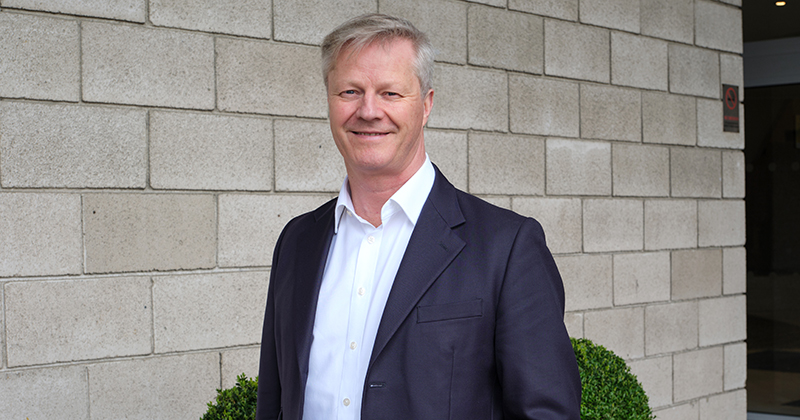
Chris Claydon

Explosive success

I ask Claydon whether he would have considered studying T Levels, had they been around when he was at school? The chief executive tells me not to ask him about his education. “People develop at different ages, let’s put it that way.”

Claydon joined the army at 18, starting in infantry roles including patrolling the streets of Northern Ireland. He later applied to become a helicopter pilot in the Army Air Corps, starting on the Gazelle and the Lynx before learning to fly the Apache attack – described by some as a “flying tank”.

But Claydon was keen to fly high in other ways in his career and grasped the opportunity to spend five years working for the Ministry of Defence on strategy. During the Arab Spring, he worked with the Cabinet Office, briefing ministers on plans to extract UK nationals from countries in conflict.

He also worked on projects around how to establish a presence in the Middle East and was very closely involved in a scheme to base the UK military east of Suez for the first time since the 1960s. It involved establishing a seaborne mine countermeasure force to provide guarantees of access to the Gulf.

Another job in which Claydon was very heavily involved was designing countermeasures to the improvised explosive devices that were killing and injuring so many soldiers in Afghanistan at the time. The devices, also known as roadside bombs, were being used “extensively and effectively” and it was “quite a challenge designing systems to overcome that threat”.

Of all his jobs in the military, this was the one that Claydon gained “most satisfaction” from because it resulted in casualty figures dropping.

King of the castle

But his final stint before leaving the military was perhaps even more impressive. During the day, he commanded a brigade of 4,500 across sites in the UK and South East Asia, delivering security, crisis response, training, logistics and infrastructure support to military forces and civilian emergency services. In his “evening and weekend job, quite bizarrely”, he was deputy constable of Dover Castle.

His role involved supporting the constable – at the time, Admiral of the Fleet Lord Boyce. Notable former constables include Queen Elizabeth the Queen Mother and Sir Winston Churchill during the Second World War.

Claydon’s children enjoyed making the most of castle life when they came to visit him there, and he admits that “once the gates had closed, the whole castle was yours. For games, go-karting and teaching children to drive, it was wonderful.

Claydon has the “dubious distinction” of being the last full-time resident of Dover Castle in its 850-year history after cost-cutting measures saw the position disposed of. He insists, with a smile, that this has nothing to do with any parties he threw, and was “definitely not because I destroyed a piece of English Heritage property”.

Civilian life

Claydon now lives in a house (“not a castle”) in Hammersmith. The job leading ECITB piqued his interest because it involved “pulling together a workforce to deliver critical national infrastructure”, something he considers vital for the country.

“It’s not making the plastic toy that goes into a happy meal. People who do that [infrastructure] work should feel absolutely motivated and proud they are doing important things.”

But the shrinking domestic skilled labour market since Brexit, combined with a tight global market – “we’re all on the same timetable to net zero, everyone’s starting to build this infrastructure” – has created a “perfect storm” for the engineering and construction industry.

One of the biggest challenges is finding people to work on the country’s first nuclear power station to be built for a generation, Hinkley Point C in Somerset. The site’s owner EDF Energy is stumping up £24 million for 30,000 new training places for electricians, welders and pipe installers.

There is also HS2, which also requires thousands of electricians to lay cables.

At the moment, a contractor will only take on apprentices when the order book is filled. But it takes four years to train an apprentice electrician, for example.

“Unless you’ve got a lot of spare capacity in the system, you have this constant tension between, ‘I need it now’ and ‘But I can only get it when I’m paying for it’.”

Claydon believes the solution for large infrastructure projects is to develop a model of “forward funding”, to “pump prime” the system of skills provision. He provides the example of a £500 million project for carbon capture in Teesside.

If those funding the project could provide £5 million to train local people up in advance in the core skills required of welding, pipe fitting and electrics, while some may go on to work for other companies by the time the project comes to fruition, at least those skills would be “more readily accessible to meet the requirements”.

On a project of that size, Claydon sees £5 million as “nothing”, and the investors will have “helped de-risk the project”.

“It’s hitting their ESG [environmental, social, governance] goals, so there’s a win-win. But how you persuade people is the challenge.”

But that is “unfinished business”, which he has left to his successor at ECITB.

Military skills

Claydon believes the soft skills he learnt in the military around “conflict resolution” and “tact and diplomacy” have been invaluable in his roles since. He recalls a position he undertook at the United Nations headquarters in Sierra Leone, which was a “tricky juggling act between the military and civilian mission, and bringing people together to reach agreements on issues which could really scale out of control if you weren’t careful”.

The importance of training – now central to his role – was also intrinsic to his role as a helicopter pilot, where he was “constantly training and being evaluated”.

While in the military “you are all of one company – you define a mission and work towards it” – but being chief executive of a training provider involves “negotiating and navigating between people with different strategies and agendas. It’s harder to get a more coherent line going forward around issues.”

Electric dreams to be realised

JTL, graded ‘good’ by Ofsted at its last inspection in 2017, is currently training around 8,500 apprentices and taking on around 2,300 new starters this year. That “inevitably places strain on the system” by requiring more qualified engineers to teach and assess.

“It’s that age-old conundrum, that the trainer gets paid less than the site operative. But we need the site operative to become the trainer. You can see the fragilities in that system.”

But, while there are “good numbers” of apprentices signing up, it is “not going to be enough” to meet the economy’s needs. He also believes there is a “north-south divide” in the apprenticeships market, with “people understanding the value of skilled jobs in the north” but a “wider, more competent and competitive jobs market” down south.

“You generally get more applicants further north. So you are competing harder in the south, where there are very high-demand areas.”

JTL’s electrical apprentices are the ones at the forefront of the country’s net zero ambitions. But Claydon believes the industry needs to do more to promote its role in saving the planet to the next generation in order to attract new recruits.

“Joining photovoltaic cells and bringing solar farms on stream, smart housing and all those smart technologies saving energy in the commercial environment, installing offshore wind turbines – all of these things are contributing to reducing our carbon emissions. We’re playing a vital role on that journey.”

Babington CEO steps down

The boss of one of England’s largest training providers has stepped down with immediate effect.

Babington Business College confirmed today that chief executive David Marsh has left the company after almost five years at the helm.

A message to stakeholders, seen by FE Week, said Marsh’s decision to leave was due to “personal reasons”. Companies House shows he set up his own consultancy firm last week.

Marsh’s departure comes months after Babington was sold by RJD Partners in December 2022 to Unigestion, a Switzerland-based private equity firm.

A spokesperson for Babington said its board of directors is “actively working to appoint a new chief executive”.

The company’s “executive committee” members – chief operating officer Jen Bramley, chief learning officer Rachel Kay, and chief financial officer Steve McMullan – will take over the day-to-day leadership of the organisation.

Marsh is a recent former board member of the Association of Employment and Learning Providers and a co-founder of the St Martin’s Group – another membership body for training providers.

He started his career in education as a teacher before spending almost six years at Babcock International Group where he was a director in the company’s training business.

He then spent two years as head of academies at British Gas before becoming managing director of Capita’s apprenticeship and training business, and then moving to Babington in October 2018.

Babington, which was founded almost 50 years ago, is currently rated ‘good’ by Ofsted and trains thousands of apprentices and adult learners each year in areas like accountancy, administration, management and employability skills.

The provider acquired the apprenticeships division of PeoplePlus, which had described that part of its business as “loss-making”, in 2020. Babington then shot up to the fifth biggest provider in terms of apprenticeship starts in England in 2021/22, recording 4,420 according to government data.

Babington is yet to file accounts for 2022, but its financial statements for 2021 show turnover reached £26.1 million in 2021 with a profit after tax of £3.4 million. However, Babington’s holding company, Project Sinatra Topco Ltd – now called Babington Managed Services Topco Ltd – showed a loss of £2.5 million in the same year.

Sixth form college delays closure after backlash from parents, union and MP

Leaders at a sixth form college who announced “abrupt” plans to shut this summer and leave dozens of students in limbo have bowed to pressure and committed to delaying closure by a year, admitting they “got it wrong”.

Queen Alexandra Sixth Form College in Wallsend said this week that it would close at the end of the academic year because plummeting student numbers over the last three years had left it “no longer financially viable”.

It left 49 AS students in the first year of their A-levels scrambling to sort provision for next year. But following outcry from students, parents, Tynemouth MP Alan Campbell and the University and College Union, the decision has been postponed by a year.

The sixth form, which is part of the Tyne Coast College group, has now committed to seeing through the first-year students and instead close in July 2024.

Following a crisis meeting between chief executive Lindsey Whiterod and the chair of governors this morning, Whiterod admitted it had been the wrong call to close so hastily.

“The response to our announcement to cease A-level provision has been overwhelming. It is clear that the students absolutely love studying at the QA and the response from parents, students and previous students has been incredible. The chair and I have reflected on our decision and, simply put, we got it wrong,” Whiterod explained.

“Myself and the chair can only apologise for the stress that this has created to parents, students, teaching and support staff who I must personally commend and thank for how well they have carried on supporting our learners after the initial announcement.”

The college said that it wanted to make the announcement as soon as possible to minimise disruption to students preparing for exams.

The initial announcement this week had put 11 members of staff at risk of losing their jobs, and an application process of voluntary redundancy had already begun, as well as endeavours to finds alternative roles for staff under threat.

Whiterod confirmed the result of the fresh announcement will “not create efficiencies elsewhere”.

Staff at the college had been hastily attempting to find alternative sites for the first-year students to complete their studies for next year, which had included forming individualised spreadsheets for students based on what they were studying and where they could be matched, and plans to sort one-to-one meetings to discuss options.

Today’s update means that will no longer be necessary.

On Thursday, the college said it made the announcement of the impending closure at the earliest opportunity, but it attracted widespread ire, including from Tynemouth MP Alan Campbell who questioned how “abruptly” the decision had been made.

“I fully share the concerns that have been raised with me and have today been in contact with the principal of Tyne Coast College, the local authority and the minister of state for higher education to see what can be done to address this issue,” he said before the latest announcement.

UCU regional support official Jon Bryan added: “Staff, students and the local community are rightly furious that their local sixth form college will no longer cater to A-level students. Ending A-level provision would see young people in Wallsend lose key educational opportunities and the decision must be reversed.”

In its original announcement, a spokesperson for Tyne Coast College said it was a “challenging” time for the sector, with the decision coming after a review of its curriculum.

“Despite trying to grow the provision with new A-level options in the 2022/23 academic year, sadly we did not see growth,” the spokesperson added.

It is understood the sixth form currently has 49 AS-level students and 66 second-year students. FE Week has asked the college to clarify how much its student numbers have declined by in the last few years.

Tyne Coast College accounts for 2021/22 indicated a £3.4 million deficit for the year before other gains and losses, however £2.5 million of that was because of changes to the Tyne and Wear local government pension scheme.

Its adjusted EBITDA (earnings before interest, tax, depreciation and amortisation) was reported at £1.3 million.

Tyne Coast College principal Lindsey Whiterod had previously been a national leader in FE up to March last year – a programme that sits alongside the FE commissioner’s office who work with senior leaders to provide strategic mentoring and advice on improvement plans for the sector.