Skip to content
27 September 2026

Latest news from FE Week

Internships help students with learning difficulties find long-term employment

Kirklees College is piloting a work placement scheme for young people with learning disabilities geared towards helping them find long-term jobs.

There are 19 students taking the ‘supported internships’, who all come from the college’s foundation learning department, based in Dewsbury and Huddersfield.

The pilot scheme, set to become a permanent fixture at the college if it is judged to be a success, will involve them spending two days a week throughout this academic year with an employer, for example at garden centres, sports centres and retail shops.

They will spend a further one day a week training with the college.

The learners will gain either a Pearson E3 award in customer service, or a Pearson level one award in the principles of customer service after completing the internships.

Jenny Evans, the college’s head of foundation learning, said that they “will be a great way for our learners not only to learn new skills but to prepare them for work so that hopefully they will get a job that suits them at the end”.

Pic: Foundation students taking part in the supported internships pilot at Kirklees College

Public Accounts Committee to look at FE ‘financial meltdown’

Concerns the FE sector is heading for “financial meltdown” are set to be investigated by the Public Accounts Committee (PAC).

The committee will next week “challenge government” as it picks up on the findings of the National Audit Office (NAO), which in July reported that the financial health of the FE college sector had been in decline with 110 colleges recording an operating deficit in 2013/14, up from 52 in 2010/11.

The NAO report, entitled Overseeing financial sustainability in the FE sector, further said that in the same period, the number of colleges assessed by the Skills Funding Agency (SFA) to have ‘inadequate’ financial health rose from 12 (5 per cent of colleges) to 29 (12 per cent).

The SFA, it said in the NAO report, had been too slow to spot problems with colleges’ finances because of failures to check the “realism” of their “over-optimistic” forecasts, and that the SFA’s formal interventions, once it finds a college’s financial health is ‘inadequate’, “has often lacked sufficient impact”.

The findings drew a stark warning from PAC committee chair Meg Hillier, who said at the time: “I do not believe it is any exaggeration to say the future sustainability of the FE sector is at risk of financial meltdown.”

cartoon 130
A cartoon from edition 130 of FE Week, dated March 9, 2015, about the NAO inquiry into FE college sector finances

And her committee will be looking further into the issues raised by the NAO report with its own inquiry, taking evidence from a number of high-ranking sector figures (see gallery below) including Department for Business, Innovation and Skills (BIS) permanent secretary Martin Donnelly, Department for Education permanent secretary Chris Wormald and SFA and Education Funding Agency chief executive Peter Lauener.

A PAC spokesperson said: “This inquiry will challenge government on whether it is taking responsibility for protecting the taxpayers’ money invested in the sector; examine whether the balance between ‘prevention’ and ‘intervention’ is correct when responding to financial sustainability issues; and obtain assurances that government has robust plans in place for creating a sustainable college infrastructure for the future.”

They added: “The SFA anticipates that the number of colleges it assesses as having inadequate financial health will continue to grow. On current trends, it could be around 70 colleges by the end of 2015/16.

“The financial support that the SFA offers to struggling colleges has increased significantly since 2010, but most has not yet been repaid. The outstanding balance, including new advances, stood at £45m by February 2015, relating to 13 colleges.”

The PAC’s first evidence session takes place on Monday, October 19, at 4pm. In addition to those already listed, committee members will hear evidence from Sarah Wright, principal of Central Sussex College, Stuart Laverick, principal of Heart of Worcestershire College, and Ian Ashman, principal of Hackney Community College.

[slideshow_deploy id=’40297′]

Main image, top: PA

Teenager’s space opera rocks

A budding composer from Richard Huish College has written and conducted his own rock opera aged just 17 years old.

Chris Grabham’s 45 minute production, called The Invaders — Act One, Part One — The Journey to Zergo, was performed to around 40 audience members at the Somerset college last month.

Chris Grabham playing a xylophone during a practice session

Featuring a full orchestra, choir and soloists, it is set in 2050 and portrays the emotions of a character that has to leave Earth because a meteor is heading for it.

Chris, who is studying A-level music, maths, further maths and physics and plays orchestral percussion, said: “There was enormous applause at the end, everyone was on their feet and that has given me confidence in my writing and conducting.

He is now planning to write a follow up rock opera and hopes to perform the original work again at the college next summer.

Main pic: Richard Huish College music students perform the rock opera

FE Commissioner ends work at ‘back on track’ Barnfield and Weymouth

Further Education Commissioner Dr David Collins will be stepping back from involvement at previously troubled Barnfield College and Weymouth College, FE Week has learned.

Barnfield, in Luton, received a letter last month from Skills Minister Nick Boles confirming Dr Collins’ role at the college was over.

It followed a visit in July from his adviser that concluded the college had addressed all of Dr Collins’ recommendations.

The adviser’s report, seen by FE Week, praises the college for progress in “reviewing staff and removing those who are not willing to change the way they work” and notes that a new leadership team is in place “with a clear vision of where they want the outcomes to be”.

Tim Eyton-Jones (above left), principal of Barnfield, said: “This is a major milestone in the college’s recent history and marks a positive transformation and direction we will be continuing.”

Dr Collins’ recommendations to Barnfield, which has more than 7,250 learners, were intended to address areas of concern identified during his two visits to the college, in January and the same time last year.

He saw weaknesses in governance and management, financial regulation and quality improvement measures.

His recommendations included a management structure review, cutting staff costs, and ensuring the governing body had greater scrutiny of curriculum, standards and finance.

Dr Collins’ first visit to Barnfield College was triggered by the college being assessed as inadequate for financial control by the Skills Funding Agency (SFA).

The second followed an Ofsted inspection in November, which rated the college as inadequate in all areas with no key strengths.

The letter to the college from Mr Boles states that: “While the college remains inadequate for Ofsted inspection and in formal intervention until it has fully complied with conditions in the Financial Health Notice of Concern, the FE Commissioner is satisfied that his engagement in the current process is complete and intervention monitoring will pass to the SFA.”

Meanwhile, a spokesperson for the Department for Business, Skills and Innovation (BIS) confirmed the FE Commissioner-led Structure and Prospects Appraisal (SPA) at Weymouth was concluding after it met financial and enrolment targets set by the SPA.

Weymouth, which has almost 4,000 learners, was told by an FE Commissioner adviser this month that Dr Collins was “ready to take a step back from his oversight role” following indication that its break-even budget plan for 2015/16 was on track, according to a college spokesperson.

Nigel Evans (above right), interim principal at Weymouth, said: “The FE Commissioner and his team helped us identify and implement a sound financial plan, which should allow us to continue to serve the needs of students, parents, employers and the wider community right across Dorset.”

Dr Collins started the SPA at Weymouth following his visit in March last year, after the college had been assessed as inadequate for financial control by the SFA.

In his report, Dr Collins said: “The college’s financial difficulties arise partly from ambitious plans to grow its 16-18 provision after several years of decline in learner numbers.

“Unfortunately, the college did not ensure it had the necessary finances to fund all developments in advance.”

An Ofsted inspection in January resulted in an inadequate overall rating, despite good ratings for learner outcomes and teaching, learning and assessment, due to principal Liz Myles’ handling of college finances. She resigned in February having been suspended late last year.

A monitoring visit by Ofsted in July found “significant” and also “reasonable” improvement” in all areas it looked at again.

Could Matthew Hancock be facing his biggest test yet with IT system role in large employers’ apprenticeship levy?

This is the man with the daunting task of implementing a new cross-government IT system for large employers to pay into the proposed apprenticeship levy — and he’s got to do it in just 18 months.
In an exclusive interview with FE Week, Cabinet Office Minister and ‘earn or learn’ taskforce chair Matthew Hancock opened up on just how far officials have to go in designing the new system that will determine and track levy cash revenue on one side and pump out digital apprenticeship vouchers on the other.
The architect of Traineeships also discussed how he saw the youth unemployment programme just over two years after it was launched in a wide-ranging interview that goes on to touch upon his taskforce, Trailblazer apprenticeship standards and that ‘half-cock’ comment from his Skills Minister successor, Nick Boles.


Scale of apprenticeship levy IT task emerges

The government is yet to make a start on designing an IT system to track large employer payments into a proposed levy despite the fact it would need to be in place in just 18 months, FE Week can reveal.
But Cabinet Office Minister Matthew Hancock has been charged with overseeing the development of the system and he told FE Week that it would be done “properly”.
“We’ve got to settle the full details of the policy first,” he said.
“But I’m now responsible for digital implementation across government, so believe you me it will get the attention it deserves.”
But while a Department for Business, Innovation and Skills consultation on the levy proposals closed earlier this month, the government has already said it wants the system in place in 2017 — and has tied it closely to the planned new digital apprenticeship voucher.
Indeed, the levy consultation document said: “Government intends for employers to have an online “voucher account” where they will be able to see their levy contribution and the digital vouchers that they can use to purchase apprenticeship training.
“The amount in an employer’s individual voucher account available for apprenticeship training will be dictated directly by the amount levied from the employer by HMRC.”
It added: “This would be part of a broader digital system that enables employers to advertise vacancies, search for applicants and engage registered providers to provide training for their apprentices.”
But memories of the botched data collections and funding transformation programme, in which among other issues a new funding information system produced inaccurate reports, from largely under his watch while Skills Minister will still be fresh in the minds of many in FE.
Nevertheless, Mr Hancock also told of his determination that the IT system would be worked out “properly”.
“You can only work out the full figure once the policy details are set, but we’re going to do it properly,” he said.

SEE EDITOR’S COMMENT BELOW


Hancock on…

Traineeships

We set out what we were trying to achieve with Traineeships at the start, which was to make sure people who aren’t yet quite ready to take a job can get into a job, and can get the training that they need, the work experience and the English and maths.

So the key is to learn from where the people who have been on them have ended up, that’s what really matters, and the value for money that we get from the taxpayers’ point of view too.

Similarities between Traineeships and new “activity programmes”

The intensive activity programmes are about making sure that if somebody’s unemployed and signing on, then they get the intensive support within the jobcentre in the first instance, aimed very much at the skills needed to get through an interview and the support you need there. There isn’t the English and maths element. Where needs differ, so too should the support that people get.

Apprenticeship reforms and Skills Minister Nick Boles’s claim that the first round went off “half-cock”

It was a choice phrase. Nick and I work very closely together. We’re old friends from before either of us went into Parliament and I think he’s doing a magnificent job, so there’s no way you’ll get an inch of paper between us on policy issues. I take it with a grin on my face.

On the substance of it, the levy proposals are different from the original PAYE proposals. I think, actually, they’re a better set of proposals and the only regret I have about them is that I didn’t come up with the idea myself.

Reporter Freddie Whittaker interviews Cabinet Office Minister Matthew Hancock during the 2015 Conservative Party conference

Number of new apprenticeship standards

I remember those early days of re-writing the frameworks when we gave the pen to employers and said: ‘You write down what you need people to be able to do’. And in some cases they were astonished that we didn’t then take the pen back and we said: ‘No really, we want you to write it’.

There’s a large number of occupations in the economy and apprenticeships need to reflect the economy if they’re going to reflect the economy.

Should the Skills Funding Agency and Education Funding Agency should merge?

There’s all sorts of ways you can organise a government in order to deliver, but I think it’s very important to stay focused on the needs of young people and we can get too tied up with bureaucratic design.

Decisions of the taskforce

The decisions of the task force are announced through the ministers who sit on it. So the purpose of the task force is to bring together the different departments and ministers who are involved in delivering this agenda.

Life without Sir Vince Cable

I always had a very professional relationship with him. He was always very straight-dealing, he was a strong supporter of the skills agenda. But there were things we were unable to do.

We were unable to be as clear as we now can be that all young people under the age of 21 should either be earning or learning, and to deliver that you need both support for training opportunities but you also need very strong incentives in the benefits system.

That’s something we weren’t able to deliver, that’s something we now can and I hope that leads to a further fall in youth unemployment.

Young people and apprentices won’t benefit from the new living wage

People gain experience through time and people are inevitably, on average, less experienced when they are younger.

We’ve put up the apprentice minimum wage very sharply. It was much lower. And we decided to put it up. So it’s gone up to over £3 an-hour. It was £2.65 when I was apprenticeships minister.

Let’s be clear, there is a good reason that there’s an apprentice minimum wage that’s different to the national minimum wage and the new national living wage that’s coming in. When you’re an apprentice you are learning and earning at the same time but you’re learning and that’s why the wage is lower to reflect the fact you’re training on the job.


Editor’s comment

Action man given mission impossible?

It seems very obvious that Matthew Hancock, the man of action when it comes to ‘digital implementation across government’, has been given an impossible mission.

If the government deadlines are to be believed, they have less than two years to develop, test and roll-out a new online apprenticeship payment and funding system.

The history of problems with the current intermittently available SFA apprenticeship funding system, which took three years to develop, have been well documented on these pages.

Yet the current system is child’s play compared to one that will need to accommodate hundreds of thousands of time limited employer levy payments via the Treasury, millions of online apprentice voucher applications and many more millions of individual payments to employers, colleges and training providers.

So my advice to the minister is simple.

Commission a feasibility study from some relevant technology experts who know they won’t gain financially from developing the new system.

I suspect the study would conclude, regardless of development costs, that the timescales are too tight and the risk of failure too great.

More time is needed, alongside carefully considered action, else this movie genre will quickly switch from fantasy to disaster.

Chris Henwood

FE Week editor

chris.henwood@feweek.co.uk


 Main image above: Bloomberg

Two official apprenticeship vacancy websites still live — months after one was due to close

Two official apprenticeship vacancy websites are still running five months after one of them was said to be closing down.

A spokesperson for the Skills Funding Agency (SFA) told FE Week in March that the old National Apprenticeship Service vacancy matching website would be taken down in May, once the new ‘Find an apprenticeship’ service was fully operational.

There had been concerns that with both running at the same time there could be confusion over whether both were official. Despite this, both sites are still live and both are still listing new apprenticeship vacancies.

And an SFA spokesperson said she could not give a date for when the old site would be shutting down.

On the day FE Week checked the sites, the old one listed 14,373 adverts and the new one listed 14,306.

A notice on the home page of the old site tells users that the site is no longer accepting new registrations or applications, and directs users to the new site to apply for an apprenticeship. When users click on any of the adverts on the old site, they are taken through to the new site.

FE Week has previously reported on the potential for confusion arising from having two apprenticeship vacancy websites running simultaneously.

David Hughes, chief executive of the National Institute of Adult Continuing Education, said: “In order to deliver high quality apprenticeships to everyone, we need to offer applicants clear and accessible routes into apprenticeships, therefore it is disappointing if this issue is creating confusion.”

Stewart Segal, chief executive of the Association of Employment and Learning Providers (AELP), said: “The sooner we move to one single site the better.

A spokesperson for the SFA said the old website “remains available as some users still have live applications — some vacancies can have a long lead time and therefore learners still need to access these applications”.

The spokesperson could not give a date for when the old site would be closed, and said it would be when they know no one is still using it.

Let larger firms share levy funding with small employers, says FSB

Large employers should be able to hand out apprenticeship funding earned under the government’s proposed new levy system to smaller firms, ministers have been told.

The call was made by the Federation of Small Businesses (FSB) in its response to the government’s consultation on the plans, which closed on October 2.

It said large employers set to be made to pay the levy “may not have capacity to take on additional apprenticeships ‘inhouse’, while others may already have a fully qualifi ed workforce that fulfi l their immediate needs”.

“We believe these employers should have some control over where their levy money is spent and, in keeping with the ‘use it or lose it’ model, be permitted to select other companies to receive a proportion of their levy contributions,” the response added.

It stated that large employers may want to hand over surplus funding from the levy, set to be introduced in 2017, to smaller employers in their supply chains that would not be required to pay the charge.

“Others may wish to fund the training of apprenticeships, for instance, for corporate social responsibility or community purposes,” it added.

Senior FSB policy adviser David Nash told FE Week that spending levy cash on smaller companies would “make commercial sense for the large firm too, if skills gaps within the supply chain are filled”.

David Pollard, chair of the FSB education and skills committee, also said in a letter accompanying the consultation response that “it is important the levy is designed in a way that meets the requirements of employers over the long-term, and that we avoid constant policy churn”.

“Whichever model is ultimately agreed must deliver a secure long-term funding source,” he said.

The consultation responses of a number of other sector bodies, including the Association of Colleges (AoC) and Confederation of British Industry (CBI) were reported in edition 149 of FE Week.

The CBI stated that “employers should be allowed to spend their levy on training outside the company — for instance in their supply chain if they choose to.

“Many businesses train apprentices for their partners or the wider supply chain. Toyota, for example, operates a ‘cooperative model’ of apprenticeships with its suppliers and local businesses.”

It also called for the levy to be controlled by a new independent board, using the Low Pay Commission as a “blueprint”.

Meanwhile, the AoC warned the “government must not be seen to be using the levy as a reason to reduce its own £1.5bn annual spending on apprenticeships”.

The response from the Association of Employment and Learning Providers, covered on feweek.co.uk, proposed that cash generated by the levy should be combined with government funding in a central pot available to all employers.

A spokesperson for the Department for Business, Innovation and Skills declined to reveal how many consultation responses it had received, but said: “The government response [to all consultation submissions] will be published in due course.”

‘It’s about finding the right measures of quality’ — City & Guilds Industry Skills Board panel on how to make apprenticeships work

A panel of five representatives from industry and trade unions was drawn together by City & Guilds to discuss the findings of the Industry Skills Board (ISB) report Making Apprenticeships Work.

The report includes 25 recommendations from the ISB for improving the way that apprenticeships are delivered. It was launched the same day as the panel event — Monday, October 5 — which was held at the Haberdasher’s Hall in London.

Quality and how to measure it
The panel was clear about what a quality apprenticeship should look like.

“Every apprenticeship needs to be of high quality and high value,” said Andy Smyth, vocational learning development manager at TUI Group and chair of the ISB.

“It needs to make an impact on the individual taking that apprenticeship. It needs to be such that they can make a contribution to their organisation positively. And collectively it needs to have an impact on the productivity targets that we’re setting for the UK.”

From a parent’s perspective, a good quality apprenticeship “means their son or daughter is going to get paid a reasonable wage, and relatively quickly if they progress, and they’re not going to incur a massive student debt going to university, and it’s going to lead to a job,” according to Nicky Taylor, head of training and development at Ginsters.Andy Smyth TUI web
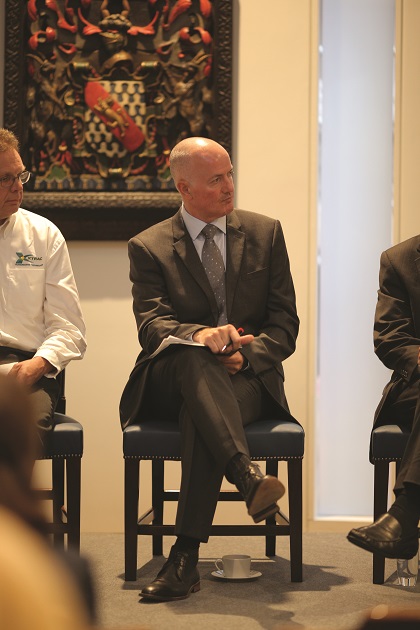
But how do you ensure that level of quality? It’s about more than just duration, the panel agreed — although a minimum was necessary, according to Tom Wilson, director or Unionlearn at the TUC, “because there were so many scandals”. Nonetheless, he said, a “one-year duration is a very crude proxy”.

It was a point echoed by Mr Smyth, pictured right, who said: “We could almost classify the 12-month duration as being a set of stabilisers on the system. It was designed to do something, and we all understand that.”

There was less agreement on what those measures of quality might be — not least because, as a member of the audience commented, “there’s an awful lot more to a quality experience for an individual”.

Mark Maudsley, chief executive of GTA England, proposed looking at the outcomes of an apprenticeship as a quality measure. “Sustainability of employment I think is something we should pull into the suite of things to look at,” he suggested.

Whatever measures of quality were identified, they would need to be reflected in the Ofsted inspection of those involved in delivering the apprenticeship.

However, Mr Smyth said: “It’s about finding the right measures of quality, rather than finding an easy way of doing it that just happens to fit a system.”

Flexibility
An apprenticeship should be flexible enough, according to the panel, to meet the needs of both the learner and the employer.

When someone starts an apprenticeship, said Ms Taylor, “you’re giving them the experience of how that sector works and operates and lives and breathes, and therefore the model needs to be flexible enough to reflect what’s really going on in different employers”.

It should be easier for people to take a break during an apprenticeship, according to Mark Lavington, HR manager at PGL, so that those who aren’t in full-time, permanent employment — for

example, seasonal workers — could still take one. This would help to ensure that apprenticeships “reflect the pathways that people are walking,” he said.
City and Guilds report coverMr Smyth also stressed the need for greater flexibility in the education system as a whole. “People will go in and out of the education system,” he said. “Our job is to make sure the system can respond appropriately to the needs of the individuals.”

This includes ensuring that people don’t come out of education and find themselves ineligible for further support because of the learning they’ve already done. To address this, Mr Lavington called for colleges and employers to be “incentivised to think further through so that the journey was being created at a start point”.

This, he said, would mean greater involvement of employers at the start of a college course, in order to create a package that included enough learning and work “to get them to a point of mastery as a unit”.

Apprenticeship levy
The apprenticeship levy is a “hot topic at the moment” according to Mr Smyth, and the ISB “recognised there is a lot of good that can be done” but at this stage he said they needed to make sure they didn’t constrain themselves.

“There’s a lot we don’t know about the levy yet, but we are positively engaged in, OK, what could we do with this?” he said.


How to build a quality and sustainable apprenticeship system — the employers’ perspectiveKirstie Donnelly 1 web
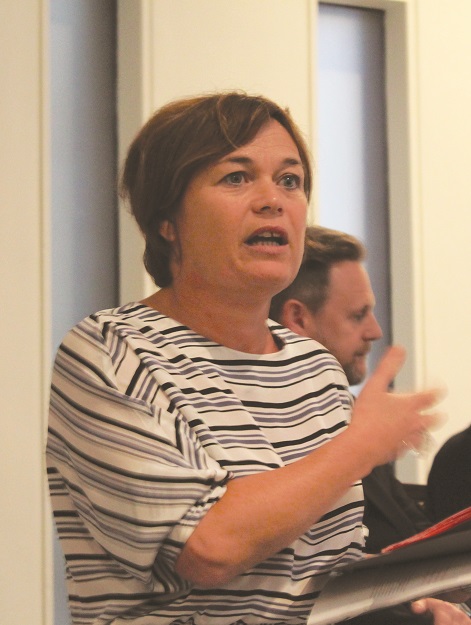
Kirstie Donnelly MBE
Managing director, City & Guilds

To celebrate the launch of the Making Apprenticeships Work report, we gathered a group of employers and educators together to hear from our Industry Skills Board (ISB) members about what makes a great apprenticeship for them and what needs to change in the system to maintain quality.

All panellists agreed about the positive impact apprentices have on their businesses and Warren Page, from Xtrac, said that apprenticeships are the best way to maintain skills.

However, the discussion quickly moved on to the difficulties of convincing parents and young people to consider apprenticeships as well as the difficulty of getting onto an apprenticeship when you’ve made that choice.

We didn’t have all the answers but everyone in the room wanted to build better links between education and employers so that young people can get excited about industries that they may never have been exposed to before.

We came back again to the poor careers advice in this country and the need to involve employers a lot more in this. Someone asked whether the employers would be willing to use some of the levy funds to pay for an improved careers service.

Something that I am proud of is the diversity of employers we have on the ISB. It allows us to understand the variety of skills needs across different industries and the flexibility that is required in the system to make it work for everyone.

One of the panellists, Mark Lavington, from PGL Travel, feels constrained by the notion of a fixed-length apprenticeship as this doesn’t give him enough flexibility to train seasonal staff. This led to a discussion around the ideal length of an apprenticeship with everyone agreeing that the length matters less than the quality. The consensus was that learning doesn’t just happen in one block but it’s something people return to throughout their entire careers.

Chair Andy Smyth, from TUI Group, was keen to point out that it’s not all about apprenticeships. The ISB acts as a skills advisory body and while apprenticeships are part of its remit they are not the only answer. I look forward to continuing the discussions around the broader skills agenda with the ISB over the coming year.

Finally, what we tried to put forward with our report and certainly what came across on Monday was that the ISB is not a talking shop.

We will all hold ourselves to account and report on the progress of our action plan. As Mark put it: “We are keen to influence what happens rather than criticise what’s occurring.”

Legal seal of approval granted for FE chartered status body

Chartered status for colleges and training providers in the FE sector has moved an important step closer after the body set up to launch the quality mark was given legal approval.

The Queen approved the grant of a Royal Charter to the Institution for Further Education (IfE) in June, as reported in FE Week.

The body announced today that it has now been given the Great Seal of the Realm.

A spokesperson said that this meant it had been granted legal status and would now be known as the Chartered Institution for Further Education (CIfE).

Lord Lingfield, chair of the new CIfE, said the development was “a significant milestone” in the chartered status project for FE.

He added: “I am grateful to everyone in government and in the sector who have helped us to get this far.

“We shall now be moving to fill in the remaining details of the Institution’s internal governance framework and to set up the new chartered organisation to accept qualifying colleges and training providers into membership.”

Plans were originally drawn up, by the Department for Business, Innovation and Skills, for the Royal seal of approval to be granted to high-achieving FE institutions in July 2012.

It was almost another year before the appointment of Tory peer Lord Lingfield (pictured main, above) as chair of the IfE.

In March 2014, he told FE Week that he expected “negotiations to be completed within months” that would allow for the quality mark to be launched.

But an FE Week survey on the mark, carried out in May last year, unveiled concern that it could simply “sink without trace, before further worries earlier this year that it had “stalled” after no sign of movement.