


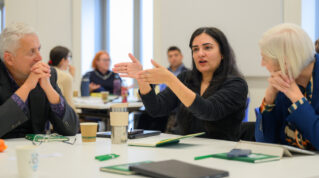
A few months ago, I was speaking with a group of digital bootcamp graduates at an employer led event in the Midlands. One learner in her mid-30s who was sharp and motivated, and retraining after redundancy, had built an entire web app from scratch told me she’d applied for 47 digital roles and heard back from one. She laughed as she said it, but it was the kind of laugh you use to cover frustration.
“Apparently,” she said, “I’m both ‘skilled’ and ‘not experienced enough’ at the same time.”
That line stuck with me, because it sums up what so many FE providers have been telling me while launching Agenda for Change (AFC): the UK doesn’t have a digital talent shortage, it has a progression blockage.
On the provider side, things look good; Strong teaching, relevant curriculum, and high motivation of learners who boast completion rates that you might assume would impress employers. But when learners step out of the classroom and into the job market, the doors often stay shut.
Providers tell me the real problem isn’t the learning; It’s the leap. The first role. The first “yes.”
One head of digital summed it up perfectly for me over coffee: “Ben, we’re preparing people for real jobs employers say they can’t fill but employers still hire like it’s 2009.”
And this isn’t affecting everyone equally. Adults retraining, people switching careers later in life, learners from under-represented groups these are often the candidates who thrive in FE and bootcamps yet struggle the most at the hiring stage. They didn’t follow a traditional academic path, so their applications fall into the “maybe later” pile, no matter how capable they are.
There’s another layer to this too. AI-driven hiring tools are increasingly screening candidates long before a human ever sees their application. These systems tend to favour familiar profiles and past patterns, which means FE learners, career-switchers and those from non-traditional backgrounds are often filtered out by the algorithm itself, not their ability.
All this is happening at the same time that AI is turning digital roles upside down.
Ask employers what skills they need in the next three years and the answer is usually a thoughtful pause. The World Economic Forum predicts that 44 per cent of workers skills will be disrupted within five years.
So, it’s no wonder employers are unsure how to hire they’re still figuring out what roles even exist.
Yet FE is adapting far faster than people realise. Colleges are weaving AI literacy into courses. Bootcamps are shifting towards workflow automation, data literacy and applied problem-solving. Tutors are upskilling constantly, often learning new tools a few weeks before they teach them.
The issue isn’t FE falling behind. It’s employers falling behind FE.
What needs to change?
First, employers need better ways to assess early-career digital talent beyond the usual degree-or-bust approach. The Chartered Institute of Personnel and Development (CIPD) has repeatedly highlighted that “experience inflation” is locking capable people out of entry-level roles, digital roles included. If employers genuinely want new talent, they need to start valuing skills and potential not just familiar CV formats.
Second, we need far deeper collaboration between providers and employers. Not just guest lectures or advisory boards, but genuine co-design of curriculum, job simulations and entry routes shaped around real working practices especially as AI continues changing the nature of digital work.
And finally, we need to confront a truth that’s been hiding in plain sight: skills aren’t the bottleneck, recruitment practices are.
If employers genuinely want to be “future fit”, they need to start recognising the talent being trained right now instead of filtering it out before it’s even had a chance.
Right now, we are training talented people who could fill the UK’s digital gaps, but they’re stuck at stage one because hiring processes haven’t evolved in step with FE provision or the pace of AI.
That learner who applied for 47 roles didn’t lack skills. She lacked access. And there are thousands just like her diverse, motivated, adaptable, ready to work.
The question now is whether employers are ready to meet them where they are …







Your thoughts