Movers & Shakers: Edition 184

Your weekly guide to who’s new, and who’s leaving.

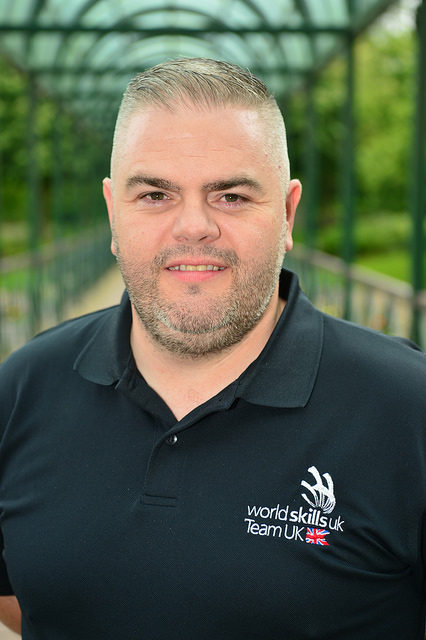
Jeff Chadd has been appointed assistant principal and head of sixth form at Barrow Sixth Form College, as it undergoes a merger with Furness College.

Furness College and Barrow Sixth Form College, in Cumbria, merged in August as a result of recent area reviews. They will form one partnership, but still retain their separate sites and identities.

There will also be a whole new executive structure, with Mr Chadd based at the Rating Lane campus in Barrow.

Mr Chadd has worked at the sixth form college for 22 years teaching languages, and is the former deputy principal.

The board of governors has also seen changes following the merger, with four governors from the sixth form moving to the new board – which will hold its first meeting in November.

Speaking of his appointment, Mr Chadd said: “Under a merged college we have the opportunity to expand the curriculum to keep pace with what students and employers are looking for.

“My aim will be to strengthen that offer to ensure we best meet the needs of young people, adults and employers through excellent education and skills training.”

Meanwhile, David Gallagher has been appointed as commercial director at training course provider, Babington Group.

Founded in 1974, the group provides training across a wide range of sectors, covering everything from accounting to hairdressing.

The company’s mission statement says it wants to inspire ‘everyone to realise their full potential by providing training and opportunities to improve quality of life, and thereby create a better future’.

Prior to his new role, Mr Gallagher was managing director of Employment and Skills Innovation Services, a consultancy business which he set up in 2012 – and now plans to sell. The business supports local enterprise partnerships, training organisations, employers and sector bodies to innovate within the education, employment and skills markets.
In his new role, Mr Gallagher will be leading on growth across the business, with an emphasis on the government’s apprenticeship reforms, and how these changes will impact the sector.

Speaking of his new appointment, he said: “Babington are real pioneers and have a genuine passion and belief in making that difference. I’m looking forward to the challenge, and to help build on the collaborations and knowledge that is already taking place.”

Specialist education and care provider the Aurora Group has appointed Kathryn Rudd OBE as its new managing director of adult services.

The Aurora Group is a provider of education and care services for children, young people and adults with special needs, and has adult care homes in both Cambridge and Bristol.

Prior to accepting her new position, Ms Rudd was at the National Star College in Cheltenham, where she worked for 16 years. In 2015, she and the rest of the senior leadership team at the college were the Association of Colleges Beacon Award Winners for Outstanding Leadership of Improvement.

She is also the chair of the National Association of Specialist Colleges.

In her new role, Ms Rudd will oversee the adult services team across the company’s growing group of schools, colleges, transition services and adult care homes.

Speaking of her new role, she said: “This was a real opportunity to make a positive difference to the lives of thousands of young people and adults across the UK.

“We will be enabling people to build on their strengths and will be putting the individual, not the disability, first.”


If you want to let us know of any new faces at the top of your college, training provider or awarding organisation, please let us know by emailing news@feweek.co.uk

Apprenticeship funding reforms: May 1, 2017 contingency coming?

There is a sad inevitability to the repeated delays to the unrealistic timetable for apprenticeship reforms.

So much of the provisional detail is contested, and with a new minister in post grappling with plans, the situation won’t improve any time soon.

As I wrote in a recent blog for NCFE, we haven’t given ourselves a chance to predict how the new system will work.

The limited pilot is failing because there were so few available standards to start apprentices on and even fewer approved assessment organisations.

So far just 15 apprentices, all with one firm, have completed a new standard.

The employer response to the new payroll tax is another unknown quantity, as it wasn’t part of the pilot.

And we don’t know what impact putting employers in charge of ‘negotiating’ apprenticeship funding rates will have either. Then there are the plans to simplify funding rates which we have exposed for unfairly hitting younger apprentices, particularly in poorer areas.

The DfE claims it won’t budge and the levy will launch on the April 6 with the funding reforms shortly after on May 1.

Few can be in any doubt now that the levy will happen, but from where I’m sitting its looks a safe bet that Robert Halfon is considering a contingency plan for the funding reform.

TV’s Reggie Yates announced as AoC conference speaker

Reggie Yates has been unveiled as the latest star speaker for the Association of Colleges’ annual conference.

The actor, presenter and DJ will join other big names including the broadcaster Steph McGovern and the comedian Ruby Wax, at the event which takes place between November 15 and 17 at the ICC in Birmingham.

The conference will also feature the first speech to delegates from the new apprenticeships and skills minister Robert Halfon since he was handed the ministerial brief in July.
Mr Yates (pictured) is the opening speaker for the event, and will discuss his time at City and Islington College and how it supported him in his broadcasting career and achievements.

As a previous AoC Gold Award winner, he will also be interviewed by Ms McGovern, who has signed up to chair the conference, the first under the AoC’s new chief David Hughes since he took over from Martin Doel.

The comedian, author and mental health campaigner Ruby Wax OBE will deliver a keynote speech on the morning of November 16, while the TV impressionist Jon Culshaw will also make an appearance, entertaining dinner guests at the AoC Charitable Trust Beacon Awards ceremony that evening.


Ruby Wax will also speak at the conference

Mr Yates first found fame in the Disney hit comedy Desmonds aged just eight, and went on to host the children’s TV shows Diggit and Smile on the BBC.

He landed on primetime TV with a hosting gig at Top of the Pops, and spent several successful years at Radio 1 presenting Weekend Breakfast, the Request Show and the Chart Show until December 2012.

He has also voiced the lead character in hit children’s animated TV series Rastamouse for CBBC.

Other TV appearances include documentary work such as Reggie Yates: Extreme Russia in 2015, which won the Best Factual Programme at the Edinburgh TV Awards and the RTS award for Best Programme and Best Presenter.

Behind the camera, Mr Yates’ career has include writing and directing.

His first short film, Patriarch, was aired on Channel 4 as part of their Random Acts season, while his second, Date Night, won best UK Short at the London Independent Film Festival.

“We’re delighted to have Reggie Yates coming to speak at the AoC’s annual conference and exhibition,” said an AoC spokesperson.

“Reggie won an AoC Gold Award earlier this year, as a testament to how a former college student has gone on to become so successful in his chosen career.”

She added: “He will be the first speaker at the conference and I have no doubt that hearing about his experiences as a student, and how City and Islington College helped him get to where he is now, will be inspirational to delegates.”

FE Week is the premier media partner for the conference and exhibition, so look out for more reports on what to expect in the coming weeks.

For more information and to book a place at the AoC annual conference and exhibition,
you can also visit www.aocannualconference.co.uk

Funding reform roll-out in 2017 still on track, insists DfE

There will be no delay to apprenticeship funding reforms, the government has insisted, despite growing concerns in the sector over a series of setbacks to key policy details.

The Association of Colleges called for all funding and regulation reforms to be delayed beyond the planned May 1 launch date for the first time last week, after FE Week exclusively revealed that the new apprenticeship provider register was being pushed back.

However, the DfE remains adamant that it would neither alter the April 6 launch of the apprenticeship levy on April 6, nor push back the May 1 deadline for its funding arrangements.

“The dates set out on gov.uk regarding apprenticeship dates still stand,” a spokesperson told FE Week.

Some delays, however, are unavoidable. Applications to the first wave of the controversial new provider register – which will work alongside the existing register of training organisations, Roto – will not now be accepted until the end of October, rather than of the third of the month as was planned.

The Skills Funding Agency claims this delay has been due to “changes to the register proposals and approach” following feedback from providers.

These are busy people and busy businesses who need to plan

Mark Dawe, chief executive of the Association of Employment and Learning Providers, was quick to slam the delay as “incredibly unfair”, adding: “These are busy people and busy businesses who need to plan.”

AoC’s boss David Hughes has also expressed major concerns, saying: “The changes proposed to apprenticeship funding and regulation are complex and risk undermining the high quality provision already in place. If there is a delay in opening the register or confirming funding rates, I would like to see a more phased implementation.

“More than anything colleges, providers and employers need certainty and confidence about the changes, with a timetable they can rely on to plan how they will continue to deliver apprenticeships.

Nick-Linford-editor-exp-300x140
Read Editor Nick Linford’s thoughts here

“It is a tough call for the minister, but perhaps now a delay in implementing the new arrangements would be the most prudent.”

The government also announced this week that growth requests for advance learner loans have been paused until further notice, after FE Week last week exposed lengthy delays with processing. The government is understood to be struggling to cope with extra demand for new 19-to-23 loans (see box).

In July, the CBI called for the launch of the apprenticeship levy to be put back.

Mr Dawe has also previously told FE Week that while he supports pressing ahead with the launch of the levy, he wants to delay other apprenticeship reforms.

“We can’t afford to wait longer because the levy is even more vital following the Brexit vote and the need to develop our own skills base, with the likely ending of the free movement of Labour,” he said.

“However there are other aspects of the apprenticeship reforms, such as the standards, the provider register and this autumn’s non-levy payers’ procurement exercise, where the transitional risks are very high, and where a pause for further deliberation would be welcome.”

Council wants small-school sixth forms to merge or close

Brighton and Hove council wants to merge or close its small-school sixth forms, it has announced following a review of local post-16 education.

Its report calls for school and academy governing bodies to “consider the future financial viability of their sixth form provision” and develop a plan to increase numbers or merge with another school.

The review was launched last October so that school sixth forms and independent training providers could be fully considered in the larger Sussex-wide area review.

The council is “not ducking the difficult issue” of telling schools to increase their numbers, according to Tom Bewick (pictured), the managing director of consultancy firm New Work Skills, who chairs the council’s children, young people and skills committee.

He told FE Week that the council would tell schools to “either increase your numbers, justify your sixth form provision – or you should be considering getting out of it”.

The Association of Colleges last week announced it was launching a judicial review into the Department for Education’s decision to fund a new sixth form which won’t meet minimum student numbers – contravening its own rules.

The council is “not ducking the difficult issue”

FE Week found that student numbers at many sixth forms fall below the minimum of 200, despite growing evidence that students at small sixth forms do less well than those at larger sixth forms or colleges.

The Brighton and Hove review covered five school or academy sixth forms – Cardinal Newman, Hove Park, Blatchington Mill, Portslade Aldridge Community Academy, and Brighton Aldridge Community Academy – as well as Varndean College and Brighton and Hove Sixth Form College, both SFCs, as well as City College Brighton and Hove, a general FE college.

According to Education Funding Agency allocations for 2015/16, Cardinal Newman had 453 students, Hove Park had 266, Blatchington Mill had 163, Portslade Aldridge had 129 – while Brighton Aldridge had just 50 students.

Despite this, Mr Bewick told FE Week he was “less concerned” about the two academies, which he described as being “on an upward curve”.

“I worry more about Hove Park and Blatchington Mill,” he said.

The report, which will be presented on Monday, found that the academies have been focused on increasing numbers to 550 across both schools by 2017, with the intake at Brighton Aldridge having already “increased significantly” for the current year.

Hove Park and Blatchington Mill started working together in September this year to offer a joint curriculum across both schools, with a target of at least 15 to 20 students per class.

Ashley Harrold, the head at Blatchington Mill, said he was “disappointed” that Mr Bewick had ignored this collaboration.

“Our sixth form is a caring and nurturing environment that offers a different route to FE and employment than other establishments in the local picture,” he said.

Rob Reed, Hove Park School’s head, said that planning for the partnership had begun before the local review started.

“We are sure that local residents would see it as a hugely backward step for their choices in this area to be significantly reduced,” he added.

Ofsted considering climbdown over logo use

Ofsted could be heading for an embarrassing U-turn over its surprise decision to threaten providers with legal action over their unauthorised use of its logo to advertise ‘good’ inspection ratings.

Last week, FE Week revealed that several training providers had been threatened out of the blue with court action by the education watchdog, for the crime of using a modified version of the Ofsted logo.

They were told in harsh legal letters that they were breaching Crown copyright law – and that Ofsted would only allow institutions rated ‘outstanding’ to display such a logo, according to little-known regulations.

However, FE Week understands officials at the watchdog have indicated that they could now revisit the policy, following what might politely be called a bemused response from the education community.

A spokesperson for Ofsted denied to FE Week that there had been a “formal” review, and said the policy was “very much as it was last week”, but added: “We do look at policies across the board on a regular basis.”

A policy rethink would be welcome news for numerous schools, colleges and training providers who are currently in breach, by publishing ‘good’ logos on websites, outdoor banners and in prospectuses – leaving them open to potential action.

Mark Dawe, the boss of the Association of Employment and Learning Providers, last week told FE Week that he’d never even heard of Ofsted’s outstanding-only logo policy, and labelled it “the best kept secret in education”.

When we find the Ofsted logo has been used inappropriately we approach the provider and request that they remove it

Mary Bousted, general secretary of the Association of Teachers and Lecturers, echoed his sentiment, saying: “Every day you go past schools with signs and logos saying they are graded as ‘good’. These letters are a monumental waste of time and resources.”

Ofsted insists that the policy, which was apparently introduced in the year 2000, has been enforced over the past 16 years. The spokesperson revealed that although the watchdog doesn’t keep a central register of contacts it has with providers it’s had concerning logo misuse, they estimated there had been more than 500 cases in the last four years alone.

“We have clear guidelines published on our website governing its use, which are applied consistently across all remits,” they said. “When we find the Ofsted logo has been used inappropriately we approach the provider and request that they remove it.”

In one letter recently received by an unnamed FE training provider, which had deployed a version of the logo on its website, the education watchdog said it would begin legal action if the image was not removed from all materials within 14 days.

The letter read: “The Ofsted logo is covered by Crown copyright. In addition, the Ofsted name is a registered trademark with the Intellectual Property Office. Therefore, the logo cannot be used without Ofsted’s express permission.

“You should be aware that the unauthorised use of our logo may give rise to a civil action against you. To avoid this, please remove the Ofsted logo from your website and any other offending materials with immediate effect.”

AELP welcomed a the possibility of a review.

“A quick review has got to be the way forward,” said a spokesperson. “For a government championing better informed choices by employers, learners and parents, surely people shouldn’t be denied a sensible sharing of information about quality provision in this way?”

Ofsted picks Damar to train its apprentices

Ofsted is using just one training provider for its new cohort of 31 apprentices, FE Week can reveal.

The recruits will all follow a two-year business administration programme at levels two and three with Stockport-based provider Damar Ltd.

In March, the Skills Funding Agency was found to be using a total of 13 different providers – three colleges and 10 independent training providers – for just 26 apprentices.

A spokesperson for Ofsted told FE Week that Damar Ltd, which was rated ‘good’ overall in its last full inspection in August 2012, was chosen following a selection process that covered criteria including quality, suitability for the role, and location.

“They demonstrated that they are a good provider, with experience of working with the civil service, and a track record of targeting hard to reach communities,” she said.

damar

Jonathan Bourne (pictured), Damar Ltd’s managing director, said it was “a great privilege” to have been chosen as Ofsted’s apprenticeship training provider.

“We look forward to working with the talented new recruits and Ofsted colleagues and seeing the apprentices grow into confident, knowledgeable and skilled professionals,” he added.

The 31 new recruits will take on a variety of roles, including inspection support, social care policy and education policy.

They were chosen from a field of 200 applicants, following a recruitment drive that specifically targeted young people from disadvantaged backgrounds.

Twenty-three of the 31 are aged between 16 and 18, with a further six aged 19 to 23; the remaining two are 24 or older, Ofsted told FE Week.

The apprentices’ levels of English and maths had been assessed, and those without at least a level one or two qualification in these areas will be supported to achieve it during their apprenticeship.

Ofsted will paying a financial contribution to Damar Ltd for the apprentices aged 19 and older, while the new programme will build on a previous apprenticeship scheme, run in May 2013, which recruited six apprentices to work at the organisation.

A lot of apprenticeships are simply accrediting what they’re doing already

Last October the education watchdog published a highly critical report into apprenticeships that singled out poor-quality training programmes, particularly those that use government cash to subsidise low wages for older learners.

In an exclusive interview with FE Week at the time of the report, Ofsted chief inspector Sir Michael Wilshaw said: “What we’re seeing is that a lot of apprenticeships are simply accrediting what they’re doing already, and again employers are using funding from government to subsidise already low wages – that’s got to stop.”

The report also found that “far too few” 16- to 18-year-olds were starting apprenticeships.

Matthew Coffey, Ofsted’s chief operating officer, said he was “delighted” to welcome the new apprentices.

“We want to provide individuals with a genuine opportunity to improve their lives, by offering them an alternative career path from the traditional university route.”

MP renews spat with college over planned job cuts

A senior MP has vowed to fight Hull College all the way over a string of job losses it wants to make.

Karl Turner, former shadow attorney general and MP for Kingston upon Hull, has previously joined striking staff on the picket line, and has promised to meet with the University and College Union again, as another strike ballot closes.

The UCU has balloted its members on the possibility of another strike, and “action short of a strike”, which could include work to rule – when employees do no more than the minimum required in their job – which closed on Friday (September 30), after the college announced of the summer vacation it would make around 70 redundancies and close its three nurseries before the end of the year.

Mr Turner said the college’s actions would “hit students the hardest”.

He previously joined college workers on strike in May, supporting their dispute over pay and a controversial new lesson observation system.

He ended up calling for an investigation into the college’s chief executive Gary Warke, after he was allegedly sent a “threatening and derogatory” letter.

The MP uploaded a copy of the letter to his blog, in which Mr Warke allegedly wrote to “express my sincere disappointment that you chose to address striking UCU members without the courtesy of informing me”, adding: “We find your actions, two days before local elections, highly inappropriate and disrespectful to the Hull College Group.”

Speaking ahead of the new ballot, Mr Turner told FE Week that “redundancies have become a yearly exercise at Hull College, which will not help staff morale”.

He said: “It is deplorable that many staff found out about redundancies during the summer holidays, reducing their ability to organise effectively, and have an input in the consultation period.

“It is students that will be hit hardest by these cuts with proposals to shut the on-site nursery service as well as closing down many vital student facing services which provide pastoral care.

“I am meeting with representatives from the UCU as a priority to discuss how we can fight these cuts in staff numbers. It seems that Hull College is more interested in protecting profits than providing the community with a vital service.”

The UCU said the plans “made a mockery” of what they claimed was a college promise not to cut more jobs following the last round of redundancies.

The previous strike ended in a payrise for staff and an end to no-notice observations.

In a statement, the college said: “Hull College Group is currently in consultation with trade unions and staff regarding a proposed redundancy programme of about 70 full time posts, which includes the closure of our nursery provision as well as the creation of 30 new roles.

“The Group is also in the process of recruiting up to 45 new jobs as part of our highly successful HCUK Training commercial arm as we significantly grow our apprenticeship and commissioned work to employers.

“All of these new roles and jobs are being offered as redeployment opportunities for staff which will significantly mitigate job losses.”

A spokesperson for Mr Turner’s office confirmed that the college never responded to the MP’s public concerns over the letter.

Update: Hull College staff vote for strike action

More than eight in ten (86 per cent) members of the UCU at Hull College have voted in support of strike action over planned redundancies, while 96 per cent voted in favour of action short of a strike. The union will now meet on Monday (October 3) to discuss next steps

UCU regional official, Julie Kelley, said: “This ballot result clearly shows the level of anger among staff, who have already been demoralised by successive rounds of redundancies. The decision to strike is never taken lightly, but staff feel they have been left with no alternative.

“Closing courses and cutting facilities will reduce access to education for local people and diminish the student experience. We are urging the college to halt these damaging plans and work with UCU to find alternatives to more job losses.”

How can colleges best support students with their mental health?

Good mental health support is vital and can be improved by sharing good practice, says Ian Ashman.

The Association of Colleges’ 2015 survey on mental health in colleges asked members about changes in the incidence of mental health issues amongst students. The intelligence provided by principals was startling.

Two thirds said that the number of students with mental health difficulties had ‘significantly increased’ in the past three years, with a further 20 per cent saying they had ‘slightly increased’. What is perhaps more of a concern is that 75 per cent felt their college had ‘significant numbers’ of students with undisclosed mental health difficulties. Social media was highlighted as the major reason for the increase, with many also quoting exam and financial pressures.

Though the rise is worrying, the fact is that colleges have a long and proud history of working with students who have particular needs or challenges. In fact, many colleges have been providing support on mental health issues for years.

Mental health support has literally been the difference between life and death

Hackney Community College is an example of this long-running support. It has won the Queens Anniversary Prize for Higher and Further Education and numerous other awards for its mental health education and advice service, which has also featured strongly in four consecutive Ofsted reports.

At its heart, the service has two well-qualified and experienced advisers. One post is funded through the college’s student support budget and the other through a long-standing agreement with its acute mental health trust, helping service users to access education and supporting progress into employment. The latter recognises the strong therapeutic value of participation in education.

These services have been developed through strong local partnerships and help equip all staff with the skills needed to support students.

The AoC is developing and sharing other examples of good practice in particular colleges, and will be doing more in this area during the coming year, including at its SEND Conference on December 14.

Examples include City of Liverpool College, where the clinical commissioning group has funded two college-based mental health adviser posts; Highbury College in Portsmouth with its close links with the CCG; and Birmingham, where colleges encouraged the CCG to move to commission services for 16-25s. This helps to ensure students don’t lose out when they move into adult services at the age of 19.

The AoC survey supported my own experience, that there are helpful features of a strong approach to mental health within colleges.

Developing a whole-college approach to wellbeing, as well as having clear policies and systems in place to support the mental health of students and staff, is considered to be the most effective approach, ensuring that welfare forms a part of all students’ tutorial programmes. This can also create opportunities for providing additional
sessions such as dealing with stress and examinations.

Mental health support has literally been the difference between life and death

A dedicated staff member for mental health or a counsellor with specific training, who can provide one-to-one and group support to students, means there is always somewhere to turn. They can also run mental health awareness and skills training for staff.

It is through good strategic relationships with health commissioners and mental health service providers that colleges are able to provide the support students need.

AoC is making this a priority both nationally and locally. For example, my first formal meeting as president elect was with ministers and officials of the Departments of Health and Education on this issue. Nationally we have gained representation on the DoH’s Children and Young People Stakeholder forum, to press the case for colleges.

Locally we need to increase the representation of colleges on local stakeholder boards and engage with directors of public health, to ensure that services are shaped to the needs of our students, especially as they move between children’s and adult services.

I know from personal experience the vital work colleges do in this area. On more than one occasion a student has told me that the mental health support provided by the college has literally been the difference between life and death.

This is surely a good enough reason to make this a priority for all of us.


Mental health will be one of the themes at the AoC Annual Conference (15-17 November).