Skip to content
7 August 2026

Latest news from FE Week

Summit to launch ‘skills revolution’ with employers

The government will host a special summit at the end of this month to launch a new ‘skills partner’ programme with employers to help develop technical and vocational education reforms.

The Department for Education announced that the Skills Summit event will take place on November 30.

The education secretary will lead the event in London, which is backed by the Confederation of British Industry.

The summit will “see the launch of a new partnership between employers and government to deliver a skills revolution”, it said.

“The skills partner programme will see employers working with government to design and deliver reforms to technical and vocational education, so that British businesses have the home-grown skills they need to compete globally.”

It is clearly very early days, as the LinkedIn group on which the announcement was made had just nine followers at the time it was published.

“A skills partnership – between government and business – can create a skills revolution,” said Justine Greening. “It’s time to set ourselves a collective challenge: to develop our homegrown talent.”

The Skills Partner page on LinkedIn also explains that the summit “will help people, communities and businesses to achieve their potential.

“We are creating a world-class technical and vocational education system that will be as prestigious as our leading universities, creating opportunities to help everyone reach their potential, regardless of their background. “We are working with employers and education providers to design and deliver these reforms so that British businesses have the home-grown skills they need to compete globally.”

It advises people to follow the page for updates on the summit and more information on how to register your organisation’s interest in the programme.

The extent to which employers will be involved with policy reform remains to be seen, but it seems to be the government’s latest attempt to get employers involved in skills training.

Employers have previously been encouraged to help design new apprenticeships through the Trailblazer programme.

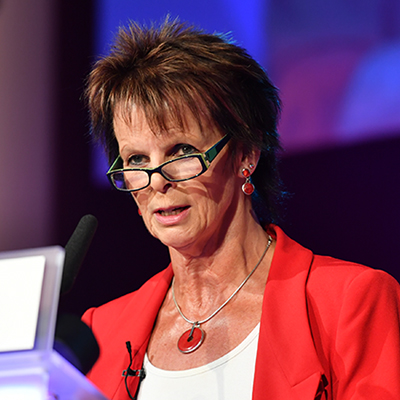
The skills minister Anne Milton referred to the event during her speech at the AoC conference in Bimingham today, during which she pleaded with sector leaders for closer collaboration over technical education reforms after years of turbulence that have “put too much distance between us”.

“At the Skills Summit later this month we will be focusing on developing our partnership with employers,” she said. “Today, I’d like to talk about our partnership with you.”

The CBI declined to comment.

Post-16 funding inequality has consequences

Nick Linford considers the extent to which poor college performance can be blamed on government interference and a lack of investment.

If Ofsted inspection reports are to be believed, we should be very concerned that the college sector has been going downhill for three years in a row.

This week we’ve crunched the figures and revealed that its annual report is expected to say next month that the proportion of ‘good’ or ‘outstanding’ general further education colleges will fall to 69 per cent.

That means nearly a third of colleges are classed as failing their learners, so what’s going on?

Constant reform

For several years now Ofsted has warned of the policy complexity faced by colleges, saying in its annual report last year: “Area reviews, reforms to apprenticeships and the ‘Post-16 skills plan’, following Lord Sainsbury’s review, are all very significant projects that will see fundamental changes made to the further education and skills system. With both performance concerns and ongoing large-scale changes to the system, again this year many general FE colleges face a period of continuing turmoil.”

Since then, the new chief inspector Amanda Spielman hasn’t shied away from highlighting the challenges colleges face from wide scale reforms. Answering questions from MPs on the education select committee last week, she said that compared to schools, colleges have “a much more complex job to make sure that there is the right pathway for everybody, with changes in qualifications, programmes of study, apprenticeships and reforms in practically all areas, keeping your handle around seeing people through the existing and introducing the new ones. There is no question – it is an enormous amount of work for colleges at the moment and a big challenge.”

And while “we’ve never known so much change” is an often repeated sentence at FE conferences, it is likely to be heard more than ever at the AoC conference next week.

So, the Department for Education and five skills ministers in as many years perhaps need to recognise that constant reform of rules and policies is translating into poor provision for learners.

Funding inequality

As a former college curriculum planner myself, I’ve seen first-hand how a lack of financial resource makes it impossible to deliver a high quality curriculum.

And this resource is being squeezed for all colleges, with 16-to-18 funding rates stuck at 2013 levels despite ever-rising costs.

As a result, and as a recent survey conducted by the Sixth Form College Association has corroborated, many colleges have been forced to increase class sizes, reduce teaching time and cut student support.

This may help balance the books, but it would be very surprising if Ofsted hadn’t found the learner experience was starting to deteriorate.

Colleges have the biggest funding challenge

The chief inspector seems all too aware of the potential significance of funding levels on quality, telling the education select committee that “colleges have the biggest funding challenge”.

And when asked by one committee member about the “consequences of the funding inequality post-16”, she said “we see quite disappointing outcomes at inspection for FE, compared with pre-16”, and would not rule out funding inequality from being to blame for this “correlation”.

Putting it bluntly, the college sector is being left behind when it comes to resources, and no amount of T-level planning will improve the outcomes for learners today.

The budget at the end of the month is an opportunity for the chancellor to recognise that colleges are at a tipping point.

In practical terms, and as a minimum, money should be found to increase the 16-to-18 per-pupil funding rates by £200, as the Support Our Sixth-formers (SOS) campaign wants.

FE Week has officially joined the campaign, joining big beasts like AoC, ACSL, SFCA and NUS, because every year that the funding rate goes unchanged represents ever deeper real-terms cuts.

And these disappointing Ofsted outcomes increasingly suggest the sector has reached that tipping point.

All the evidence points to a simple fact: additional investment in colleges is long overdue and desperately needed, now.

Nick Linford is the editor of FE Week

AoC Conference: Milton pleas for renewed ‘partnership’ with colleges

Anne Milton wants a refreshed “partnership” between FE and the government to help with the technical education reforms.

The skills and apprenticeships minister used her speech at this year’s Association of Colleges conference to plea with sector leaders for closer collaboration after going through past turbulent years that have “put too much distance between us”.

“I know that words like ‘partnership’ and ‘working together’ come with historical baggage,” she told delegates. “There have been times in the past when our partnerships have been tested. 

“But as we face new challenges, the way in which we work together will also need to change.”

Ms Milton insisted that she was not coming with a “blueprint” for how the partnership between FE and government should work from now on, but spoke of three “emerging themes”.

Together, we have a determination to meet the challenges and seize the opportunities that lie ahead

The first of those was “support: from government, for the sector”. 

“We are, and will be, asking a lot of you over the next few years. It is only right to make sure that you can get the support that you need,” the minister said.

“Wherever we can, we want to deliver that support by harnessing the capacity within the sector.  Improvement through collaboration, rather than competition alone. That’s what we are doing with the National Leaders programme, and through the new Strategic College Improvement Fund.  

“Where that capacity for support does not already exist within the sector, or needs to be strengthened, we will invest, strategically, in its development.”

Second, she said she wants government to play “an active role”, but was clear that she does not think those in power “always knows best” or can do it on their own.

“Just as an active role for government is central to our approach on industrial strategy, we need to adopt the same mindset when thinking about how we achieve the world class FE provision. ‘By the sector, for the sector’ is not, on its own, always the best response to many of the biggest challenges we face together.

“There are some issues where government has a unique set of levers and resources that can help find solutions to shared problems.”

You want more money, everyone wants more money and I will bang the drum for you 

And thirdly, Ms Milton asked for “whole system co-ordination”.

“We need a better co-ordinated approach, both within government, and between the government and the sector,” she said. “I am looking to the new College Improvement Board, chaired by the FE Commissioner [Richard Atkins] to help deliver that in strengthening quality, for example. 

“We need to ensure that targeted support for quality improvement works in tandem with wider support for FE teachers and leaders. We need to harness the insights from inspection by Ofsted to help identify improvement needs.

“We need to reform the accountability system to make it work better. And we need to ensure that our ambition is matched by providers who are financially resilient.”

The minister wrapped up her speech by giving a heartfelt message of optimism for the times ahead for FE.

“Partnership is a much over-used word. But if meant, if felt by both sides, if it is meaningful, genuine and balanced, it does work.

“This is a hugely exciting and challenging time for colleges and for FE, as it is for government. You want more money and I will always lobby for that. 

“What I know is that together, we have a shared ambition for all of our learners, for all of our communities and for our country. 

“Together, we have a determination to meet the challenges and seize the opportunities that lie ahead. Together I know we can make this happen.”

FE Week is the premier media partner at this year’s AoC Conference. You can follow live coverage of the event by following @feweek on Twitter and using #AoCConf.

David Hughes and the AoC are wrong about degree apprenticeships

David Hughes is wrong to criticise the rise in management apprenticeships – they are opening opportunities to people who’ve never had them, argues Mandy Crawford-Lee

The University Vocational Awards Council believes in the vital role of colleges in delivering college and work-based training programmes for young people and adults. We also want to champion HE and FE partnership in the delivery of apprenticeships. 

However, we strongly disagree with David Hughes’ concerns about an ‘unstoppable rise in management apprenticeships’ and inaccessible degree apprenticeships, voiced in his interview with FE Week published on 10 November. Much as UVAC values and respects the AoC, we would like to set out why these arguments are so flawed.

Read any labour market study and a deficiency in and need for management skills will be identified. Put simply, a lack of management skills is arguably the most significant barrier to increasing productivity in both the public and private sector.

The levy isn’t ‘FE money’

Apprenticeships are supposedly a productivity programme where employers are in the driving seat. When the apprenticeship levy was introduced, levy-paying employers were given the assurance they would choose through the apprenticeship service how it should be spent. Are AoC really arguing that employers should be restricted on using levy funds on the chartered manager degree apprenticeship, despite commitments made by government and the evident need to enhance the quality of leadership and management in the UK economy?

There are a few other fundamental problems with the AoC’s arguments. First, let’s look at where the levy is coming from.

The biggest levy payer by far is the NHS.  The effective use of their levy will be fundamental to the development of NHS staff and the delivery of NHS services. We would all want the NHS to have the best trained and most competent managers possible, and we know from some significant tenders the NHS wants to use the chartered manager degree apprenticeship to meet an identified need. The NHS sees the maximum recovery of its levy payments as fundamentally important – to state the obvious, the NHS is a cash-strapped organisation. Is the AoC really saying the NHS shouldn’t be able to recover its levy payments as its sees fit and the AoC knows better than NHS managers how best to spend their levy payments?

A second problem with the AoC argument is that it feels like the thin end of the wedge. Take the registered nurse degree apprenticeship. Before Brexit, the UK was facing a massive shortage of nurses; with Brexit, this shortage will increase substantially. We suspect – and hope – many NHS trusts will focus on recovering a large proportion of their levy payments by using the registered nurse degree apprenticeship.

The biggest levy payer by far is the NHS

Police forces will do likewise with the police constable degree apprenticeship, and local authorities with the social work degree apprenticeship. Given these are high-cost, high-level and potentially high-volume programmes, does David Hughes want to restrict their numbers too and instead divert funding, against employer wishes, to the level 2 business administration and customer service apprenticeships that characterised the system in the past?

Of course, no one would argue against using apprenticeship to support social mobility. But here again UVAC takes issue with the AoC argument. Degree apprenticeships, including the chartered manager degree apprenticeship will open up new opportunities to individuals who haven’t in the past had the opportunity to benefit from higher education or to obtain professional membership. Not all aspiring and accidental managers, and existing employees who want to become nurses and social workers, are as well paid as the AoC assumes.

Finally, AoC might be playing with fire here. The levy wasn’t introduced by government as a cash grab or stealth tax on employers in the public and private sector to fund further education. The levy isn’t ‘FE money’.

The apprenticeship reforms were introduced to move the system on and replace the old discredited agency, intermediary level and provider-driven apprenticeship system of the past. Employers not providers are in the driving seat, and employer leadership will ensure the development of a high-quality apprenticeship system. 

Mandy Crawford-Lee is director of policy and operations at the University Vocational Awards Council

FE practitioner research movement gathers pace

As one college principal puts out a call for greater support for practitioner research, moves are afoot to create a “meta network” of FE research organisations to facilitate collaborations on the ground. So what can principals do to support more research – and why does it matter? FE Week takes a look.

Around 30 bodies – including the Learning and Skills Research Network, the National Education Union, the Education and Training Foundation and others – met recently to discuss a “meta network” of FE research organisations.

The idea behind this network is to allow practitioners to share work and collaborate – which, according to Andrew Morris, co-founder of the LSRN, could bring a number of benefits.

READ MORE: How FE colleges can encourage research

He described it as a place where information about research could be brought together, providing “tremendous scope for collective communication of work and of best practice” and “increasing the chances of collaboration” – which in turn could bring in vital funding.

Meanwhile Ali Hadawi, principal of Central Bedfordshire College and the only college representative on the board of the Association for Research into Post-Compulsory Education, has exhorted his peers to “take the initiative and embed research within our colleges”.

In an exclusive piece for FE Week he calls on fellow principals to “actively support college practitioners to engage with local universities”. “Practitioner research”, which involves lecturers testing ways to expand or improve their normal teaching practice, is not widely carried out in FE, according to Ruth Silver, chair of the Further Education Trust for Leadership.

She described this research as “idiosyncratic and individually based” but with the potential to be “amplified geographically”.

“The seeds are there, it just needs a brave gardener to get it going,” she said.


Dame Ruth Silver

The Education Endowment Foundation, which was set up in 2011 with a £125 million investment from the Department for Education to support research in schools, had its remit expanded in 2016 to include post-16.

It is running three trials on GCSE resits, and also offers funding to FE practitioners – although this is reserved for “high-potential programmes” across “multiple post-16 settings”.

This can make it hard to access, Mr Morris explained. “One of the huge problems with FE research is that it’s so fragmented,” he said. “There are so many small operations going on; that it doesn’t secure big funding from big organisations very easily.”

Two research centres have also been established in recent years, looking specifically at post-16 education and training: the Centre for Vocational Education Research at the London School of Economics, and the Post-14 Education and Work Centre at the University College London Institute of Education, both founded in 2015.

The Further Education Trust for Leadership has been dedicated to developing leadership of thinking in FE since 2013 – which includes funding former Association of Colleges chief executive Martin Doel’s “public policy” FE and skills professorship at UCL IoE.

The most effective way to improve outcomes for your own learners is to spend time getting to know them in a research context

But why should colleges engage more with research?

According to Paul Kessell-Holland, head of partnerships at the Education and Training Foundation, which runs a practitioner programme, research allows colleges to create a “bespoke” solution to tackle their own problems. “The most effective way to improve outcomes for your own learners is to spend time getting to know them in a research context,” he said.

Rania Hafez, co-chair of the London and South-East LSRN, argues that framing practitioner research as a focus on “scholarship” rather than on “more articles in obscure journals” or “quantifiable outcomes” is vital to improving teaching and learning.

Challenging regulators is a primary focus for Mr Hadawi, who wants a research body from the FE sector to have power to “challenge Ofsted or policymakers”. But FE practitioner research faces a number of challenges, including a lack of time and research culture within FE, fragmentation and underfunding.

According to Gary Husband, a former FE lecturer who now works at the University of Stirling and sits on the ARPCE committee, many research grants require a university to be involved, which can make it “very difficult” for FE institutions to get research-specific funding – although some is available through the Education and Training Foundation’s practitioner research programme.

Mr Husband said partnerships between colleges, research organisations and universities, as suggested by Mr Hadawi, would give people in FE the “skills needed to do good quality research”, and mean they could apply for funding.

“All it needs is a few brave individuals to lead the way,” he said.

Education and Training Foundation practitioner research programme

This programme, worth around £250,000 a year, provides funding for FE staff to engage in research that would benefit teaching and learning or management of their institution.

Around 50 places are on offer on two programmes, a one-year course leading to an MA short=-course qualification, and a two-year MPhil qualification.

The funding covers all the costs of the programme, which involves a commitment of around three residential stays of three days each per year.

Paul Kessell-Holland, the ETF’s head of partnerships, acknowledged that there will be some costs to the college in terms of staff time away.

“It works in a similar way to an MBA, where you’re expected to work on your own business, and that’s one of the benefits of letting a member of staff do it,” he explained.

West Yorkshire Colleges Consortium

The consortium was set up as a joint venture company in 2016 by seven colleges: Bradford, Calderdale, Kirklees, Leeds City, Leeds College of Building, Shipley and Wakefield, with the specific remit of bidding for and managing European Social Fund projects.

Rachel Mather, research and development manager for the consortium, said she worked with the different colleges to deliver “skills interventions” that made use of labour market information and social information from organisations such as the Joseph Rowntree Foundation and the Social Mobility Consortium.

This might have meant ensuring that seasonal workers have “the right skills for the requirements of the region where there’s job availability to secure additional employment”, but it also meant looking at “other issues and barriers” for people in “precarious work” such as childcare and other caring responsibilities.

FE Research Meet

Modelled on the more established Teach Meet for school teachers, this aims to bring together people involved in FE research to discuss what they’re doing and to share their findings.

Jo Fletcher-Saxon, an assistant principal at Ashton Sixth Form College, is one of the organisers.

“I see the FE Research Meet model as a move to open up a space for those who work within the sector,” she said.

She wants to give them “the opportunity to undertake some research or practitioner inquiry in their setting to have a place, space, infrastructure and network within which to share those findings”.

The idea is proving popular –bookings for the next event in June 2018 have already exceeded the “20 or so” she’d expected. Proposed topics for discussion include the use of technology by recently trained FE teachers, and online teacher learning communities.

@JFletcherSaxon #FEResearchMeet

Learning and Skills Research Network

This entirely volunteer-run network is the granddad of FE research networks, having been around since 1997, despite receiving no funding.

The network runs two national workshops a year, one in the spring and one in the autumn, and also has a number of regional groups.

The spring meeting focuses on a policy-related issue, while the autumn one looks at “different aspects of practitioner research – universals rather than specifics”, according to Andrew Morris, the network’s co-founder.

These include “how to make your research have impact and how colleges cultivate a culture of research”.

Examples of research carried out by LSRN members include using data to measure the effectiveness of different teaching and learning strategies.

Mr Morris said there are “a few hundred” people involved with the network either through its meeting or its termly newsletter, though this is growing, with two new regional groups being set up this year.

An Interview with Rania Hafez

There’s a simple way Ofsted could boost colleges’ engagement with research, according to the co-chair of the London and south-east Learning and Skills Research Network, and that is by including it as a measure of good management.

“I would like more principals to reach out by allowing scholarship spaces for their staff,” explains Rania Hafez.

“Ofsted just needs to make it a requirement of management to be truly supportive of scholarship.”

I meet Hafez in a vaulted hall at the former Royal Naval College occupied by the University of Greenwich, where she is programme leader for the MA in education. She considers herself one of several “stowaways” in higher education – academics based in HE institutions, who are actually “FE, heart and soul”.

She has also been a visiting research fellow at the University of Derby for six years, and insists that “research should not just be about more articles in obscure journals that no one is going to read”. In fact, she considers “research” almost the wrong word – preferring “inquiry” or “scholarship”.

While “quantifiable outcomes” have their place, she says, “you don’t fatten a pig by weighing it”.

We too often treat research like a science project

A former FE lecturer and manager, she waxes lyrical about the “wonderful things happening in the classroom every day” but argues that teachers need more time to read and debate: “I would like to see libraries full of books, not only for students, but for lecturers.”

She expands on the theme: “We too often treat research like a science project. We think that if we keep researching, we’re eventually going to discover the new penicillin. But teachers as experts is one area that we’re not really valuing.”

Passionate about the need for reflection to inform practice, Hafez is adamant colleges can facilitate this at minimal cost.

FE institutions could, for example, “create spaces – both in time and place – to develop communities of practice”.

“Lunchtime discussions can be a collegiate, safe place to discuss what is and isn’t working in the classroom, and share ideas,” she suggests.

“If research isn’t informed by proper intellectual inquiry, it will just be weighing the pig.”

AoC Conference day one: Jeremy Corbyn’s key FE pledges

Jeremy Corbyn will expand on his party’s plans to offer free lifelong education through a National Education Service later today, at the Association of Colleges’ annual conference.

Held at the ICC in Birmingham with FE Week as the premier media partner, this is one of the key events in the FE calendar, and this year takes place over two days, on November 14 to 15, and the Labour leader is one of the headline speakers.

He is due to address delegates at 4.15pm this afternoon, during a keynote session also featuring Oftsed chief inspector Amanda Spielman.

“Increasing productivity is not about squeezing out every last drop of energy from working people,” he will say. “It’s about investing in people’s lives, investing in their education, their skills and their futures – as well as the infrastructure and technologies of the future.

“This is why a National Education Service will allow anybody to retrain and upskill at any point in their lives,” he will pledge.

Mr Corbyn will add a commitment to adult education, and “never writing people off, but giving people fresh opportunities right the way through their lives”, embodies one of his party’s fundamental principles: opportunity for the many not the few.

He will demand that chancellor Philip Hammond’s upcoming budget must provide investment in skills-related infrastructure, new technologies and people, and also warn of a recruitment crisis in colleges and support better pay for teachers.

AoC boss David Hughes, who will also be addressing delegates this afternoon, expressed regret back in September for only being able to offer staff a one-per-cent payrise.

Nevertheless, he is delighted that the conference will feature Mr Corbyn, who will also take the opportunity during his visit to the nation’s second largest city to drop into South and City College Birmingham.

“It is great news that we have the leader of the opposition coming to speak to delegates for the first time,” he has said.

“It’s another important recognition of the crucial roles which colleges play, for the economy, for communities, families, young people and adults.”

FE Week will, as ever, report live throughout the event, and write a supplement dedicated to all the main events and announcements, sponsored by NOCN.

Anne Milton, the minister for apprenticeships and skills, AoC chair Carole Stott, and author, journalist and broadcaster Matthew Syed, will address delegates this morning.

The AoC awards ceremony this evening will include the prestigious AoC Beacon Awards and Student of the Year Award in addition to the new Student Video of the Year Award.

Keynote speakers tomorrow morning will be AoC president Dr Alison Birkinshaw OBE, chief executive of the Office for Students Nicola Dandridge, and science writer, broadcaster and comedian Timandra Harkness.

The afternoon session will see a panel of learners with National Union for Students’ vice president for FE, Emily Chapman, speaking about “what has FE done for our learners?”, and a speech by Labour’s former press chief Alastair Campbell.


UTC makes impressive turnaround – then ditches the brand

A university technical college which clawed its way up two Ofsted ratings in eight months has denied distancing itself from the UTC movement even though it has removed all mention from its name.

Once known as UTC Cambridge, the 14-to-19 provider has rebranded as the Cambridge Academy for Science and Technology as it joins Parkside Federation Academies, a multi-academy trust.

Its principal insisted the college was not trying to “take away from the UTC movement” but said the decision had been made because “so many people in our local community didn’t know what UTC Cambridge stood for”.

An FE Week investigation in March revealed that, out of 20 UTCs inspected by Ofsted up to that point, only nine were rated ‘good’ or ‘outstanding’.

The UTC movement began in 2010, and five more have opened this September, bringing the total to 49.

We were a small college trying to manage on our own, and that was a part of the reason for the ‘inadequate’ rating

But many of the technical providers have failed to attract enough students to be viable, largely due to issues with having to recruit at 14, and eight have so far closed.

A spokesperson for the Baker Dearing Educational Trust, the driving force behind the UTC project, said that although providers typically include “UTC” in their name, in local circumstances boards can choose to do otherwise.

Ms Foreman accepted that UTC “could” have been included in the new name, but said they were more concerned about having a name that “shared our vision” of science and technology specialism.

“We are still a part of that movement and still proud of being at UTC, but it’s hard for a UTC to get themselves known and get across what they do. People understand better now,” she said.

She added that being part of Parkside Federation Academies would provide much needed “security”.

“We were a small college trying to manage on our own, and that was a part of the reason for the ‘inadequate’ rating,” she said. “We’re putting that rating behind us. We are on a journey and getting a lot of positive feedback.”

The BDT spokesperson praised the college’s turnaround, but denied that it was distancing itself from the brand.

“In the case of the Cambridge Academy for Science and Technology, the Parkside Federation have made a dramatic impact and turned the UTC around after a difficult start,” they said.

“The governors have decided to change the name of the UTC as part of a relaunch. They are fully aligned with the UTC ethos and are an active and valued member of the UTC programme.”

UTC Cambridge had been criticised by the regulator for ineffective leadership, management and safeguarding in a report published in November 2016 following an inspection the previous September.

However, the college was awarded a grade two across the board after an inspection in May 2017 praised leaders including Ms Foreman who became acting principal in November 2016 and head teacher in April.

The report, published in June, made UTC Cambridge the first of the 14-19 institutions to come back from a grade four.

Government rejects call for change on end-point assessment

The government has rejected a call from an influential parliamentary group for at least one end-point assessment organisation to be in place before an apprentice can start on a standard. 

The refusal came as part of its response to a Commons select committee report on apprenticeships, published this morning.

The original report, published in March by the former sub-committee for education, skills and the economy, recommended that “standards should have at least one approved assessment organisation in place before they can be delivered”.

But the government argued this would be “counter-productive”, and said that “98.9 per cent of all apprentices due to complete by March 2018 have an EPA organisation in place”.

It also claimed that “all apprenticeship standards will have an EPA organisation available before apprentices reach their end-point assessment – particularly as many of these apprenticeships will take several years to complete”.

This appeared to contradict recent warnings from sector leaders that the first wave of apprentices were reaching the end of their courses without a final test in place.

Sue Pember, director of policy at Holex, told FE Week last month that she was aware of apprentices who had finished their programmes but had “been unable to complete and qualify” due to a lack of anyone to deliver the final assessment.

FE Week analysis of apprenticeship starts in 2016/17 revealed that the proportion on standards without an EPA organisation in place had fallen – from 10 per cent in 2015/16, to three per cent in 2016/17.

But because the overall numbers were up, so too was the number of apprentices on courses without assessors – from 450 who started in 2015/16, to 790 in 2016/17.

The sub-committee report, which was formed from the education and business select committees and was chaired by former MPs Iain Wright and Neil Carmichael (pictured above), gave a total of 36 conclusions relating to all aspects of the apprenticeships programme.

A number of them focused on the need for further measures of success, beyond the 3 million starts target, to create a greater focus on quality. 

These included a call for “far clearer outcome measures for individual apprentices”, including “programme completion, progression to higher levels and subsequent achievement of secure relevant employment”.

In response the government said it would be publishing an annual report based on the “high-level indicators of success” outlined in its benefits strategy earlier this year, with the first report due “late 2017”.

The government also rejected a number of recommendations that called for changes to important aspects of the reform programme.

These included the recommendation that Ofqual should externally quality assure all EPAs – although the government said it would “keep the implementation of external quality assurance under review”.

And in response to the recommendation that the government “explore ways of restructuring the levy on a sectoral and regional basis” it said a “single national rate maintains simplicity and clarity for all employers”.

How FE colleges can encourage research

It’s time the sector took control of its own destiny, argues Ali Hadawi

Over the years, my sense of frustration with how policymakers and regulatory bodies view further education colleges has only increased. It can be disheartening that the wonderful impact of FE on individuals, society and the economy is not widely acknowledged.

One way to manage this is to claim people don’t understand FE, or that policymakers don’t care, or that Ofsted is out of touch. But I believe FE has the potential to construct a new reality for itself, in which it leads the debate.

The sector needs a unified, evidence-based approach to informing practice in teaching, learning, assessment, improvement, management, leadership, engagement, change, impact, productivity, skills gaps… the list is endless.

There is much research, with a robust evidence base, by practitioners and academics in and on FE, but it too often remains in an academic bubble, as highlighted by Martin Doel in his recent interview with FE Week.

For example, there is academic research to show lesson observations do not, in themselves, lead to improvement in practice. But the sector doesn’t use this, as far as I am aware, to work with Ofsted on coming up with a better methodology for judging quality.

READ MORE: FE practitioner research movement gathers pace

Rather than waiting for the DfE to tell us that our practice should be informed by research, we need to take the initiative and embed research within our colleges.

There are several bodies already involved and each plays a valuable role. We have for example the Association for Research in Post-Compulsory Education, the British Education Research Association, the Learning and Skills Research network, Teacher Education in Lifelong Learning and the British Educational Leadership and Educational Research Society, to name but a few. The Education and Training Foundation and the Further Education Trust for Leadership also engage in research.

Colleges need not only to be better plugged in, but to see ourselves as part of the same continuum. Whether curriculum managers, assessors, lecturers or principals – we should see research as an important part of our business.

I was recently chagrined to find that one of our lecturers was conducting – and funding – a doctorate off his own back. This is our failing as a college, for not having clearly communicated that we are keen to support research and would welcome requests for funding.

Colleges could react by complaining once again that we are being left out, or we could take the initiative and do it ourselves

If we actively support college practitioners to engage with local universities in researching relevant areas of policy and practice – whether it be assessment mechanisms, funding methodologies, leadership, or teaching and learning practices – within five years we could have a body of evidence with which to challenge Ofsted or policymakers.

Along with FETL’s creation of the public policy professorship at UCL IoE, there are positive steps towards greater communication between the college and university sectors.

Earlier this year, I was invited to join the board of the Association for Research in Post-Compulsory Education, as their only college principal. It recognises the need to engage with the practitioner base; we must now engage and recognise the need for this work.

The DfE recently launched its research schools programme, allocating significant funding to support the application of research in schools, and encourage them to apply for funding to conduct their own projects.

Colleges could react by complaining once again that we are being left out, or we could take the initiative and do it ourselves.

Some steps colleges could take include:

Communicate to staff that you welcome research proposals – we get a 50-per-cent fee waiver for any member of our staff doing a higher degree at our local university

Set up a committee to handle these requests

Engage with your local university’s education department – and encourage their researchers to spend time in real world of FE

Reach out to the research organisations above to see how you can feed into them

In short, if we’re going to influence policy, we need to take control of our own research agenda.

Ali Hadawi is principal and chief executive of Central Bedfordshire College