


When Ofsted confirmed the removal of the overall effectiveness grade, I welcomed the decision. For years, that single-word judgement dominated headlines, banners, leadership discussions and tender requirements.
It was a blunt instrument that consumed unnecessary deliberation time during inspection and likely skewed decision-making. Its absence should, in theory, take some of the heat out of inspection.
But removing the overall grade does not remove the culture that grew around it.
A new challenge is emerging as inspections under the revised framework take place: a branding problem with the grading scale.
Under the previous framework, the centre of the bell curve of inspection outcomes broadly sat above ‘good’. Sector shorthand evolved accordingly. Leaders aimed for at least ‘good’. Governors asked whether provision was ‘good’. Staff knew where they stood if feedback suggested they were working at a ‘good’ standard.
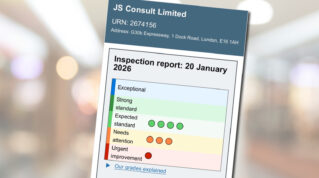
Under the revised framework, that centre sits above ‘meets expectations’. That is the structural shift Ofsted has made. Even so, more ‘needs attention’ grades are being awarded than ‘requires improvement’ were previously, as Ofsted has highlighted.
Yet in many organisations, I’ve noticed a translation happening. People mentally convert the new scale back into the old one. ‘Strong’ becomes the new ‘good’. ‘Meets expectations’ is interpreted as something less than acceptable.
That is not what the framework intends, and I’d argue it’s within our gift to address this rather than wait for an unlikely change in the framework.
Culture takes years to unravel
This matters because any inspection system brings both intended and unintended consequences. When grades were removed from teaching observations, the intention was to reflect extensive research showing both the damage caused by grading individual lessons and the lack of validity in judging teaching quality from a single observation.
Yet the culture built around grading lessons took years to unravel. Even where providers stopped using grades, teachers still asked the same question at the end of feedback conversations: “But what grade would that have been?”
The culture did not disappear simply because the system changed – something social scientists call cultural lag.
The revised inspection grades risk following the same path. Even without an overall effectiveness judgement, organisations can recreate the same pressure if they interpret the framework through the lens of the old system.
The phrase ‘meets expectations’ can sound modest. In everyday language it may imply adequacy rather than strength. But within the inspection model, it means something quite different.
It describes provision that is working as it should. Learners are benefiting. Systems are functioning. Standards are being delivered. While ambition for improvement is essential, it should not come at the expense of balance.
‘Meeting expectations’ can, and should, be regarded as success. If you have been through an inspection recently, you’ll know it’s not easy to hit every indicator in the toolkit, and I don’t think we should shy away from calling it a checklist with nuance.
Perhaps the issue, therefore, is not the wording itself but the narrative attached to it.
This matters particularly for governing boards or senior leaders further removed from the mechanics of Ofsted inspection, such as employer-providers or universities.
Understanding recalibration
Without clear explanation, some will understandably anchor the new scale to the old one. And that risks recreating the high-stakes pressure that the reforms intended to reduce.
Those furthest from the inspection process, yet accountable for outcomes, need support from leaders to understand the recalibration. The most common outcome now is ‘meets expectations’. That’s where the bell curve sits.
The revised framework’s success may depend less on Ofsted and more on how the sector chooses to use it. We can avoid the public flogging that poorer overall grades once triggered, normalise honest conversations where attention is needed, and celebrate meeting expectations as well as exceeding them.
Leaders have an opportunity to shape the narrative. That means being clear, internally and externally, about what the new grades represent. It means briefing governors and employers carefully.
The framework has shifted. The culture needs time to catch up.











Your thoughts