

Officials have quietly gifted more than £7 million to “support” a merger between two Leicestershire colleges.
On August 1, Loughborough College merged with the financially troubled SMB College Group – a year after SMB was flagged as an insolvency risk and propped up with up to £4.6 million of emergency funding.
As part of the deal, the Department for Education handed the new college group a £7.3 million grant – understood to be non-repayable as long as conditions are met – agreed loans of up to £2.1 million, and accepted plans to sell off a campus and theatre in Melton Mowbray.
It is hoped the merger will create a solvent college group under Loughborough College’s leadership, with campuses stretching across north Leicestershire.
But news of plans to sell the large 40-year-old theatre and adjoining college buildings has been met with dismay by people who fear the loss of a site for vocational training will harm the town’s already struggling economy.
Merger terms revealed
Details of the grant and campus sale were revealed by Loughborough College when FE Week sought details of the merger in a freedom of information request.
Loughborough College shared minutes of its July board meeting, which are yet to be published, which say the DfE gave the college a £7,368,770 grant to “support the merger” and a loan agreement of up to £2.1 million.
A Loughborough College spokesman said the DfE grant would be used for “strengthening essential operational functions”, to support “strategic investment” for the college group’s long-term future, and for “safeguarding the quality of teaching”.
The merger also involved the transfer of all of SMB College Group’s “property, rights and liabilities” – including its three campuses in Stephenson, Brooksby and Melton Mowbray.
Loughborough College principal Corrie Harris has taken over as the merged group’s CEO, while SMB College principal Dawn Whitemore has retired.
Campus sale plans
A previously unpublished merger proposal document written by Loughborough also referred to “plans for sale of the Melton site” and part of Brooksby, a specialist land-based campus six miles outside of Melton Mowbray.
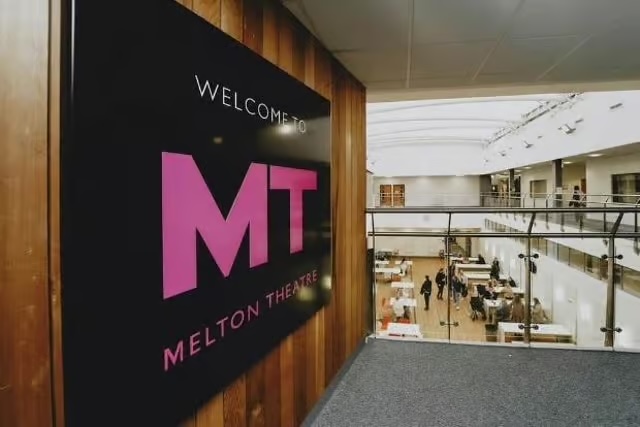
The Melton campus has long specialised in performing arts and includes a 340-seat theatre auditorium, a hospitality training centre, public library and classrooms that were mothballed during the pandemic.
Whitemore told FE Week her team worked with the council to safeguard the Melton campus and Brooksby Hall, a 16th century manor house acquired by Leicestershire and Rutland County Councils in the 1940s to establish an agricultural college. However, options worked up by the team “were not embraced” by the FE Commissioner, who was appointed to lead the DfE’s financial intervention in 2023.
She added: “All parties were well aware of the need to find a solution for the historical financial burden that the group had faced, so as part of the merger we were very open, honest and transparent as we did not want the merger to fall through.”
Consultation notices published ahead of the merger did not detail any property sales, but simply listed “benefits” for students, staff and employers such as “enhanced facilities” and “financial resilience”.
A published ahead of the merger summarised responses from 63 people and referred to concerns about the “potential closure” of the Melton Theatre, which the college warned needed “major investment” to stay open.
Local dismay
Pip Allnatt, leader of Melton Borough Council, told FE Week that SMB College Group management and the FE Commissioner withdrew from proposals to save the theatre.
He said: “We are very disappointed at the slow demise of the Melton campus even though Brooksby continues to grow.
“The Loughborough College campus is used by Melton students but it is an inconsistent and long bus journey away. The start time of some courses is prohibitive.”
Mark Frisby, a former student at the theatre who went on to teach there, sat as a governor on the college board and now runs a careers advice company, called the merger a “takeover” by Loughborough College.
He said: “I think [selling the campus] would be an enormous step backwards, a theatre for a town of our size is one of the jewels.
“That people can’t go to a local college in a town centre where buses stop is a loss for us.”
Allen Thwaites, an independent councillor on Melton Borough Council, said: “The former Melton Tech was where I first met many people who are now local business owners – they all started at Melton College.
“The facility is the victim of a wider lack of support for education that is not university-based.”
College seeking solutions
A Loughborough College spokesperson claimed “no final decisions have been made” and said management was “working closely” with Melton Borough Council to “explore viable, long-term solutions” for the theatre and campus.
They added: “We fully recognise the theatre’s cultural and community value as a much-loved local asset and are committed to carefully considering all options for its regeneration and continued use.”
A DfE spokesperson declined to comment on record but told FE Week the financial support package provided to the college was intended to establish it as a financially sustainable institution.










If a college has been flagged as an insolvency risk, who is being held accountable? What consequences do poor college leaders face?
College leaders receive significantly higher salaries, pension contributions and benefits than their ITP equivalents but when they fail, bailouts appear from a previous empty coffer!
Bailouts that are large enough to ensure the payment of salaries of the scale mentioned.
We cannot continue this “don’t worry if you fail, we’ve got you covered” system of college governance.
This is not in the best interest of learners or the communities they serve.