


Ministers have been urged not to repeat past mistakes with the government’s rollout of free AI training that aims to reach 10 million workers by 2030.
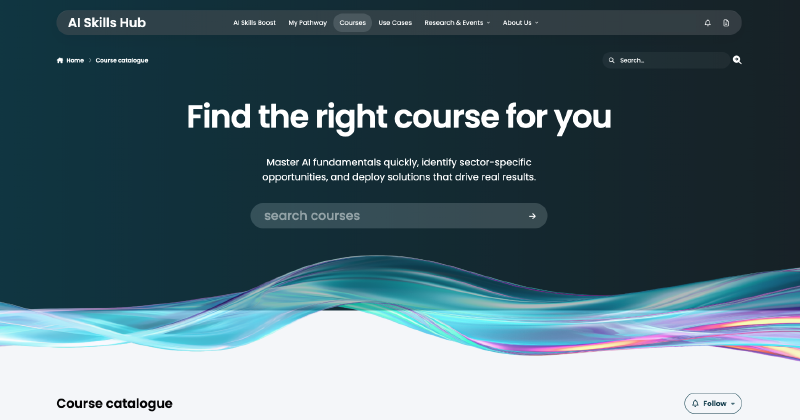
The government this week unveiled plans to make “free AI training available to everybody”, expanding its AI Skills Boost programme through an online AI Skills Hub that directs users to beginner and advanced courses developed by technology firms.
But experts have warned the initiative risks repeating the failures of the ‘skills toolkits’ platform rolled out during the pandemic, which closed after two years marred by unreliable course completion data that misled Parliament about its success.
Technology secretary Liz Kendall said the new AI hub would help deliver the government’s ambition to upskill millions of adults, with free introductory courses.
It directs visitors to enrol on free beginner courses such as Amazon’s Introduction to Generative AI, Gemini for Google Workspace, and Mathematics of Machine Learning by the Alan Turing Institute.
The hub is an expansion of the AI Skills Boost programme launched by prime minister Sir Keir Starmer in June as part of a drive to improve UK work-readiness and boost productivity.
Tech firm Multiverse is the only apprenticeship provider involved in the programme.
Lessons learned?
A notice published by the Department for Science, Innovation & Technology (DSIT) this week claimed more than one million AI training courses delivered by 11 industry partners had been completed since Starmer’s announcement.
The figure covers all courses taken by external learners and employees from partners including Amazon, BT, Google, Microsoft and Salesforce.
DSIT said, however, it could not share partner or course-level breakdowns of completion data due to “commercial sensitivity”.
Experts said that while support for AI upskilling was “welcome”, the announcement felt “familiar”.
The Department for Education spent more than £1 million on the original skills toolkit platform in 2020, which signposted users to free digital and numeracy courses.
The platform later came under fire after FE Week revealed that published take-up figures included web hits as “registrations”, and counted some course “completions” when users spent just three minutes viewing a resource.
The controversy prompted concerns from the Office for Statistics Regulation and led to the Department for Education pausing publication of the data.
Sue Pember, policy lead at adult education network HOLEX, said: “While the ambition is positive, the lesson from the skills toolkit should be that take-up and outcomes matter more than headline registration numbers.”
Paid courses
Visitors to the AI Skills Hub are required to create an account before accessing a catalogue of more than 590 courses.
Officials said the hub offered learning ranging from 20-minute modules to full university master’s programmes.
FE Week analysis of the course list found many offerings were simply being marketed through the hub and redirected users to providers’ own platforms.
Most courses from the main host organisations – Microsoft, Google and Amazon – are free, with just four of their 137 courses requiring payment.
But many others incur a fee, with around 60 per cent of all listed courses requiring users to pay.
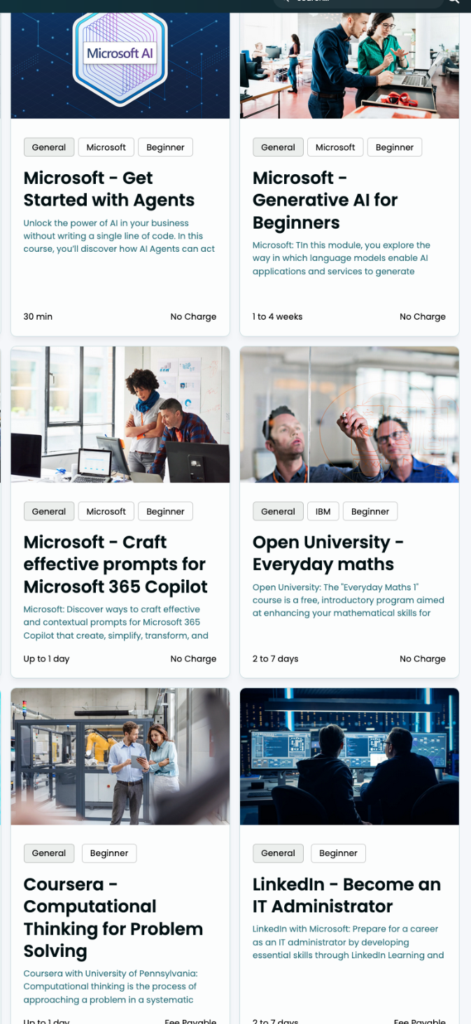
“Although the announcement says the training is free, within a few clicks users are asked to pay for some modules, which risks excluding those who most need support,” Pember said.
“Without clearer standards alignment, better design and targeted support, this risks being more of a rebrand than a step change. Or even worse, a marketing tool for selling high-cost courses.”
Pember also questioned whether the hub would support learners with low skills or limited digital confidence.
“The platform is hard to navigate and doesn’t clearly link to digital standards,” she said.
The government said a selection of industry-developed AI courses had been assessed against Skills England’s AI foundation skills for work benchmark, with learners receiving a virtual AI foundations badge upon completion.
But Pember pointed out it was “unclear how they align to national digital skills standards, which raises questions about their consistency, progression and value”.
Skills England chair Phil Smith said the agency had worked “rapidly” with technology firms to ensure courses selected for the AI Skills Boost programme provide the “quality and capability” employers need.
He added: “It’s also a huge step forward that everyone who completes these short courses will get digital badges that properly recognise what they’ve learned. It’s a simple idea that will make a huge difference.”
Smith also co-chairs the Digital Skills Council, an external advisory body to DSIT that includes representatives from industry, academia and the public sector.
Council members include senior figures from Lloyds Banking Group, Multiverse and techUK.






Your thoughts