Skip to content
23 June 2026

Latest news from FE Week

Debrief from Denmark

Though Team UK did the country proud in Herning with its haul of six medals, its 15th place in the medal table was its lowest in recent years. Anviksha Patel spoke to WorldSkills UK to find out why the UK went backwards

In the hours after the EuroSkills closing ceremony last weekend, Team UK’s competitors were determined to return to training and “go for gold” at next year’s global competition in Shanghai.

But despite the positive attitudes, there was no hiding from the fact that 15th place ranked Team UK alongside Luxembourg and Slovakia in the table of 33 competing countries.

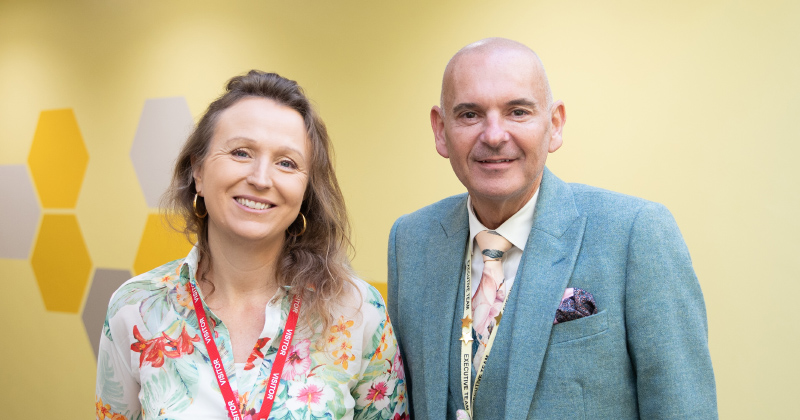
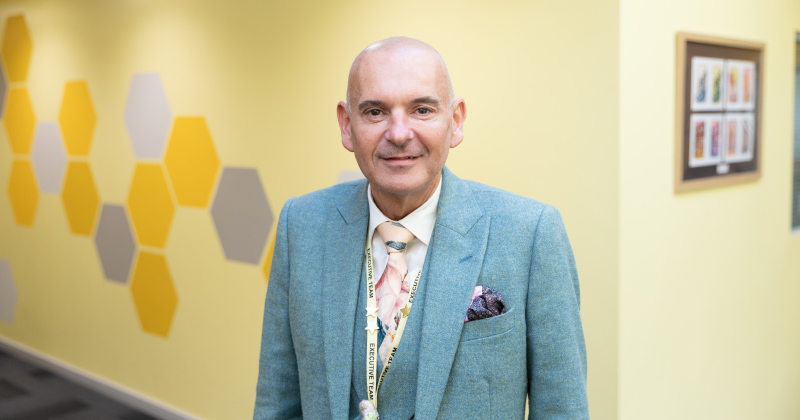
WorldSkills UK chief executive Ben Blackledge hailed his competitors’ “mature approach” after winning a bronze and five medallions for excellence, but revealed some rival countries selected more experienced competitors in Denmark.

“The amount they’ve learned and the amount of people on the flight saying, ‘we want to go home and train’, it was really positive,” he said.

“But we knew that we were going up against more experienced competition. 

“Reflecting on that, it makes me really proud of their performance, but we always want to do better.”

Blackledge explained EuroSkills has grown in size and prestige since its launch in 2008, meaning the quality of competition has risen.

EuroSkills is the first international pressure test for many members of Team UK and forms the first part of WorldSkills UK’s two-year competition cycle, so it is not the pinnacle of competition for the UK, unlike some other European countries.

“We always go in knowing that we’ve got competitors who are relatively new to our programme. And this year, we’ve got some training managers who are also new.

“There is always a tension between performance and learning. 

“We’ve got to make sure that we’re still close enough to achieving gold, silver and bronze, but also we are the only European country that has a Centre of Excellence.

“We’re the only country that is looking at how to use medals for more than prestige.”

As he looks ahead to WorldSkills Shanghai, the chief executive faces a tough financial outlook.

Funding from the Department for Education has declined year on year and WorldSkills UK now raises more from commercial income than it receives from government grants. Last year the DfE cut its grant by 15 per cent to £5.7 million.

Blackledge said the charity aimed to grow commercial income through “cash and value in kind” via industry-leading specialist training and cutting-edge equipment.

“There is more work for us to do around the collective employer voice, because looking at Germany and Switzerland and Hungary, they have strong chamber engagement and government and industry partnerships are backing their work,” he added.

But Blackledge hailed skills minister Jacqui Smith’s visit to Team UK last week which he said provided a “real boost”.

“There is absolutely value in having public support for the work we’re doing,” he said.

“We want to get Number 10 and Number 11 more involved and say, WorldSkills UK is part of our growth strategy and flying the flag for the UK.”

Blackledge added that whilst there was no prospect of extra money from the government, there was value in being embedded in policy and strategy.

Among the criteria to achieve ‘exceptional’ for participation and development in the new Ofsted inspection toolkit is a reference to “having internal and external competitions”.

Being a member of the WorldSkills UK Centre for Excellence, and having learners take part in WorldSkills UK competitions, was also listed as a selection criteria in the recent bidding round for construction technical excellence colleges. 

Meanwhile, skills minister Smith hinted at “support for WorldSkills” in the upcoming post-16 white paper.

MOVERS AND SHAKERS: EDITION 507

Emily Andrews

Director of Policy and Research, Learning and Work Institute

Start date: July 2025

Previous Job: Deputy Director for Work, Centre for Ageing Better

Interesting fact: In a previous role as an academic historian, Emily appeared on an offshoot of Who Do You Think You are. Somewhere on the internet there is footage of her telling Brookside star Claire Sweeney about her distant ancestor who ended their life in an asylum on the Isle of Man


Professional headshot photography captured with signature lighting and expert expression coaching. Studio-quality portraits delivered on location across the South West.

Claire Green

Post-16 and Skills Specialist, Association of School and College Leaders

Start date: September 2025

Previous Job: Director of Sixth Form, Northampton Schools for Girls

Interesting fact: While serving as director of sixth form, Claire completed an MA in educational leadership and launched her blog, The Sixth Form Slant, a resource for sixth form leaders that has reached readers worldwide

Best-in-class social action champions wanted for FE awards

Colleges have until October 10 to put forward staff and students for this year’s Good for Me Good for FE awards, which celebrate outstanding volunteering, fundraising and community impact across the sector.

Now in their third year, the awards shine a spotlight on individuals, teams and projects where efforts have gone above and beyond in support of communities.

The campaign was first launched in 2021 to highlight the breadth of social action in further education and is sponsored by NCFE and FE Associates, with FE Week as media partner.

Eight categories are up for grabs this year: individual fundraiser of the year, team/college fundraiser of the year, student volunteer of the year, staff volunteer of the year, project of the year, volunteering accreditation excellence, inspirational role model of the year, and outstanding long-service in volunteering.

Finalists in each category will be announced on November 19 at the Association of Colleges’ annual conference in Birmingham by AoC chief executive David Hughes and London South East Colleges CEO Sam Parrett. Winners will then be revealed at a House of Lords celebration on December 5.

Burton and South Derbyshire College’s Rob Stevenson, a volunteer first responder and veterans advocate, took home the staff volunteer of the year award last year. The public services lecturer said the award “highlights the connection between my personal pursuits and how the knowledge and experiences I gain enhance my classroom sessions”.

He added: “I absolutely love my job, and seeing the impact my personal journey has on my learners and their growth is the reason I teach.”

The judging panel again features leading sector figures, including FE Commissioner Shelagh Legrave, Education and Training Foundation chief executive Katerina Kolyva, and Dame Sally Dicketts, alongside patron Baroness Nicky Morgan.

Morgan said: “Time and again, we see how volunteering and fundraising not only benefit local communities, but also build confidence, skills and opportunities for those taking part. 

“These awards rightly celebrate that impact and highlight the sector’s powerful role in driving positive social change.”

Entries are open now and must be submitted via the Good for Me Good for FE website by October 10.

‘World-class’ government apprenticeship app flops

Apprentices have been “left stranded” by bugs in a £1.2 million Department for Education app, FE Week can reveal.

The government’s flagship Your Apprenticeship app has been criticised by MPs and industry bodies for technical issues and a lack of functionality as a probe using freedom of information laws showed only 7 per cent of apprentices had ssigned up. 

The app was created in conjunction with scandal-ridden company Fujitsu, whose Horizon system played a key role in the Post Office scandal, and students from Manchester Metropolitan University.

Education secretary Bridget Phillipson unveiled the app in February in an attempt to assist learners in tracking their progress, accessing key documents, and preparing for end-point assessments. 

However, users have encountered problems, including login failures and unresponsive interfaces. Dozens of apprentices have said the app “remains blocked on the pushed notifications screen”, meaning they aren’t able to use its tools.

The DfE admitted the app cost over £50 per user, with only 23,943 “active users”, in addition to annual running costs of £55,000.

Active users are those who have successfully signed up to the app, not necessarily those regularly using it.

One apprentice said: “The app is poorly designed. It forces users to accept notifications, and even after adjusting settings, it remains stuck on the notification prompt, making it completely unusable. Many users have reported the same issue, so emailing support feels pointless.”

Apple App Store

Another learner told us: “This app just doesn’t work right. It forces you to stay on a blank screen, but even if you change the settings it stays stuck on that screen. I deleted it, reinstalled, and still ran into the same thing. Basically, you can’t use it even if you try, so we are left stranded.”

The DfE has been informing users that the crash on the notifications prompt has now been fixed.

Manuela Perteghella, who sits on the House of Commons education select committee, told FE Week: “These reports are extremely concerning. The government needs to urgently lay out how it will fix the issues with the app and get it working for those apprentices.”

Emily Rock, the CEO of the Association of Apprentices, added: “We understand that apprentices are often time-poor, and anything that helps reduce stress and improve their experience is welcome. While technical issues with the Your Apprenticeship app are clearly frustrating for users, we support the principle behind it.”

When the government released the system it claimed to provide a “world-class experience” to learners by making it a “one-stop shop” that would “revolutionise” training and support.

It is understood the app is an extension of Fujitsu’s £14.25m contract, which ended in April, despite its promise not to bid for government work before the Post Office Horizon Inquiry concluded. 

“As part of this, we provided skilled resources to help with the development of the Your Apprenticeship app, but we have no involvement in its ongoing delivery or functionality,” a Fujitsu spokesperson said.

Manchester Metropolitan University, which was involved in early-stage development, said: “While the university is not involved in the app’s deployment or ongoing management, we continue to support the government’s efforts to enhance digital tools.”

A DfE spokesperson said: “We are pleased with the take-up of the Your Apprenticeship app so far, with over 40,000 downloads and just 40 queries regarding access or use of the app. Our Plan for Change is working, with apprenticeship starts, achievement and participation all up compared to the same period last year.

“However, we are aware of a minor bug affecting some Android users which we are working hard to resolve. We continue to work closely with apprentices as we develop this app to ensure it meets their needs.”

Staff pay recommendation will be unaffordable for ‘many’ colleges, say AoC

College staff should be awarded a 4 per cent pay rise this year, but the Association of Colleges had admitted “many” of its members will be unable to afford it. 

Following negotiations with five trade unions representing college workers yesterday, the Association of Colleges (AoC) announced its delayed 4 per cent pay award recommendation for 2025-26, a rise from last year’s 2.5 per cent proposal.

While the pay award matches the School Teachers’ Review Body’s (STRB) 4 per cent pay recommendation for school teachers, the AoC admitted it will “barely” maintain the pay gap between college and school teachers rather than close it.

The college membership body also acknowledged that many of its members will not be able to afford its recommendation this year. While 16-19 education funding has risen this year, funding for adult education has been cut by up to 6 per cent. 

The AoC urged unions to join its “united” campaign to the government this autumn for “sustained investment” in adult education funding.

Gerry McDonald, CEO of New City College and chair of AoC’s employment policy committee, said: “We understand that many colleges will find it challenging to meet our recommendation, particularly where they have large numbers of adult learners and apprentices.

“That is why we are also making a recommendation to the government to acknowledge the barriers the sector faces in raising pay. Sustained investment, especially in adult learning, is essential if we are to meet our aspiration for an appropriately rewarded workforce.”

Unlike schools, colleges decide staff pay awards themselves. The AoC’s annual pay proposal is non-binding, so colleges can award pay rises above or below the recommendation.

The University and College Union (UCU) polled its FE members in the summer and found 86 per cent were prepared to take strike action to secure an “above inflation pay rise, binding national bargaining and a national workload agreement”.

“We know many colleges will ignore the AoC recommendation,” Jo Grady, general secretary of UCU, said. 

“To truly deliver a new deal for FE, the AoC needs to come forward with a package of measures that begins to close the gap with school teachers, addresses the excessive workloads causing staff to burn out and helps create a new national bargaining framework. UCU members demanding fundamental change are prepared to take action to achieve our aims.”

Unison said the 4 per cent offer will “do little to improve the lot of support staff” in colleges.

Head of education Mike Short said: “Colleges must do more to protect their lowest paid staff from the cost of living crisis. Bills continue to rise, but wages simply aren’t keeping pace.

“Until there’s a fully funded sector that can set national pay deals, staff and students will continue to suffer.”

Andy Murray, Unite’s head of education, said: “As the joint claim emphasised we need a new, fully funded, national bargaining framework to reach binding agreements with further education employers and to raise the profile of further education with government to ensure a sustainable level of funding for the sector which enables the sector to recruit and retain valued staff.”

FE will remain severely constrained

Today’s pay award is lower than the 5.4 per cent increase to 16-19 funding rates for 2025-26 and is only very slightly higher than the current rate of inflation, 3.8 per cent.

The funding rate boost was funded by a £190m injection announced by education secretary Bridget Phillipson in May, £160m of which will go to colleges and FE providers with 16-19 cohorts.

Phillipson advised the extra cash should be used for “strategic priorities, including [staff] recruitment and retention”.

Representatives of the AoC and the National Joint Forum, made up of five trade unions representing FE teachers and staff, met in June to negotiate staff pay following the STRB pay recommendation.

But the AoC delayed making its own proposal as it had not fully considered the recent funding announcements, such as an extra £155 million to cover national insurance hikes.

At the time, colleges were estimating the national insurance cash boost would cover between 50 to 85 per cent of costs but were also unsure of in-year student growth in September.

Hughes told FE Week in June that more work needed to be done with colleges who had low 16-19 numbers.

There are a reported 35 colleges with over 20 per cent of income from adult education funding, as well as colleges with large apprenticeship funding.

AoC’s analysis today said even for the colleges that can afford to offer a 4 per cent pay award, it will “barely maintain” the pay gap with schoolteachers rather than close it.

FE lecturers earn, on average, around £10,000 less than school teachers.

The recommendation is also lower than the 10 per cent pay rise (or £3,000 increase) demanded by unions in their annual pay claim made back in April.

The pay claim also called for the AoC to take action to close the pay gap FE and school teachers’ pay within three years.

UCU said it was “nonsensical” make a recommendation that keeps FE pay lower than the school sector amid a teacher recruitment crisis.

“A pay recommendation of just 4 per cent does not deliver for staff, students and the communities that rely on good quality college education,” Grady said.

David Hughes, chief executive of AoC agreed: “The 4 per cent recommendation is the right benchmark for us to set nationally, but we recognise that for many colleges it simply will not be possible. 

“It is crystal clear that even with a 4 per cent increase, college pay remains uncompetitive.”

“What we need is a planned and fully-funded approach over the coming years to bring college pay to the level we all know it needs to be, at least in line with schools and much more competitive with industry.

“We are also urging the unions to join us in a united campaign this autumn for better adult education funding. Without it, the sector will remain severely constrained in addressing the unacceptable pay gap with schools and industry.”

Skills are the missing piece in our fight against wasted potential

When the Prime Minister asked me to take on the role of Secretary of State for Work and Pensions our vision was clear: to build a department of opportunity with skills at its heart.

This means not just supporting people when they’re out of work but giving them the tools they need to benefit from the security of good jobs.

The Department for Work and Pensions (DWP) has always had ‘work’ in its title but adding skills to our responsibilities gives us a renewed energy and focus.

It allows us to move beyond providing a safety net and allows us to be a springboard to better futures.

This is critical to building a workforce fit for the future, critical for our economy and critical for our young people who have been written off for too long.

The statistics are stark – one in eight young people are not in education, employment or training, every one of them representing lost opportunity, unused talent and wasted potential.

We cannot afford to give up on this generation. We need to be ambitious which means creating pathways that lead directly from skills development to sustainable employment.

That is why, in my first week in the job, I visited Waltham Forest College, where I witnessed this in action.

The college has a brilliant partnership with the local jobcentre.

Work coaches are on-site with students, creating seamless pathways from learning to earning.

The jobcentre works with employers and the college to deliver tailored training for roles in the local community – including the nurses, builders and rail engineers who power our economy.

On the Rail Engineering programme alone, 97 percent of students progress into employment after completing their training.

This is the innovation I want to see replicated across the country.

Our approach recognises that the challenges of economic inactivity, youth unemployment, and skills gaps are interconnected.

We cannot effectively tackle one without addressing the others.

So, by bringing apprenticeships, adult further education, skills training, careers guidance, and Skills England under DWP’s remit, we’re creating strong pathways to support the millions of people across the country.

When someone walks into a jobcentre, we want to offer them more than just support or help with their job search. We want to assess their skills, identify gaps, and provide clear routes to training that leads to employment.

The timing is crucial as we are already delivering the biggest overhaul of jobcentres in a generation, backed by £240 million investment to boost employment.

This is not just about helping people to find a job, but equipping them with skills for sustainable, well-paid employment in growing sectors.

Skills and work are natural partners. By adding skills to DWP’s job description we are building a department that truly serves opportunity, ambition, and Britain’s future economic success.

The other King’s college

Working for the King’s Foundation is no ordinary job. To do it, explains the charity’s media spokesperson Alex Schweitzer-Thompson, you have to “buy into” His Majesty’s lofty mission to “promote harmony with nature, to improve the well-being of people and the planet”, as its financial accounts describe it.

The foundation does this by teaching traditional heritage skills that have been cut from many further education and training budgets elsewhere.

Since being established 35 years ago, the charity has taught more than 115,000 students, mainly at the King’s heritage estates of Highgrove House in Gloucestershire and Dumfries House and the Castle of Mey in Scotland, with courses ranging from lacemaking and millinery to furniture-making and farming.

It’s easy to be cynical about its utopian vision of ‘harmony’, which seems a far cry from the world we live in.

“A lot of people would say that it’s very idealistic,” Schweitzer-Thompson admits. “Until you see it in practice, it’s easy to think it’s pie in the sky – that an educator can’t do that and get the results that industry needs.

“But a lot of what we do is almost disproving other people and showing that there is another way.”

The King’s Foundation’s building craft students working out what to build for their live project

Fanciful creations

We’re sitting in Schweitzer-Thompson’s car, driving across the sprawling 2,000-acre Dumfries House estate in Ayrshire that is the foundation’s headquarters, to meet students on its latest building crafts programme.

The group of eight have been tasked with designing and building an ornamental nature observation tower (“they’re not allowed to call it a bird hide, as the estate already has one”) during the course of their eight-month programme. The design they settle on will need to be approved by King Charles himself.

As they discuss what it could look like, each student suggests ideas based on their skill sets: some have basic experience as stonemasons, one is a thatcher and another a timber framer. The beauty of the collaboration is that they learn from one another’s disciplines, explains their teacher Charles, as “quite often, one skill feeds into another”.

Seeing them in action provides a poignant reminder of what construction training might have looked like before industrialisation. The grounds of Dumfries House and Highgrove are graced with dozens of fanciful follies, dovecotes, temples, belvederes, treehouses and bridges – legacies of past students’ achievements.

A shelter at Dumfries House created by former building craft students

On a group tour I joined that morning of Dumfries House’s grounds (along with American fashion designer Jeff Garner and TV show This Morning’s resident baker Juliet Sear), our guide introduced us to its “star” Tamworth pig called Hilda, who has featured in Vogue and Countryfile and “cooked with Raymond Blanc”. She is housed in a bespoke slate-shingled and thatched-roof structure that more closely resembles a swimming pool cabana than a pigsty.

The current crop of building crafts students have recently returned from placements at some of the country’s most renowned heritage sites.

Stephen, 47, a former special needs teacher who suffered “burnout” two years ago and retrained as a stonemason, was sent to the Tower of London for his. Within a fortnight, he had been offered a job there when he finishes the course, which underlines how in-demand his niche skills are.

“People were investing their time to help me, which was really kind… it makes me feel as though I’m in the right place,” he says.

Their course includes a business skills week in which students meet a solicitor, an accountant and a surveyor to build up their business acumen. Some past students have carved decorative stones to thank the King for providing their fully funded courses (each gets a £1,500-a-month bursary for living expenses too). The stones now form part of a “wall of gifts” in His Majesty’s stumpery.

King’s Foundation’s building crafts student Stephen

A new chapter

Such architectural gems are reaping financial rewards for the foundation by drawing in tourists. In the year to March 2024, its trading income exceeded donations for the first time, boosting overall income 12 per cent to £26.1 million.

A farming and rural skills training centre opened last year at Dumfries House, and the foundation is also expanding overseas. Offshoots of its School of Traditional Arts operate as far afield as Qatar, Saudi Arabia and China, while the King’s Foundation Australia is restoring a derelict estate in New South Wales to train locals in heritage crafts, modelled on Dumfries House.

But the charity has not been immune from scandal. In January, the Scottish Charity Regulator found that Michael Fawcett, the former chief executive of what was then the Prince’s Foundation, had made unauthorised payments, and that governance failed to meet standards. Procedures have since been overhauled.

The foundation is determined to turn a new leaf and is becoming more vocal about its core ‘harmony’ mission. In July, indigenous tribesmen and craftspeople from across the world were invited to an inaugural Harmony Summit the King held at Highgrove House. And Amazon is putting the finishing touches on a documentary about his harmony ideals, including how they can be implemented in education.

A beautifully designed bridge at Dumfries House provides inspiration for an artist

Sustainability focus

The emphasis on harmony means learners are made familiar with the entire lifecycle of the materials they work with.

Nick Wright, manager of the foundation’s Snowdon School of Furniture (Lord Snowdon is the foundation’s vice president), explains how before working on timber, his students are first taken for a tour of the arboretum to learn “which trees are good for timber and what diseases they have to contend with,” then to a sawmill to “think about how the wood is cut and how much waste there is”. “Nowhere else really does that, it’s quite a unique programme,” he adds.

Similarly, each year 3,000 schoolchildren go through a “farm to fork” programme developed in partnership with chef Jamie Oliver and farmer Jimmy Doherty. They sow seeds in Dumfries House’s education garden, return to harvest the vegetables and then prepare healthy meals, helping “fill the huge knowledge gap among kids of where their food comes from,” says Schweitzer-Thompson.

The foundation’s adult learners tend to stay in accommodation on the estate where their course is taught, fostering a community of makers who bounce ideas off each other and use the picturesque grounds as inspiration. One Highgrove furniture maker recently made a wooden hat block for a milliner – reviving another endangered craft, as such blocks are now “very hard to come across,” says education director Daniel McAuliffe.

Nick Wright, manager of the foundation’s Snowdon School of Furniture

A model to replicate

In an old sawmill now converted into a textile training centre, a “first of its kind in the UK” course is starting in conjunction with Amazon MGM Studios in movie and TV costume crafts. Fifty-nine applications have been received for six places to work on Amazon’s historic and fantasy productions, including Rings of Power.

Unlike standard costume-making courses, this one will put “a huge emphasis” on reducing the waste “that industry is famous for”, Schweitzer-Thompson explains. On the TV, film and magazine shoots that take place on the King’s estates, “90 per cent” of what is used is “discarded” afterwards.

The training is a good example of how the foundation runs courses as “a model for others to replicate… to show them what really can be done if you road test an idea”.

A gardener in Dumfries House education garden

Endangered crafts

The King’s Foundation has taught some of the niche skills on the Heritage Craft Association’s ‘endangered’ list, meaning that without its support they could die out. One is pargeting, a decorative plastering technique from East Anglia that has only six practitioners left. Another is traditional kilt making, taught by a villager near Dumfries House. Schweitzer-Thompson bemoans that most kilts sold on the Royal Mile in Edinburgh are mass-produced in China.

Alas, some skills like hand-stitched cricket ball making and mouth-blown sheet glass production have already died out. Plans are afoot to create a new heritage crafts centre at Dumfries House to ensure more can survive.

Saving such skills is dear to the King’s heart. At a foundation event he remarked that some “timeless skills, which are always needed really, whatever age we’re in”, were “all rather disappearing. The battle is trying to keep all the special ones”.

Milliner Emily and one of her straw hats

Hat-trick for the King

Millinery used to be big business in the UK, particularly in Luton, where over 70 million hats a year were produced. Now Highgrove is the only place still teaching straw hat-making. The programme started last year is one of two the foundation runs with Chanel, which provides discarded stock for students to revive.

The milliners use rare century-old sewing machines to plait straw into hats. One student, Sophie, who handmakes biodegradable sequins for her hats, is working on costumes for a new Disney+ series. Communications director Izzy Stephenson reveals King Charles “always makes a point of coming to meet the students” on heritage craft programmes; the recent crop of milliners met him four times.

Emily, a recent graduate, spoke to the King about the challenge of sourcing the heritage straw they need. He offered to grow it on spare land at Sandringham. Next year will see the first harvest of Sandringham wheat, to be used for breadmaking, thatching and straw hats, which will then be sold at Highgrove House.

The century-old 17 Guinea sewing machines that King’s Foundation milliners use at Highgrove House

Reviving building crafts

Foundation student Tobias has been busy reviving traditions of a different kind. Before starting his programme at Dumfries House, he travelled across France and Germany for seven months as a wandering journeyman apprentice stonemason. It is a medieval custom still practised in parts of Europe. He ventured from town to town with other journeymen in traditional clothes, taking ad-hoc work and visiting colleges, and believes he benefited greatly.

“You’re learning more of your craft, but you’re also seeing other cultures,” he says.

His teacher, Charles, was taught stonemasonry by masons from Portland in Dorset, a county once famous for stonemasonry, at courses at Weymouth College. It no longer provides them, which Charles believes is a “great shame”. “There was this great heritage there, and that’s gone and won’t come back.”

The foundation also offers a fine art foundation course in London, but McAuliffe says it is “battling against the culture of all the FE courses in fine and applied arts closing down”.

“It’s the thing that the King’s Foundation often does – when other people close things down, we open them up because we see the need,” adds McAuliffe. “The creative industry is huge.”

Buildings craft student Tobias and his teacher, Peter

Lack of assessment

The building crafts course runs alongside an NVQ, depending on specialism, but “it’s not really about the qualification”, says Charles. What matters is what students learn and who they meet. He claims their completion rate is an enviable 99.9 per cent.

The lack of assessment makes the King’s Foundation’s programmes unusual in an era when assessment is so central in FE. McAuliffe believes not getting “bogged down by assessment criteria” makes it a “fascinating place to work if you’re interested in education”.

“No one fails” on its courses, because “it’s just not possible – if they don’t perform, they’re asked to leave”, but that rarely happens. The bursary puts “an expectation on the student”, and also “breaks down barriers” for those from disadvantaged backgrounds, who McAuliffe estimates make up around half of each cohort.

Education director Daniel McAuliffe

The future

Nobody is sure whether Prince William will continue his father’s legacy and take over the King’s Foundation when he becomes monarch, although the charity would be able to stand on its own two feet if he chooses not to.

But what of the wider prospects for the heritage skills it teaches? McAuliffe believes there is a “shift” happening in society that could spell a golden age for heritage crafts, with people “understanding that luxury isn’t a pair of expensive plastic sunglasses with a logo on, but a hand-plated beaded hat that took 54 hours to make”.

Similarly, Schweitzer-Thompson points out that none of the skills taught can ever be replaced by AI, so they will “stand the test of time”.

“Maybe when everyone else has had to adapt their curriculums and totally rethink their education programmes, we might be the last one standing, still doing what we did 10 years previously.”

A flower binding session at Dumfries House
A group of young people woodcarving at Highgrove House

OfS to end TEF opt-out for colleges and small providers

Further education colleges and specialist providers are set to lose the ability to opt out of the Teaching Excellence Framework (TEF) under plans from the Office for Students (OfS) to overhaul its higher education quality assessment regime.

A consultation launched today proposes bringing every registered higher education provider into scope for a reformed “integrated” TEF from 2027. Until now, colleges and specialist providers with fewer than 500 undergraduate students have been able to opt out.

According to the OfS register, 45 colleges took part in the last TEF assessment round in 2023, while 90 chose not to. Several principals told FE Week the process was considered too bureaucratically burdensome for the scale of their higher education offer, with little perceived benefit.

The Association of Colleges (AoC) said a new quality assessment model for higher education must be “proportionate and cost-effective” for colleges.

Arti Saraswat, senior policy manager for higher education at the AoC, said: “We are concerned that the requirement for all colleges to participate in technical excellence frameworks will add to the burden and cost of regulation for colleges, particularly those with small volumes of higher education.

“We look forward to working with the OfS to establish a proportionate and cost-effective approach to regulating the quality of HE taught in FE colleges.”

The changes follow last year’s independent review of the OfS, which recommended integrating the TEF with the regulator’s category B conditions of registration to create a more coherent and transparent system.

Under the plans, evidence requirements for student outcomes would be “simplified” and folded into TEF assessments, using an “expanded” set of post-study indicators. 

Measures for student experience will also be broadened and “aligned” with the existing B condition criteria, which are currently assessed separately.

Unlike Ofsted, which has dropped overall effectiveness grades, the OfS intends to retain an overall TEF rating alongside separate judgments on student experience and student outcomes.

Providers will continue to be judged gold, silver, bronze or ‘requires improvement’. But the OfS has set out a tougher package of incentives and interventions. 

A ‘requires improvement’ judgment could see a provider stripped of degree-awarding powers or restricted in the number of students it can recruit. Bronze providers may also face student number limits and be barred from some kinds of public funding, while gold institutions could benefit from reduced regulatory scrutiny through longer TEF awards and potential access to new funding streams.

Jean Arnold, deputy director of quality at the OfS, said the new approach was designed to give students “a clear view of the quality of teaching and learning delivered by every registered university and college” and to “incentivise institutions to push for the highest level of quality.” 

She added: “We know most universities and colleges in England are already delivering high quality education. It’s important that we minimise the burden on those institutions and recognise their good work, while responding more quickly when quality falls short or students are not being properly supported to succeed in their studies.”

The OfS also said it would recruit more academic and student assessors with college-based HE experience to evaluate providers. 

The consultation outlines a “consideration” to include apprenticeships, which are currently optional, in new-style TEF assessments, and flags a “double regulation” risk with Ofsted.

“Including apprenticeships in the assessment of the student experience could constitute double regulation of this provision, given the responsibilities of Ofsted in this area. We would welcome feedback on the extent to which apprenticeships should be included in the future TEF.” 

The consultation is open until December 11, 2025.  The OfS plans to publish decisions in spring 2026 and launch a more detailed consultation in autumn 2026 ahead of the first new-style TEF cycle in 2027-28.

Careers service shake-up ‘rebrand, not reform’, say MPs

MPs have criticised an “absence of information” about a planned merger of the National Careers Service (NCS) with Jobcentres, almost a year after plans to reform the government services were first announced.

In November last year, the Department for Work and Pensions (DWP) announced that it would create a more “personalised” jobs and careers service for jobseekers by combining the two services.

This was part of a promised “groundbreaking new approach” to the services Jobcentres provide, designed to improve links with local employers and support people who want to progress at work or retrain.

But a report by the MPs on the work and pensions select committee has called for a more “ambitious and energetic approach” to the merger, after the DWP only provided “an outline sketch” of its plans.

The committee praised the merger as an “exciting opportunity” to change Jobcentres’ culture of employment support to a longer-term focus that tries to build people’s “sustainable careers” with a greater emphasis on “aspirations and development”.

However, it warned that the merger risks being “little more than a rebranding exercise” if the DWP fails to resolve issues such as contract changes for NCS staff, accountability structures and devolution arrangements. 

Committee chair Debbie Abrahams also called on the DWP and DfE to draw up a joint national strategy for adult careers services, which are currently a “hodgepodge arrangement” due to shared responsibility between the DWP, the DfE, local government, private providers and FE colleges.

NCS providers also told the committee they are “operating under uncertainty” due to a lack of clarity about how their services will be integrated into the new service.

The National Careers Service is a Department for Education (DfE)-funded service for adults run by nine regional “prime contractors”, who manage a network of “sub-contractors” with a total annual budget of about £55 million.

In June, the DWP announced a single “pathfinder” pilot of an improved jobs and careers service in Wakefield, West Yorkshire, with a budget of up to £15 million, but “did not set out details” of changes it is testing, the committee said.

A government announcement said the pathfinder Jobcentre will offer careers events, more personalised appointments and extra training for staff, but did not set out how or whether National Careers Service staff would be involved.

In their recommendations, the committee said the DWP and DfE should work together to develop a national strategy for careers advice to guide the objectives of England’s “confusing and fragmented system”.

The government should also review funding for the “under-valued and under-utilised” NCS, to fund additional sessions with people with the greatest need.

Other recommendations include protecting the “distinct role and skills” of careers advisers who move into the new jobs and careers service, confirming how it will measure its success, and publishing a transition plan for integrating the NCS with Jobcentres.

The committee has also published a separate report calling for “more detail and ambition” from the government on its plans to shift the work Jobcentres do “away from monitoring benefit conditions and towards employment support”.

A government spokesperson said: “As the committee recognises, we are already delivering ambitious reforms through the new Jobs and Careers Service, helping people to find good jobs with lasting career progression.

“We are determined to build a workforce equipped with the skills for the future economy and are working hand in hand with employers to deliver tailored recruitment support to more than 8,000 of Britain’s biggest businesses. 

“Alongside the biggest overhaul of jobcentres in a generation, we are investing £240 million to get Britain working and grow the economy by guaranteeing every young person the chance to earn or learn, tackling inactivity and joining up work and health support as we deliver on our plan for change.”