Skip to content
24 June 2026

Latest news from FE Week

Sam takes on martial arts world — and wins

A Central College Nottingham (CCN) sport student battled his way to victory in two gruelling mixed martial arts (MMA) bouts to be crowned amateur world champion in the sport.

Sam Clark, aged 19, who studies a BTec extended diploma in sport, travelled to Portamao in Portugal for the international sporting kickboxing association world championships after winning the British national title last November in Birmingham.

Sam competed in the under 70kg category and won two fights to take home the title.

In the first, Sam won by executing a choke-out in one minute and 20 seconds of the first round and then, in the second fight, by virtue of an arm lock that forced his opponent into submission after one minute and 40 seconds, again in the first round.

Sam said: “I am delighted and thrilled to have won the world title, it’s not quite sunk in yet. I’m going to keep training hard with my MMA and ultimately the dream is to try and go semi-professional within the sport.”

Main pic: New amateur world champion in mixed martial arts Sam Clark, from Central College Nottingham

Children get sporting chance

Yorkshire primary schoolchildren have been enjoying PE lessons from East Riding College childcare learners.

Year 2 youngsters from nearby Bay Primary School had 16 sessions, across nearly two months, from the group of 18 college students.

They are all working towards level three BTec diplomas but were using the skills and knowledge developed as part of a sports leadership course undertaken in addition to their main course.

One of them, 18-year-old Charlie Vickers, said: “It’s been great fun leading the sports sessions with the children — they’ve been a joy to work with.”

The sessions involved a wide range of sports and activities including football, tennis and netball.

Matt Jeffery, college sports officer, said: “This experience is perfect for those who wish to pursue a career in teaching as it really does add another string to their bow.”

Main pic: College childcare learners with pupils from Bay Primary School. East Riding College students from left: Charlie Vickers (front light blue), Louise Dunn (back light blue), Stacey Normington (royal blue) and Emily Palmer (navy blue) all aged 18


Video earns Sophie praise

A West Cheshire College student who suffers from myalgic encephalopathy (ME) has been recognised by a number of national charities after filming a video to raise awareness of the condition.

BTec level three art and design learner Sophie Lees wanted more people to understand the daily struggles that she and other sufferers face, as well as raise awareness about the symptoms.

“The condition makes me extremely exhausted and it is very debilitating,” said the 20-year-old.

“I have received so much support from people within the college to help me through my studies and I wanted to show people who may suffer from ME or any other condition the fantastic support available here.”

For the video Sophie re-enacted how it feels to suffer from ME by giving staff and students around the college, including principal Nigel Davies, a heavy jacket to wear.

It was sent to different ME charities and received recognition from them, including the ME Association which Sophie said was a “great feeling”.

Main pic: ME sufferer Sophie Lees

Ministers to review ‘questions’ over UTC programme in wake of Black Country closure

Questions over Former Education Secretary Lord Baker’s University Technical Colleges (UTCs) programme will be reviewed by ministers after questions from an MP over the closure of the Black Country UTC.

Skills Minister Nick Boles said it was important the government asked itself “is this programme as successful as it can possibly be” before agreeing to open more of the institutions that, as reported by FE Week, have been fraught with issues around recruitment and attendance.

Mr Boles made the comments during a Commons debate on UTCs, tabled by Walsall North MP David Winnick, who raised concerns about Black Country UTC, which will close in August after around four years and following an inadequate Ofsted inspection result.

Mr Boles told the Commons: “I think it is very important now at the start of a Parliament that we look at this programme and we ask ourselves is this programme as successful as it can possibly be before we launch ourselves into the process of opening more institutions like this, which is something that we as a government are very firmly committed to do.”

Mr Boles said he hoped Mr Winnick understood that government had to “take some risks” when it was trying to “improve and innovate”, and said it was a “huge matter of regret” that the college had been forced to close “so soon after it opened and after so much taxpayers’ money was invested”.

The Minister re-assured Mr Winnick that the UTC programme received a lot of attention from both officials and elected politicians in the Department for Education, and added: “It would not have been a surprise to the department or officials that this college was in trouble, but of course it wasn’t until that second Ofsted report that the trouble perhaps crystallised.”

Mr Boles said the government was “firmly committed” to the UTCs programme, but promised to “look at all questions on how the model works”, including issues of recruitment and sponsorship.

UTCs are 14 to 19 institutions, often run by one or more academic or commercial sponsors, which allow learners to follow a technical route from an earlier age. Black Country UTC opened in 2011 and is now one of 30 currently open. Hackney UTC will also close in August.

See edition 141 of FE Week, dated June 15, for more.

Chartered status body for FE finally arrives

The Privy Council today announced that the Queen had approved the grant of a Royal Charter to the Institution for Further Education in a first for the sector.

The Institution for Further Education, set up in 2013 by Lord Lingfield to pave the way for a new chartered membership organisation for colleges and training providers in the FE sector, has been granted its Royal Charter.

The institution will be devoted to developing the potential, reputation and standing of the further education sector.  Its mission will be to bring together the best training providers across the sector and collectively to promote, recognise and celebrate their professionalism and success.

Lord Lingfield said: “This is a  historic and long-awaited development. The new Institution will give the sector its first ever Chartered body.   It will be governed by the sector, for the sector.

“It will be part of the work of driving forward professionalism in further education, celebrating and building on what we do well, and bringing together the best performing organisations to take that work further.

“It will showcase what is best about the sector. I look forward to it helping to achieve for the sector a status both nationally and internationally equivalent to that enjoyed by our higher education colleagues.

“I am grateful to everyone who has helped us get here. There is much to be done to make the new Chartered corporation ready to open its doors to members. But we can move ahead knowing now that the principal uncertainties are behind us.”

Just over a month ago many in the sector were growing concerned that plans for an FE Chartered Status quality mark had “stalled” with no mention of the scheme in party manifestos and little in the way of news on its progress.

Plans, originally drawn up by the Department for Business, Innovation and Skills (BIS), for the Royal seal of approval to be granted to high-achieving FE institutions were revealed in July 2012.

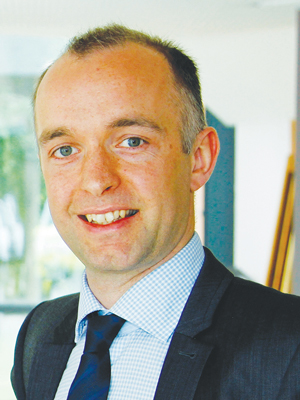
It was almost another year before the appointment of Tory peer Lord Lingfield (pictured main, above) as chair of the Institution for Further Education (IFE), a not-for-profit company set up to launch the quality mark.

In March 2014 he told FE Week he expected “negotiations to be completed within months” that would allow for the quality mark to be launched. An FE Week survey on the mark was carried out in May last year unveiling concern it could simply “sink without trace.”

However, the body’s arrival today was welcomed by Skills Minister Nick Boles, who said: “I was happy to support The Institution of Further Education’s application for a Royal Charter and look forward to their work promoting world-class skills provision.

“A skilled workforce, able to meet the needs of employers and industries, is vital to our continued economic growth. Bringing together FE providers to encourage high standards will ensure that qualifications are sought after and respected by employers and learners.”

Former FE students shine at AoC gold awards

Former college learners who have gone on to shine in their chosen profession were celebrated the Association of Colleges (AoC) gold awards ceremony at the Houses of Parliament.

A world renowned designer, a Turner prize-winning artist and a former international football referee were among those who received awards, along with the colleges that taught them.

The awards were presented last night by AoC charitable trust chair Lord Willis of Knaresborough.

Lord Willis said: “So often we do not celebrate what is really brilliant about the FE sector.

“I do get awfully fed up of universities constantly telling ups what brilliant alumni they have and celebrating the people with great successes and it’s wonderful to see the FE sector doing exactly the same.”

Those being celebrated included designer and former Croydon College student John Rocha, artist and former Luton Sixth Form College learner Elizabeth Price, ex-referee and Rotherham College alumnus Howard Webb and Labour and co-operative MP Lucy Powell, who went to Xaverian College.

Also receiving an award were Muslim hair and beauty salon owner Mary Al-Khudri, from Barnet & Southgate College, University of the West of Scotland Professor and former Coleg y Cymoedd student Julien Baker, Carl Lygo, Vice-Chancellor of BPP University, who went to Doncaster College and Leeds Rhino rugby captain  Kevin Sinfield, who attended Oldham Sixth Form College.

Lord Willis said the “raft of talent” on show at the awards would leave audience members asking ‘is that really what’s happening in the FE sector? Is that really what we can achieve?’

“And the answer is, yes it is,” he said.

On receiving his award, Mr Rocha urged young people to copy his example and “follow your dreams”.

He said: “I have been lucky throughout my career, to do something I love, and to be successful at it, to have this work acknowledged in this way is a very real honour.

“Needless to say without the foundation of my education and experience in Croydon, I would not where I am today. It really was a wonderful experience and a really enjoyable time in my life.”

Alongside the award winners, each of the colleges and their alumni nominated a future star — someone in the same field as their college’s winner who had shown the talent and the determination to follow in their footsteps.

Barnet and Southgate College  nominated level two hairdressing student Brishna Safi, aged 35,  Coleg y Cymoedd nominated A Level biology, maths and physics student Calum Haggett, 18, Croydon College put forward fashion diploma student Morgan Coghlan, 16, while Doncaster’s future star was business and administration student Nathan Forster, 21.

Olivia Cummins, 18 ,  a Luton Sixth Form College BTec Level three diplomas in art, design and graphic design student was also nominated, while Amy Clinton, an A level PE, maths and biology student was Oldham Sixth Form College’s nominee, Rotherham College put forward HNC level four media production student Alisia Angel,19, and Xaverian College put forward Maryam Watson, an AS Level in government and politics, maths, history and photography student.

Main pic, from left: Mary Al-Khudri, Carl Lygo, Lucy Powell MP, Julien Baker, Elizabeth Price and John Rocha

Happy VQ Day! Vocational learning celebrations mark eighth annual event

Happy VQ Day! Today will see the efforts of vocational learners up and down the country celebrated.

It is the eighth annual VQ Day and so stay tuned to feweek.co.uk for Twitter updates of #VQDay events, below.

And also look out for edition 141 of FE Week, dated Monday, June 15, for a 16-page supplement covering all things VQ Day — including coverage of last night’s VQ Day Awards, expert articles, and plenty more besides.

Click here for the FE Week guide to VQ Day events taking place over the next month.


‘Don’t assume’ £900m cuts falling on FE colleges, Boles warns MPs

It should not be assumed that “very large” in-year cuts facing the Department for Business, Innovation and Skills and Department for Education will all fall on the FE sector, Skills Minister Nick Boles has told MPs.

Speaking at the end of a Westminster Hall debate in Parliament held in anticipation of tomorrow’s VQ Day celebrations, Mr Boles sought to re-assure fellow MPs that the £450m savings bill faced by each department would not fall “entirely” on colleges and independent learning providers.

He also sought to defend an earlier 24 per cent cut to this year’s adult skills budget, claiming the prioritisation of apprenticeship funding had “necessitated rather larger cuts” to the remaining cash.

Nic Dakin
Nic Dakin

In response to a question from Labour MP and former college principal Nic Dakin, Mr Boles said: “While I cannot go into detail, because it would be way above my pay grade to do so, he should not assume that the only way of cutting the unprotected part of the DfE budget is by cutting the funding for 16 to 19 education including that funding that goes of FE colleges.

“He should also not assume that the only way of cutting part of the BIS budget is by cutting the funding that does to FE colleges.

“No doubt everybody will have to make a contribution but he should not assume that those very large figures of cuts will fall entirely on the sectors that he so admirably represents in this house and this debate today.”

On the 24 per cent cut, Mr Boles said the government was justified in its attempts to focus funding on apprenticeships and away from areas of “lower value”, citing government survey figures which he claimed showed that a level three apprenticeship boosted earnings by 16 per cent, while a level three non-apprenticeship course boosted earnings by just four per cent.

He said: “I am not for a minute suggesting full time FE courses don’t have a positive impact, they do, but their positive impact on people’s earnings are not as high, not nearly as high, as apprenticeships.

“There are positive impacts from full-time courses, but the averages do suggest that it is sensible to do what the government has been doing which is to shift resources out of full-time FE courses.”

Liam Byrne
Liam Byrne

Mr Boles was also grilled by Shadow Skills Minister Liam Byrne, who said his party would “constantly focus” on ensuring that apprenticeship “quantity is not at the expense of quality”, adding that the biggest challenge facing the Minister was the funding settlement with which he has to contend.

He said: “If we are to fix the productivity gap, we have got to support technical education in a radically new way. The minister will know about the fact some colleges are now quite simply unviable. Many colleges are now already on the brink.”

Mr Byrne said England needed a system of technical education “worth its name”, adding that what currently existed was a system of “piecemeal, ad-hoc system of institutions, exams and funding entitlements which are sort of yolked together, often in a very rudimentary way”.

He added: “It does not allow young people a clear line of sight from the age of 14 for a technical education career that goes up to the degree level of skill.

“In our schools there has to be a bigger and bolder effort to expose more 14-year-olds to technical education. I seriously hope that we make serious progress on building a strong careers service over the course of this Parliament.

“It was I think the CBI of all people that said before the election that the careers advice system in this country was in their eyes ‘on life support’.”

Sectors unite to plead with Education Secretary and Chancellor on 16 to 19 funding

Further Education sector leaders have joined forces with senior representatives from the schools world to plead with Education Secretary Nicky Morgan and Chancellor George Osborne for an increase in 16 to 19 education funding from 2016-17.

Martin_DoelTwo joint letters, signed by Martin Doel (pictured right), chief executive of the Association of Colleges (AoC), Brian Lightman (pictured below left) and general secretary of the Association of School and College Leaders (ASCL), were sent on Friday (June 5).

Further signatories from the FE sector were David Igoe, chief executive of the Sixth Form Colleges Association (SFCA), and Sir Geoff Hall, general Secretary of the Principals’ Professional Council.

The note to Ms Morgan, which was also signed by senior representatives from the Freedom and Autonomy for Schools National Association, Independent Academies Association,  and Grammar School Heads Association, urged her to “raise the issue of the current low funding of 16-19 education with the Chancellor” before next month’s Budget.

It said: “We are urging you to address the growing and significant disparity in the funding for the education of 16-19 year olds in schools and colleges.”

The Conservatives pledged before the general election to freeze education spending for five to 16-year-olds at its current level, leaving 16 to 19 funding vulnerable.

And the letter, along with a supporting paper, is dated June 5 and comes with the Treasury having announced that £900m of in-year departmental savings would hit the Department for Business, Innovation and Skills and the Department for Education, with each department expected to save £450m as part of £3bn of overall cuts.

It also comes amid news the Skills Funding Agency has delayed until after next month’s Budget the annual announcement on whether third quarter growth requests would be approved. It also left the door open to requests for growth, with delivery having already taken place, being turned down for even key areas such as 16 to 18 apprenticeships and traineeships.

Nevertheless, the joint letter to Ms Morgan added that “the substantial dip in funding, between pre-16 education and higher education is already having significant and adverse consequences for their [providers] continued ability to provide choice and high quality education to 16 to 19-year-olds”.

It called for “action” over the funding problems, looking ahead to the 2016-17 budget cycle, adding that the “next comprehensive spending review Brian-Lightmanshould re-evaluate the resources needed for a good education for all 16 to 19-year-olds in state education”.

The letter to the chancellor, which was signed by the same FE and school leaders, said: “This joint letter urges you to consider the issue of the current low funding of 16-19 education with the Education Secretary as part of your discussions with her before your July budget.”

An AoC spokesperson told FE Week today: “The issue of funding for 16 to 19-year-olds is so important to all of us, and that’s why we decided to work together on a joint approach to the ministers.

“We are calling on the government to make sure that funding is spread fairly across all stages of education to ensure young people have access to the high-quality education they deserve.”

An SFCA spokesperson said: “This letter highlights how serious the crisis in 16 to 19 funding actually is. The message from SFCs, FE colleges, academies, grammar schools and others is the same — ongoing funding cuts are seriously damaging the life chances of young people.
“Sixth form funding should not be regarded as a soft target. It is already difficult to offer students much more than a part time educational experience. A review of education funding is now urgently required.”

An ASCL spokesperson said:  “Put quite simply the current funding level for 16 to 19-year-olds in our schools and colleges is totally inadequate.

“This has already led to a decrease in contact time for students with their teachers, a narrowing in the range of subjects that institutions are able to offer and a reduction of the broadening curricular activities that help develop the life and employability skills so essential for young people’s future prospects.

“The situation will become critical over the next few months as schools and colleges have to find funding to cover the increases in employers’ National Insurance and teachers’ pensions contributions, as well as salary rises and general inflation.”

A Department for Education spokesperson said: “Thousands more students are staying in education or training after the age of 16, giving them the skills and experience they need to thrive in modern Britain.

“We have ended the historic and unfair funding difference between schools and colleges from the 16 to 19 funding formula, and are maintaining funding rates for 2015/16 so they can plan their future offers for students. The funding is sufficient for every full-time student to undertake a full timetable of courses.

“It is for schools to set their own budgets, taking into account our national funding formula, which ensures pupils on the same courses are funded equally, no matter where they study.”

He added: “We are determined that post-16 providers have the resources they need to ensure young people in FE can enjoy high quality courses.

“The base rate of funding for 16 to 19-year-olds in the academic year 2015/16 will continue at the same level as in the academic year 2014/15: £4,000 for full-time 16 and 17 year olds and £3,300 for full-time 18 year olds.

“From 2016/17, funding will be increased for those that get grades B and above – or equivalent – in four or more A levels and large TechBacc programmes, giving schools and colleges the green light to further help their most able students.”