Skip to content
24 June 2026

Latest news from FE Week

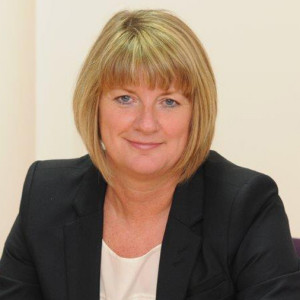
Lord Willis of Knaresborough, outgoing chair, Association of College’s charitable trust

As a teenager, Lord Willis of Knaresborough, a former head teacher, ex-Liberal Democrat MP and outgoing chair for the Association of College’s charitable trust, dreamed of a career in football.

But although Burnley-born-and-bred Willis (known, less formally, as Phil) played for Burnley FC junior team, he wasn’t good enough to make the cut for the senior team.

Having left school to unsuccessfully pursue his dream, he found himself faced with going to one of Burnley’s 200 cotton mills to find work, until his postman father, George, intervened.

From left Willis’s daughter Rachel, Willis, wife Heather and son Michael on election night 2005

“My father frogmarched me back to school and said: ‘You’re not going to be a postman’,” says Willis.

George’s insistence on education stemmed from his own experience — he had passed his 11-plus but been unable to go to grammar school because his parents couldn’t afford the uniform.

“He resented that until the day he died,” said Willis, aged 73.

“And the fact that my brother then failed his 11-plus was horrendous, and then that I had passed it but wanted to give up grammar school, he couldn’t cope with that at all — so he was determined, he took me back and pleaded with the head to have me back in the sixth form.

“And it was the best thing he ever did.”

Willis’s childhood, he says, was “a very happy childhood, but a very unhappy one”.

George had been a prisoner of war for four years in the Second World War and returned “a wrecked man”.

“He could never really engage with humanity after he came back,” says Willis.

Willis’s mother, Nora, was a nurse from Donegal, and it was she who instilled an understanding of the importance of qualifications in him from an early age.

“What my mum wanted to be most of all was a district nurse on a bicycle, and she had to be a registered nurse rather than a state-enrolled nurse to do that,” he explains.

Willis and Michael at family farm in Donegal

“And I can remember literally being in her bed in the morning when the postman came with a letter saying she had passed and become a registered nurse.

“And I couldn’t understand why she was crying — it seems very strange to me, because I read the letter to her, and it clearly said that she had passed, and yet she was in bits. I think I recognised, even at that early stage, how important education was.”

Nora died when Willis was 13, leaving George “just utterly and totally broken” and “drinking heavily” as a result.

“School was the only thing that kept me sane, and school was just fabulous,” says Willis.

“I had wonderful teachers who picked me up, disciplined me, made sure my nose was kept to the grindstone, and without them I would have definitely gone off the rails — because I was a very troublesome kid.

“It is meeting inspirational people who you aspire to be like that actually keeps you motivated to move forward.”

From left: Willis with daughter Rachel, son in law Tim and wife Heather in the House of Commons

Despite his early experience of tragedy, Willis, a dad-of-two, comes across as gruffly optimistic. “Looking back, there wasn’t a lot wrong,” he says.

“I can remember listening to kids as a head, and when I was teaching, bemoaning what they haven’t got, and I used to get really irritated — you know, you’re fit and healthy and you’re reasonably intelligent, you know, you can do whatever you like.”

Once back at school, Willis developed a new ambition — teaching.

“I think it was because I had so many inspirational models as teachers when I was at school,” he says.

“Not only were they good teachers, but they just loved imparting knowledge.”

The idea of inspiration, for Willis, seems to have been central to his work as a teacher and an MP, and later with the Association of Colleges.

“I think inspiration and aspiration go together,” he says.

“You cannot aspire to something unless you have somebody or something which you regard as inspirational — it’s a mistake to just say you should aspire to go to university.

“Why would anybody aspire to go to university, unless they knew people who were inspirational, who were at university and the same goes for technical skills. That’s the bit that we’ve got to connect with.”

Thirst for equality for people, whether they are adults or children, who are genuinely in need of support in order to be able to access a level playing field, it’s become a life mission


After completing teacher training at City of Leeds and Carnegie College (now part of Leeds Metropolitan University), he moved through various teaching roles in and around Leeds, including senior master at Primrose Hill High School, where he met wife Heather, then a PE teacher.

In 1979 he became head of Ormesby School in Cleveland, which was pioneering the integration of severely disabled youngsters into mainstream education.

“I just loved that school,” he says. “We integrated every child with severe physical disability south of the River Tees into a school over a period of about four years — and it was an inspirational journey.”

Willis may have loved the school, but he hated being a head.

“I became a head in 1978, the year before Margaret Thatcher became Prime Minister,” she said.

“So virtually all my headships from ’79, right through to ’97, were really under a regime which changed the face of education.

Willis and wife Heather at their wedding in 1974

“And I just felt as a head that what I was doing was balancing books. I was a bureaucrat — and I wasn’t good at it… being in a classroom was so much more exciting than that.”

He was headhunted to run John Smeaton Community School, where he set out to introduce the same principles of integration.

“Being able to say no child should be left behind because of their disability — that really has stayed with me in my political life,” he says.

“That thirst for equality for people, whether they are adults or children, who are genuinely in need of support in order to be able to access a level playing field, it’s become a life mission.”

For the first time, Willis found himself living outside of his school’s catchment area in a small village and became embroiled in a local environmental campaign against a landfill site slated to be built on the outskirts of the village.

“And I realised that unless you are on the inside when decisions are made, you can forget about affecting change,” he says.

“And so I said, ‘Right, I’m going to start’.”

Willis and wife
Willis and wife

In 1985, and at the age of 44, Willis joined the Liberal Party, which would later merge with the Social Democrats to form the Liberal Democrats, and in 1988 won a seat on Harrogate Borough Council, becoming council leader two years later.

His arrival in Parliament was a surprise — he ran against Norman Lamont in what had been considered a safe Tory seat, Harrogate and Knaresborough, and took it from him in 1997.

But a seat in Parliament wasn’t all he had hoped it would be, thanks to Labour’s huge majority.

“When I was leader of Harrogate Borough Council, I genuinely felt I could make a real difference,” he says.

“You could literally make decisions and officers would carry them out.

“And coming into Parliament was a huge disappointment because suddenly you find you are in a minority party on the periphery of things.

“So you found other ways to work, really. I spend a huge amount of time in my constituency.”

Lord Willis with his dogs Molly and Murphy saved from pound in Ireland 14 years ago

In 2010, Willis lost his seat in the Commons, but gained one in the Lords.

“I didn’t like it when I first came,” he says.

“It was just too polite, too genteel, everybody was so nice — I am suspicious, you know?”

And it was in the Lords, unimpressed by free schools that he moved away from school policy and developed an interest in science policy, and FE.

“I felt the FE agenda was totally and utterly ignored over the last five years,” he says.

“I cannot remember a single serious debate on FE in the House of Lords. It was merely a pawn of the Department.”

But, he says: “It’s its own worst enemy —the FE sector constantly says, ‘We’ll make it work. No matter what’s thrown at us, we’ll make it work’.”

And, although he’s not sure he’d go back into politics now — “Politicians are regarded with such contempt, I just don’t think it’s worth the sacrifice, to be honest,” he says — he’s got no regrets about making the leap.

“It’s been this wonderful opportunity,” he says.

“Doors open, and you either go through the door, or you don’t, but don’t moan about it if you didn’t.”

 ————————————————————————————————————————————–

It’s a personal thing


What’s your favourite book?

I don’t read fiction, but two years ago I came across Stieg Larsson and The Girl with the Dragon Tattoo, and I read the whole trilogy right through to The Girl Who Kicked the Hornets’ Nest and I just loved that genre. So I’m addicted to Swedish crime/thriller fiction. I just found it really quite exciting.

What do you do to switch off from work?

Willis aged 6
Willis aged 6

Sport. I follow Leeds United and I’m addicted to sport. When I was a youngster football and athletics were my great passions. Now, my wife and I regularly go to Leeds United games. We follow cricket, and we go to different places in the world to watch Formula One.

What’s your pet hate?

You’ll find this very petty, but I hate people who are fit and active parking in disabled and parent-only bays in supermarkets. My wife pulls me away and says: “Don’t say anything” — but it really annoys me. It’s petty, but it’s true.

If you could invite anyone, living or dead, to a dinner party, who would it be?

Former Lib Dem leader Charles Kennedy. He was a great friend of mine and we were incredibly close for a number of years, and I used to spend, when I first came into parliament, far more nights than I should have done in his flat in Victoria where we used to have an eclectic group of people who would come and just simply chat and tell stories and raconteur, right through until the early hours.

Since I left the House of Commons, I lost touch with Charles, so his death came as a huge shock, and I would dearly love to have him back at a dinner party and to be able to rekindle some of those wonderful experiences. He was quite a remarkable human being.

What did you want to be when you were growing up?

I wanted to be a footballer — that was my great desire.


Vet in the Netherlands — an inspiration for England?

Skills Minister Nick Boles told MPs this month the Dutch system of vocational education and training might be a model for England. Jeroen Onstenk outlines the Dutch system and considers whether Mr Boles might be onto something.

Vocational education and training (Vet) in the Netherlands is primarily part of the education system, rather than the labour system.

There is an elaborated system of technical and vocational education, with two pathways (apprenticeship and school-based), both including (in different proportions) school-based as well as work-based learning.

There were two separate Vet systems — a school-based system and an apprenticeship system — up until 1996, at which point various vocational learning paths and school types (the apprenticeship system and school-based vocational education; initial and adult vocational education) were integrated.

In the Dutch Vet system, hybrid qualifications are nowadays a broad and accepted part of the educational system. Highest level Vet qualification (level four) gives right of entrance to higher professional education (HPE), and, after successful completion of at least one year in HPE, also to university.

The Vet system is under constant pressure to respond to changing societal and economical demands.

Vocational education is increasingly regarded as the beginning of a vocational learning career, rather than as the culmination of skills acquisition.

During working life, workers will have to attend further training and change jobs on a number of occasions. This means that vocational education must afford a broad basis including technical, organisational and communicative as well as learning skills.

The system has been thoroughly restructured several times in the last 20 years. New courses and new contents as well as new didactics for vocational schools and apprenticeship have been implemented to respond better to the needs of a changing labour market.

The aim was to introduce, from 2005, a well functioning, clear and transparent qualification structure for senior secondary vocational education, which offers the possibilities of constant renewal and is an effective instrument for both the labour market and the educational field.

As it turned out, it took to 2012 before a new system was accepted. By then, the concept of competence had become so disputed that it was discarded by the ministry.

One important lesson is that Vet can become a recognised part of the education system as a whole

However, the main characteristics of the new system (focus on occupational tasks; integration of knowledge and skills; broad qualification profiles) were kept intact.

Although the Vet system is mainly funded by the government, employers are on at least two levels actively engaged in the Vet system — defining qualifications/setting standards and delivering training and learning opportunities (internship and apprenticeship).

Regional Vet colleges are developing from what could be called industrial training centres into innovative learning centres, in order to prepare students better for working life as well as lifelong learning and citizenship.

One important lesson is that Vet can become a recognised part of the education system as a whole. Equality of esteem can be promoted by opening up educational career possibilities (into higher education) as well as opening up realistic labour market opportunities.

There are some lessons to be learned from the qualifications restructure: reducing complexity; clustering professions (‘broad occupational profiles’); developing vocational tracks, organising and implementing successful hybrid qualifications.

Also lessons could be learned about the educational opportunities and the role of schools in Vet. Vocational pedagogy is broader than just preparing for specific jobs but is aiming for broad development with regard to vocational competence, citizenship and learning competency.

Although certainly not without difficulties or always successful, engagement of companies in such a broad aiming Vet and cooperation with schools in delivering high quality vocational education turns out to be possible.

By this cooperation and networking schools can compensate for lack of specialist expertise in vocational subjects.

Click here for an expert piece on comparison of the English Vet system with that of the Netherlands by City & Guilds UK managing director Kirstie Donnelly

New inspection framework — what you need to know

The new common inspection framework handbooks have been published. Phil Hatton takes a closer look at what FE should be taking note of.

So, with all the hype associated with the launch of the new CIF covering all Ofsted inspection remits, what will be the difference for FE?

Looking at the wording that should guide inspector judgements, very little in terms of what is looked at has changed.

Safeguarding and the emphasis on the Prevent strategy had already been introduced on some inspections prior to becoming a requirement on July 1, as had the GCSE resit emphasis on English and maths.

READ MORE: Apprenticeships – what are Ofsted inspectors looking for?

The biggest change in methodology will be the move away from grading individual sector subject areas, to a grade for each type of provision, such as 16 to 19 study programmes, adult learning programmes, apprenticeships, traineeships, provision for high-needs learners (a new term for students with learning difficulties and/or disabilities) and full-time provision for 14 to 16-year-olds.

Such judgement grades are already given at the back of current reports in the form of a grid table, so these are in reality being given more prominence as a separate report section.

These judgement grades for each type of provision will incorporate (as they do now) outcomes for learners, the quality of teaching, learning and assessment and the effectiveness of leadership and management, but with an additional judgement around the personal development, behaviour and welfare of learners (PDBW will be a new acronym soon).

Although it sounds ‘different’, some of the judgements required for the latter category have been in previous inspection frameworks. It will include taking pride in their work and becoming self-confident and assured.

Work-related learning, including external work experience, is a key part and needs to be ‘purposeful’.

Next comes development of personal, social and employability skills, including English, maths and ICT skills. This will be the real grade judgement deal breaker, especially where a college is in an area where English and maths has low school pass rates so GCSEs must be retaken (and I know I bang on about it, but the national averages in schools are just too low).

Then comes some slightly sloppy wording around ‘achieving their core learning aims, specific units of their main vocational qualifications and relevant additional qualifications that enhance their learning, along with standards of work’ (taken from what is traditionally outcomes and probably better placed there if judgements are to be clear on inspection and in self-assessment).

Work-related learning, including external work experience, is a key part and needs to be ‘purposeful’

New, but with prominence by the Further Education Funding Council 20 years ago, is ‘learners’ use of the information they receive on the full range of relevant career pathways’ (again, as colleges have been very good at this the relevance to me is ‘are schools to be judged as stringently as colleges no doubt will be?’).

Very prominent in inspection will be how well learners know how to protect themselves from the risks associated with radicalisation, extremism, forms of abuse, grooming and bullying, including through the use of the internet (I would encourage all colleges to really rethink their approach to educating learners around safe use of the internet, it became a ‘hot topic’ for particular inspectors over the last few months, featuring heavily in some reports).

A new slant, taken from schools, is how programmes allow all learners to explore personal, social and ethical issues and take part in life in wider society and in Britain. And yes, ‘Every Child Matters’ has resurfaced just as many have been dropping it with ‘how well learners know how to keep themselves fit and healthy, both physically and emotionally’.

PDBW will also include attendance and punctually, including participation in any distance learning activities (online learning and the use of virtual learning environments gaining prominence and again will need to be more explicitly addressed in self-assessment reporting).

Perhaps the most school orientated of all are ‘compliance with any guidelines for behaviour and conduct’. The single most frequent comment I get from younger college learners is how they respect their teachers because they treat them like adults. Hopefully colleges will score highly here.

New ‘data-driven’ BIS Vet research centre hits the spot

The new aims and role of the Centre for Vocational Education Research (CVER) has become clearer since a consultation event this month, as Andrew Morris explains.

The new Centre for Vocational Education Research (CVER), funded by the Department for Business, Innovation and Skills (BIS) was the focus of attention at a major gathering of college leaders and researchers this month.

Directed by Professor Sandra McNally of the Centre for Economic Performance at the London School of Economics, the new research centre will be developing much needed evidence aimed at improving the delivery of vocational programmes and involvement of employers. A clearer picture of routes to employment and better information about their value should be the result.

The programme for the new centre was set out and discussed at the latest workshop of the Learning & Skills Research Network.

In an encouraging sign for the sector, feedback from consultation events such as this will help shape the centre’s programme. Close links with the Education and Training Foundation are also planned as it develops the ideas for a vocational education and training (Vet) centre set out by the McLoughlin Commission on Adult Vocational Teaching and Learning (Cavtl).

With its wider brief as a hub for practice development and innovation the Cavtl Centre will complement the data-driven research of the BIS centre. By connecting quantitative research with the development of practice the prospects of an evidence-based vocational education system look a little brighter today.

The prospects of an evidence-based vocational education system look a little brighter today

A top priority for the LSE-based research centre is to develop a robust descriptive overview of the system. The actual experience of young people and the value of the various routes they take needs to be analysed; it’s good to hear the CVER will tackle this.

By simply describing the Vet system systematically an important first step will have been taken. The absence of common language and concepts between employers, awarding bodies, colleges and government — let alone students and parents — has been a real block on progress, a point emphasised strongly at the LSRN workshop.

The bread and butter work of the new centre will be working with large datasets, run as it is by a consortium of economists from four institutions, led by the LSE. By linking data together it will explore the value of vocational options, participation decisions, the quantity and quality of provision and influences on employer demand.

At last, important data about student journeys, qualifications, progression and employment, currently sitting in separate silos will begin to be connected up, throwing light on what is actually happening. But as researchers at the workshop pointed out: getting hold of it, cleaning it up and matching up records will be no easy task.

The economic value of vocational learning is not all that motivates students, as college leader were quick to point out at the workshop. Young people can be passionate as well as judicious in the way they make their choices.

Qualifications alone fail to capture all aspects of success in learning. Even data about levels can be misleading where different types of learner are lumped together inappropriately. At levels one and two for example some may be catching up after a poor time at school, others starting afresh after graduation.

Research centres serving the sector have come and gone — remember the Learning & Skills Research Centre and the Wider Benefits of Learning? What is vital is that this one not only crunches the numbers but also engages with the practice, policy and business communities to ensure that its work gets multiplied by others and its findings are taken on board.

It is refreshing to see the CVER addressing this at the outset. It will be producing documentation for the large datasets for the wider research community to use.

By engaging practitioners in developing the agenda and interpreting results it is more likely that people will sit up and take notice of the findings further down the line. And that’s what counts in the end if research is to make a difference.

Bailey ‘disappointed’ to lose BIS committee chair as Wright wrestles away post in second MPs’ vote

Adrian Bailey has told his “disappointment” at losing the chair of the Business, Innovation and Skills (BIS) Select Committee after Iain Wright wrestled the position away in a second round of MPs’ voting.

West Bromwich West MP Mr Bailey held the position for the last Parliament, leading inquiries into apprenticeships and adult numeracy and literacy among others, but lost to Hartlepool MP Mr Wright by 247 votes to 281, it was announced today.

City of Durham MP Dr Roberta Blackman-Woods had dropped out of contention in the all-Labour field after the first round of voting last night having won 165 votes to Mr Bailey’s 197 and Mr Wright’s 218.

Mr Bailey said: “Obviously I am disappointed to lose but Iain has great expertise and interest in FE and its link to productivity in the economy.

“I am sure he will use it to strengthen government policy in this area.”

Mr Wright, a former Apprenticeships Minister under Gordon Brown, enjoyed the backing of former education committee members Ian Mearns, Alex Cunningham and Bill Esterton. Dr Blackman-Woods had been backed by former Shadow Education Minister Rushanara Ali and former Shadow Skills Minister Gordon Marsden.

Meanwhile, Stroud MP Neil Carmichael will lead the Education Select Committee after also being taken to a second round in the alternative voting system that was employed for committee chair appointments for just the second time. He beat Tim Loughton, MP for East Worthing and Shoreham, by 294 votes to 252.

Caroline Nokes, MP for Romsey and Southampton North, had made up the rest of the all-Conservative field but dropped out after the first round, in which she received 182 votes to Mr Carmichael’s 224 and Mr Loughton’s 191.

Mr Carmichael, who takes over from Graham Stuart, said: “I am very excited by the opportunity. First of all I am delighted that obviously so many people voted for me, I don’t know the figure yet but I am very pleased. Secondly I am obviously really exhilarated with the challenge ahead in terms of the reports we will be able to have through the next five years.”

He said the next issue he had to address was the committee’s make-up of MP members.

“I have heard one or two people express and interest in joining and so when they are all appointed we will get on with the task of doing some reports,” said Mr Carmichael.

“One thing I am going to be doing very soon is discuss with the new Business, Innovation and Skills chair, Iain Wright, our proposal of doing a joint report on dealing with productivity gap. We have already discussed this on the assumption that we both would win, we actually talked about it a week or so ago.”

Mr Stuart, Conservative MP for Beverley and Holderness, held the post during the last Parliament and had been a committee member for a further three, but put his name forward to become chair of the culture, media and sport committee. However, the role went to Conservative MP for Hereford and South Herefordshire Jesse Norman.

The political make-up of both committees is yet to be announced and will be decided through negotiations between the political parties. The parties will then hold internal elections to decide who takes their shares of seats.

In the last Parliament, the two committees each had five Conservative members, five Labour members and one Liberal Democrat member.

Of the previous membership of the BIS committee, Scottish Labour MPs Ann McKechin, William Bain and Katy Clark lost their seats in the election, as did Liberal Democrat Mike Crockart, while Conservative Brian Binley stood down.

Labour MP Paul Blomfield and Conservatives Caroline Dinenage, Rebecca Harris, Robin Walker and Nadhim Zahawi remain in Parliament, but Ms Dinenage, Mr Walker and Ms Harris will not seek election to committees having received government jobs.

Of the last education committee’s membership, all but former Liberal Democrat Bradford East MP David Ward were re-elected to Parliament in May, including Labour MPs Pat Glass and Siobhan McDonagh and Conservatives Dominic Raab and Craig Whittaker, although Mr Raab has a government job.

Internal party elections of committee members are expected to take several weeks now the chairs have been elected.

Main pic above, from left: Adrian Bailey, Iain Wright and Neil Carmichael


Edition 142: Christine Slaymaker, Gerard Garvey, Steve Gibson & Ian Pretty

Farnborough College of Technology principal Christine Slaymaker has announced her retire next academic year.

She has been at the college for nearly 15 years and will stay in post until the appointment of the new principal to allow a planned and smooth transition.

“I have been truly privileged to be able to serve the communities of North Hampshire and North West Surrey for the last 15 or so years,” said Ms Slaymaker, who was given a CBE for services to FE in the Queen’s Birthday honours last year.

“I have enjoyed all my time with the college and I pay tribute to the hard working, diligent and professional staff who have achieved so much in terms of national accolades and plaudits but also for each and every individual learner who studies with us. It is undoubtedly the case that without them, I could not have enjoyed such a rewarding career.”

No date has been set for the appointment of Ms Slaymaker’s successor other than 2015/16.

Governors’ board chair Professor Martin Earwicker said: “The college has been most fortunate in having such an outstanding leader as Christine. All of us — governors, staff and students past and present — wish to extend our thanks to Christine for all she has achieved and to wish her every happiness for the future. The governors have started the difficult job of finding a worthy successor.”

And a new principal is set to take over at Newcastle Sixth Form College, which is a division of Newcastle College Group (NCG).

Gerard Garvey is currently principal at Barnsley Sixth Form College but will succeed Steve Gibson at Newcastle in August. He will also take up a position as a member of the NCG executive board.

“My focus will be on making Newcastle Sixth Form College the preferred A-level choice of study for young people in the region by developing quality and working to guarantee that learners achieve the highest success rates and make exceptional progress,” said Mr Garvey.

Joe Docherty, NCG chief executive, said: “Gerard is an experienced leader, who has achieved outstanding success rates and highly responsive partnership work with schools, learners and parents.”

Meanwhile, the new chief executive of the 157 Group is to be tax expert and public private relationships adviser Ian Pretty, currently a senior vice president for public sector at Capgemini UK.

He is due to take up the post on September 7 when current executive director Dr Lynne Sedgmore retires after seven years leading the 157 Group.

Mr Pretty’s previous roles include director of strategy at HM Revenue and Customs (HMRC) and director of strategy at the Cabinet Office.

Sarah Robinson, 157 Group chair and principal of Stoke on Trent College, said: “Having held a number of senior positions in both central government and the commercial sector, Ian brings a wide range of skills and experience to the group as we continue our influential work to raise the profile and importance of FE and skills.”

His appointment follows Dr Sedgmore’s retirement announcement in February, bringing an end to her 35 years in the sector. Mr Pretty was not available for comment.

FE Commissioner issues college merger guide as he concedes ‘there’s not enough cash to keep going like this’

Further Education Commissioner Dr David Collins has issued a 38-page guide to college mergers as he acknowledged “there is clearly not enough money for the sector to continue as it is”.

In an accompanying letter to college chairs, principals and chief executives, he offered his view of the sector landscape as one in which “rationalisation and collaboration is the new order of the day”.

He said “significant amounts of internal efficiencies” were still possible at some colleges, “notably in increasing class sizes, reducing the percentage of income spent on staffing and ensuring support staff numbers are appropriate to the size of the institution and what it can afford,” and that technology was also being explored as a means of reducing costs.

But, he said: “More and more colleges, however, feel that they gone as far as they can in these areas and are beginning to explore ways of working more closely together, rationalising their offers and ensuring greater value for money.”

He added: “The truth of the matter is that there is clearly not enough money for the sector to continue as it is and rationalisation and collaboration is the new order of the day.”

Dr Collins went on to outline how his team had carried out a number of structure and prospects appraisals (SPAs) in its first 18 months. “In a number of cases the outcome of such an SPA has been a merger or federation,” he said.

Among such mergers has been Norton Radstock College, which was visited by the FE Commissioner after an inadequate Ofsted rating, with City of Bath College, to become Bath College two months ago.

And in November Skills Minister Nick Boles approved plans for Bicton College, in Devon, to merge with the Cornwall College Group (TCCG). Dr Collins had inspected specialist land-based Bicton College after the Skills Funding Agency (SFA) raised concern about its “financial health”.

Meanwhile, Newham College, Tower Hamlets and Redbridge College are forming the Federation of East London Colleges, and Exeter College and Petroc College, both in Devon, are also in talks.

The trend prompted FE Commissioner adviser Joanna Gaukroger to review 18 college collaboration models, including merger, federation and shared services between December and January.

Among the report’s three other FE Commissioner adviser authors was Phil Frier who, shortly after taking over at debt-ridden K College as interim principal two year ago, said its merger three years earlier had failed. He then oversaw its successful break-up last year.

Nevertheless the advisers’ investigation resulted in a number of conclusions, ranging from “there is no one ‘right’ structural model for colleges” to “the success of any model is in planning and implementation”.

It was also concluded that “bringing institutions or systems together does not necessarily mean that everything has to be harmonised and uniform” and “following the ‘technical’ start date of the new structure, leaders need to be highly visible to their new teams and strongly focused on delivering their planned benefits”.

Dr Collins said: “In summary, new collaborations and new structures tend to be successful where the decision to change has been taken on logical and evidence-based grounds, subject to rigorous assessment and careful implementation.

“They can create valuable economies of scale, protect and improve student access and progression, and address issues of poor quality.

“There is much good practice in the sector about how to ensure that these important features are realised, and a willingness by those who have gone through the process to share their views and experiences with others.

“For those beginning to consider this route, a phonecall or visit to those who have come together successfully could pay dividends.”

FE funding cuts protest taken to Parliament as college lecturers tell MPs how classrooms are being hit — and learners suffer

Hundreds of staff and students from FE colleges descended on Parliament yesterday as part of an FE Week-backed campaign against funding cuts to adult education.

The lobby event, organised by the University and College Union (UCU), gave FE staff the chance to explain directly to their MPs the impact the reduction in the adult skills budget (ASB) was having on their classrooms.

It has been estimated that the ASB has been reduced by 35 per cent since 2009, and funding for adults over the age of 19 on non-apprenticeship courses is set to be slashed by up to a further 24 per cent in 2015/16, as was announced in March.

Additionally, a further £450m is due to be cut from the Department for Business Innovation and Skills (BIS) in-year budget with FE earmarked to provide some of the savings, while the same figure is is set to be cut from the Department for Education.

Sally Hunt, UCU general secretary and right) Caroline Lucas MP, Brighton Pavilion
Sally Hunt, UCU general secretary, and (right) Caroline Lucas MP, Brighton Pavilion

Sussex Coast College A-level history lecturer Justin Wynne was among the protesters and he said the cuts were “devastating” and were having a “detrimental effect” in his college already.

“We are seeing increasing class sizes to create efficiency savings,” he said. “Which although it’s not necessarily a bad thing in some areas is going to have a detrimental effect in some areas, particularly A-level, where class sizes will increase into the late 20s and 30s.”

“The amount of time students get too – ideally students are supposed to have 540 guided learning hours, but to make efficiency cuts, they’re increasing how much you deliver in a week to get the most out of each member of staff, increasing their workload therefore the balance between work and home is damaged, increasing stress.”

Sara Romero, a support worker at Falmouth Marine College, part of Cornwall College, agreed.

“There’s definitely been an impact on the front-line work I’m doing – there’s less support for people who need the support and there are plenty of them,” she said.

“There are redundancies, fewer teachers, disenchantment, people don’t feel valued, students are not getting the best service that they can and neither are the teachers that work there.”

In response to the cuts, many colleges have already begun to shed jobs – in the last few months Leeds City College has announced 146 possible job losses, as have Bradford College (140), East Kent (40), Lewisham and Southwark (112), Petroc (no figure announced), Stafford (no figure) and Telford (85) colleges, along with Birmingham Metropolitan, where 250 posts were at risk.

Catherine West MP for Hornsey and Wood Green and (left) Rob Goodfellow, UCU president-elect

Sally Hunt, UCU general secretary, said around 200 MPs — more than a third of England’s MPs — were contacted as part of the event.

She said it was “a lobby very early on [in the Parliament] that will be telling MPs about how much we care about FE in our communities and how very, very scared and angry we are as representatives of those colleges about what this government is doing to FE”.

She said: “It is not enough to say ‘we care about FE and we want to protect it’.

“What we need out of today are positive substantial commitments from your MP to say they will do every thing they can, in the chamber, with this government, with the relevant departments to lobby on our behalf to protect what we know is an important part of every town.”

The event was backed by Green MP Caroline Lucas. She said: “I think it’s no exaggeration to say that the very existence of adult education is in jeopardy.”

Skills Minister Nick Boles spoke in Parliament last week to defend the cuts. On the 24 per cent cut, he said the government was justified in its attempts to focus funding on apprenticeships and away from areas of “lower value”, citing government survey figures which he claimed showed that a level three apprenticeship boosted earnings by 16 per cent, while a level three non-apprenticeship course boosted earnings by just 4 per cent.

He said: “I am not for a minute suggesting full time FE courses don’t have a positive impact, they do, but their positive impact on people’s earnings are not as high, not nearly as high, as apprenticeships.”

A UCU petition calling for the cuts to be reversed, and believed to have been signed by more than 42,000 people, is expected to be handed in to Parliament in the next few weeks.

Visit www.fefunding.org.uk/sign-the-petition to sign the petition.

Labour leadership hopeful Andy Burnham says apprenticeships ‘central’ to campaign

Andy Burnham has said apprenticeships and technical education are central to his bid to become the next Labour leader.

The Leigh MP made the comments during a speech he gave in Crewe this morning as part of his leadership campaign.

Mr Burnham announced he would be establishing an “expert panel”, led by Pat Glass MP, which he said would “advise me on how we can make parity between academic and technical education a reality”.

He also repeated his pledge to extend maintenance loans to apprentices, a suggestion which caused a backlash on Twitter last week when he was mistakenly thought to have been considering a return for the failed apprentice FE tuition loans policy.

Mr Burnham said: “Why shouldn’t young people who want a technical education be given help to travel across the country, and relocate there like university students, to get access to the best courses?

“The life chances of too many young people are left to chance, depending on where they live, or who they know.

“If the same kind of financial support for students was available to apprentices, then they would be able to move to a different part of the country to complete the training best suited to them.

“The best candidates would be matched to the best placements.”

He called for change to start with the language used to describe training, which he said was “coded and vague”.

“If we want to value quality apprenticeships, let’s call them what they are: a technical education,” he said.

“Speaking with a bit of clarity has got to be the first step to giving our young people a clear choice about their careers.”

He said young people who aspire to go to university route had “clear goals to aim for”, while others did not, causing them to “lose their way”.

He said: “When starting school, the message to all young people should be clear: if you put in the hours, and if you meet the required standard, you will gain a solid, prestigious qualification which will open up a good opportunity for you beyond school.

“That could be a place at university. Or it could mean a high-quality apprenticeship.”

He also repeated promises for a Ucas-style system for apprenticeships, similar to the Ucas Progress scheme currently being delivered.

He said such a scheme could “do a huge amount to lift aspirations in this country”.


Picture: Creative Commons/NHS Confederation.