Skip to content
24 June 2026

Latest news from FE Week

Former Deputy PM Clegg could face BIS and DfE merger question in Lords committee grilling

Former Deputy Prime Minister Nick Clegg could be grilled by Lords tomorrow morning on whether the Department for Education (DfE) and Department for Business, Innovation and Skills (BIS) should merge.

The ex-Lib Dem leader is due before the House of Lords Social Mobility Committee and is expected to face a number of questions covering related issues such as Coalition strategy and how government oversees the skills system.

It comes as part of the committee’s ongoing investigation into the transition between school and work, with committee members having heard from DfE and BIS officials, among others, last week.

The peers, chaired by Lady Corston (pictured right), are looking to find out more about a group of young people they have dubbed “the missing middle” — the 40 to 50 per cent of 16 to 19-year-olds who are not classified as Neet — not in employment, education or training — or following the traditional route of A-levels and university.Baroness-Corston-feat

Mr Clegg, who had responsibility for social mobility in the last Parliament, is due to be the first witness at the committee’s second hearing, from 11.05am.

A committee spokesperson said: “Questions the committee are likely to put to Mr Clegg include how do you define social mobility, and what factors do you think influence upward social mobility, particularly for school leavers? What consideration was given to the ‘missing middle’ in this strategy?”

She said the committee might also ask which of his government’s social mobility policies were most successful, what he would suggest to improve upwards mobility, and whether the skills system should be brought together into one department, rather than split across the DfE and BIS.

In the following session at 11.50am, the committee will hear from a range of labour market experts, including Professor Andy Green, director of Economic and Social Research Council Centre for Learning and Life Chances in Knowledge Economies and Societies  at the Institute of Education.

Professor Paul Gregg, professor of economic and social policy and director of the Centre for Analysis and Social Policy at the University of Bath is also expected to give evidence along with Professor Ken Roberts, Professor of sociology, social policy and criminology at the University of Liverpool.

The session will be covered live on Twitter by @FEWeek, using the #HLSMC hashtag.

The committee’s third hearing is expected to take place on Wednesday, July 22, but it is not known who the witnesses will be. The committee is due to report its findings by March 23.

Job question yet to be decided as Niace and Inclusion reveal ‘strategic alliance’ to become full merger

The jobs future of staff at the National Institute of Adult Continuing Education (Niace) and the Centre for Social Inclusion (Inclusion) was today uncertain after it was revealed their “strategic alliance” would turn into full merger.

Niace, based in Leicester and employing 65 people, and Inclusion, based in London and employing 20 people, announced their alliance in February and said at the time that future merger could not be ruled out.

And that merger was announced this morning at the Into Work convention, in London’s Queen Elizabeth II centre. It is hoped the move will create an “even stronger voice promoting citizenship, inclusive economic growth and a stronger and fairer society”.

Current Niace chief executive David Hughes will head up the merged organisation, while Inclusion chief executive David Simmonds will step down, although FE Week understands he plans to remain with the organisation in another role.

Mr Hughes said there “were no plans for any other job losses” in connection with the merger, but he couldn’t rule them out, particularly with the government spending review on the horizon.

He added Niace’s offices in Leicester and Cardiff, and Inclusion’s offices in London were all expected to remain open.

A Niace spokesperson told FE Week said it was unknown what the new organisation’s name would be.

He said: “We’ve got to look at all of these things together, so the next stage is consulting with members, supporters and so on for the next few months. We won’t be able to do anything until after our AGM in November.”

But, he added, the process would be “democratic”.

David Hughes
David Hughes

Mr Hughes said: “Over the next few months we will be engaging our stakeholders, members and supporters to agree our future priorities.

“The outcome will be a new, dynamic organisation which will translate research findings into practical, market-tested policy to help people get the opportunities they need to succeed in work and in life.”

Currently, publicly-funded Niace operates under the guidance of a 14-strong board of governors while Inclusion, a limited company, does not.

And as a limited company, Inclusion will not have to consult quite in the same way, but a spokesperson said: “We are in continuous discussions with Niace — there’s a lot of details to sort out and we’re just at the beginning of that.”

He added that it was hoped the merger process would be completed by January 1.

Mr Hughes said: “Both organisations have contributed greatly across learning, skills and employment policy, research and development.

“Through our strategic alliance it has become clear that we can be an even stronger voice promoting citizenship, inclusive economic growth and a stronger and fairer society.”

dave SIMMONDS cesi
Dave Simmonds

Inclusion chief executive Dave Simmonds OBE said: “Our aim is that next year a new organisation will be born that will champion employment, skills and learning for all – especially for the unemployed and those on low incomes.

“Together we will build a new organisation that has a strong policy voice, high standards of research and will be stronger and more sustainable.”

Niace chair Maggie Galliers CBE said the aim was for the new body to “build a reputation as the ‘go to’ think tank with national influence in learning, skills and employment”.

She said: “The Niace board is clear this merger will help secure the long term future for our work, and provide us with a powerful voice on lifelong learning, skills and employment — promoting the vision for a society in which everyone has opportunities to learn and be supported to achieve their ambitions in life, community and work.”

Niace’s AGM will be held on Wednesday, November 4.

Are Lib Dems set for an FE college-educated leader?

The final votes in the contest to lead the Liberal Democrats were being cast today with the prospect of an FE-educated man at the helm proving the bookies’ favourite outcome.

Former House of Commons Education and Skills Select Committee member Tim Farron (pictured main), who revealed in an FE Week profile interview in February that he did his A-levels at Lancashire’s Runshaw College rather than the local grammar school sixth form, is 1/50 on with Paddy Power to succeed Nick Clegg as leader of the Lib Dems.

He is up against Norman Lamb (pictured inset), who went to Norfolk’s former grammar school-turned state boarding school Wymondham College and was given odds of 12/1.

They are the only contenders in the race to replace Mr Clegg, who stepped down following the party’s performance in May’s General Election when it dropped from 56 MPs to just eight.

Westmorland and Lonsdale MP Mr Farron, who was Lib Dem president from 2011 to 2014, served on the select committee for a year from 2005 and has told of his support for the sector saying that viewing vocational education as only for “kids at the lower end of achievement levels” was “an insult to them and it’s an insult to the subject, and it’s an insult to FE actually, and it’s a cop-out”.

Mr Lamb, MP for North Norfolk, served as Health Minister between 2012 and 15, and before that was Parliamentary Under-Secretary at the Department for Business, Innovation and Skills. His biog on the Lib Dem website described him as having “supported the government’s work to create more apprenticeships for young people”.

During a leadership election hustings he said: “I have a record of fighting and winning on liberal values at national level and I think I can deploy that in the party’s interest.”

However, Mr Farron said what the party needed now was his own ability to “be different sound different, be spiky, get attention” to prevent it being ignored.”

The leadership contest result is expected to be announced tomorrow. Odds listed above were correct at time of publication.

Local authority in Lewisham Southwark College takeover bid to address ‘lack of imagination and robustness’

Southwark Council has called on the FE Commissioner to support its bid take over half of Lewisham Southwark College, criticising it for “a lack of imagination and robustness in curriculum, in strategic and financial planning”.

victoria mills southwark council
Councillor Victoria Mills

The council’s cabinet member for children and schools and chair of the corporate parenting committee, Councillor Victoria Mills, has written to commissioner Dr David Collins.

She put forward a takeover proposal for the part of the college that was Southwark College before it merged with Lewisham College in 2012.

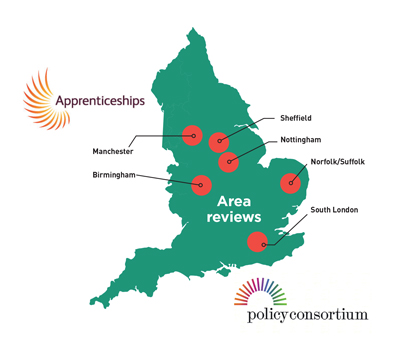
It comes amid an area-based assessment of South East London’s FE and skills provision, consisting of two structure and prospects appraisals at Greenwich Community College and Lewisham Southwark after they were both served with inadequate Ofted ratings — the second in a row for Lewisham Southwark, which is currently in administered status.

And in addition to the Ofsted blows, the merged college’s £290k ‘Lesoco’ rebrand proved a failure, as exclusively revealed by FE Week.

The 30-page Southwark Council takeover proposal (pictured left) is called Raising standards and developing skills in further education in Southwark — a prospectus for change.

It reads: “Put very simply, a second inadequate rating is simply not good enough with a lack of imagination and robustness in curriculum, in strategic and financial planning.

Chris Bilsland
Chris Bilsland

“As a stakeholder with the interests of the Southwark learner front and centre, this is why we must now seriously re-evaluate the position of FE provision in the borough and describe a new prospectus.”

College governors’ board chair Chris Bilsland said its “model of FE is not broken,” while the Department for Business, Innovation and Skills and Dr Collins were yet to comment.

However, the proposal was described as “interesting and understandable” by former Lewisham principal Dame Ruth Silver, who left in 2008 after 17 years to chair the Learning and Skills Improvement. But she also expressed concern about the college’s future under council control.

She told FE Week: “It feels like a return to the past when colleges were too often neglected by their local authorities who always put schools first — they have to, it’s the law.

“I want to see colleges in equally nourishing hands and that for now — but maybe not for long — means leadership of high calibre, governing bodies who execute their roles with knowledge and wisdom and the strongest sense of service to both place and its peoples.”

Dame Ruth Silver croppped
Dame Ruth Silver

Southwark College was rated as inadequate before it merged with Lewisham, which had a grade three rating at the time (then termed satisfactory, but ‘requires improvement’ under the current common inspection framework).

However, the prospectus suggests they be demerged, with all Southwark provision being wound down before closure next month.

There would then be a transitional management team taking over in September, with competitions to secure new provision over the autumn and winter.

The new Southwark provision would then open in September next year, with delivery phased in until the following September, when the college would be fully operational.

The prospectus added: “Early indications from the destination survey suggest that very few Southwark residents are planning to attend the college from September.

“We will however offer a support and guidance service to secure alternative provision for those who have expressed a preference to attend the college. Students who are on two year courses would be supported to transfer to other colleges.”

Southwark
Southwark Council takeover prospectus for part of Lewisham Southwark College

The council’s proposal further suggests the majority of Southwark provision be based at a central hub in Waterloo. It also proposes a “radical approach… to start afresh, to devolve the commissioning responsibility and buildings in Southwark to the borough”.

It continues: “The borough would then award the FE contract(s) and take responsibility for the provision.”

The proposal comes with a letter from Councillor Victoria Mills, in which she says: “We strongly believe that for too long our residents have been let down by the FE offer in Southwark. Solutions have been tried, but each has been left wanting.

“Students are coming out of Southwark’s schools with great potential to build on their personal success. And as a borough we are job rich.

“The employment opportunities in Southwark are simply fantastic thanks to the highly ambitious regeneration of the borough by the council and our partners.

“Sadly, there is no high quality local college of choice to help make the transition between the two.”

She added: “Our mission is that by 2016 Southwark learners will attend an innovative college that truly responds to the needs of our young people, adult learners and local employers.”

Lewisham Southwark College, which has around 13,600 learners, defended its plans to turn around performance.

Mr Bilsland said: “The college absolutely understands and shares the frustration felt by the London Boroughs of Southwark and Lewisham at the college’s historic poor performance.

“However, the model of FE provision is not broken. Rather we need to focus all our collective efforts at improving quality and performance and invest in the future. That is our plan and we are confident we will succeed in this.”

A college spokesperson pointed to appointment of a new senior management team to be led by current Newcastle College principal Carole Kitching, due to start over the summer, and plans to invest more than £40m in a new Southwark campus.

AoC issues ‘prove it’ challenge to Home Office over FE college back door visa claims

The Association of Colleges (AoC) has challenged the government to prove the sector was being used for bogus student visa claims after the Home Office announced “a crackdown on visa fraud”.

The Home Office announced new measures today to reduce the length of FE visas from three years to two, prevent students from staying on in Britain to work when they complete their course and stop them extending their studies unless they are registered at an institution with a formal link to a university.

In a written ministerial statement, Immigration Minister James Brokenshire (pictured above) said the measures would prevent publicly-funded college courses being used as a “back door” to the UK job market.

However, AoC chief executive Martin Doel (pictured right) said: “Colleges have well-established and stringent attendance monitoring systems in place to mitigate against any potential abuse and the sector is keen to see any evidence that it is being used as a back door for bogus students.”

He added: “International students make an important financial and educational contribution to the country and colleges take their work as sponsors of non-EU students very seriously.Doel

“Publically funded, Ofsted inspected further education (FE) colleges provide high-quality courses for all students, not least international students.”

A Home Office spokesperson said: “Rules are being tightened after Home Office officials detected early signs of increased fraud at some publicly-funded colleges and discovered immigration advisers advertising college visas as a means to work in the UK.”

However, he declined to explain what these early signs were.

The restrictions currently apply to privately funded colleges, but today’s announcement means that from the autumn they will also apply to those funding by the Skills Funding Agency and the Education Funding Agency.

According to the Home Office more than 5,000 people applied for visas to study in the UK from outside the EU in 2013/14.

Mr Brokenshire said: “Hard-working taxpayers who are helping to pay for publicly-funded colleges expect them to be providing top-class education, not a back door to a British work visa.

“These changes will further protect the UK’s reputation for educational excellence and stop immigration cheats abusing publicly-funded colleges.”

The rule changes also include stripping non-EU students of their right to work up to 10 hours a week while studying in the UK.

Mr Brokenshire said: “Our reforms — which include introducing English language testing, removing sponsorship rights from hundreds of bogus colleges, and restricting students’ access to the jobs market – are all part of our plan to control immigration for the benefit of Britain.”

The move follows a clampdown on bogus colleges in the last five years which led to more than 870 having their licence to sponsor students for a visa revoked and is part of a drive by Home Secretary Theresa May to push net migration figures below 100,000.

However, Mr Doel warned the restrictions would “limit” student progression from colleges to universities and could put students off coming to the UK altogether.

He said: “The Government risks seriously restricting the UK’s ability to attract international students.

“A Levels and International Foundation Year courses represent legitimate study routes for international students with many going on to successfully complete degrees at top ranking universities.

“In blocking the route from further education to university, the Government will do long term harm to the UK as an international student destination and this policy needs urgent reconsideration.”

The new rules are expected to be introduced to Parliament this week, with work restrictions in operation from August, and the other changes coming in during the autumn, although it is not know when.

Professional questions on FE teaching amid ‘coasting’ colleges warning at ATL vocational conference

What does FE professionalism look like? How should it be achieved? And how should FE professionals make their voices heard?

These were questions fuelling debate at the Association of Teachers and Lecturers (ATL) FE conference, entitled Vocationalism is Professionalism, on Friday in Paddington, West London.

The thorny issue of a professional membership body for FE practitioners was broached by Education and Training Foundation (ETF) director for strategy, quality and research Tim Weiss, and Institute of Education professor Frank Coffield.tim-and-frank

Mr Weiss gave delegates an update on the development of the Society for Education and Training (Set), the new membership body being set up by the ETF after it inherited the legacy and assets of the previous sector membership body, the Institute for Learning, which was disbanded in November.

“We have a very busy rest of the year as we start to roll out more and more benefits that are going to be available to members,” said Mr Weiss.

“In the autumn we’re going to start organising local network events for members where they’ll have the opportunity to join up with other professionals locally to discuss who they respond to changes in teaching and learning practice and in the teaching landscape.”

The group also inherited responsibility for Qualified Teacher Learning and Skills (QTLS) status from IfL, and Mr Weiss said it would be high on Set’s list of priorities.

“We’re looking at QTLS and making sure we know whether there are ways and places where we can improve that process,” he said.

“Whether that’s about improving the professional formational process or the experience of people taking it, but also looking more closely at the requirements and the content of QTLS as well to see if there are ways that we can improve that as well.”

The organisation was in the process of setting up its governance structures, establishing a practitioner advisory group and membership board, which he said would give members “a strong say” and a “crucial role in terms of designing and implementing strategy”.

However, Professor Coffield claimed the ETF’s membership offering would never be independent of government, and put forward his own proposals for an alternative, member run group.

“I’m a supporter of ETF,” he said. “It supports practitioners in terms of research and development, the model works really well but it is 96 per cent supported by government.

“So it is not independent, it is not democratic, so there is a space for an independent and democratic organisation which we will call Tutors’ Voices.”

The group he said would be “a new association to be run by and for teachers with the knowledge and expertise to stand up both to government and to management” and would be launching from September 27.

At the heart of the group, he said, would be a 10-point “Bill of Rights” for all teaching staff within FE, which included a statutory right for tutors’ representatives to be consulted on national, regional and local policy decisions.

It also called for tutors to have greater control over teaching, learning and assessment, and for all staff in state-funded institutions to be qualified.

“I think for once we should stop being so reactive and so adaptive,” said Professor Coffield. “I think that’s one of the great virtues of the sector, but I think you’re now too adaptive, too responsive and you’re not demanding enough.

“I want you to start making demands, not polite requests, of the system and of the country. We want a say in how our professional lives are run.“

However, Mr Weiss hinted that the ETF might not be entirely opposed to a rival organisation.

He said: “We’re very keen to work with other organisations through the sector. We just want to signpost people, whether it’s our members or other members to where the best quality professional development opportunities lie and where they can get the best information, the best guidance, the best research.

“We want vocationalism in the FE and skills workforce to be synonymous with professionalism and I think with this kind of mission it’s much better that it’s a shared, collective mission than working in isolation.”

hodgson-lucus-bousted
Professor Coffield’s colleague at the IOE and director of Learning for London, Professor Ann Hodgson agreed that it was important for lecturers to be able to “cross boundaries” in their work.

She referred to the Commission on Adult Vocational Teaching and Learning report, published in 2013, which identified a need for FE teachers to be “dual professionals” — with professional expertise in teaching but also as a real-world worker in the area they were teaching about.

However, Professor Hodgson said: “Dual professionalism is not enough, I think there’s a need for triple professionalism.”

The third strand, she said, would be a teacher’s ability to work with their FE colleagues different institutions and industry contacts in different sectors.

“Professionals no longer work in isolation but are expected to work in networks,” she said.

“They have to communicate and cooperate with a range of colleagues but also professionals in other sectors who have different languages who work in different patterns and have different values and that means we need to think more expansively about what it means to be a professional.”

This would mean, she said, having a better understanding of the role of the college within its community and the different ways national policy was being translated and implemented in different colleges.

Professor Bill Lucas of the University of Winchester said he was “attracted” by the idea of triple professionalism, but that he was “not convinced we’ve got the dual one right”.

Instead he called for an increased focus on pedagogy. He said: “The simplest way to explain pedagogy is the decisions we as professionals make with our learners about with learning methods are best to teach whatever our desired outcomes are.”

He also hit out at Education Secretary Nicky Morgan for undermining teachers’ professionalism in schools by describing some schools as “coasting”, and warned it would soon reach FE.

“Although it hasn’t got to colleges yet, I absolutely predict it will — anything linguistically that starts in schools tends to make it back to colleges and vice versa.

“A coasting ship is one where the captain has turned the engine off, therefore it’s a repugnant term to use about leaders in schools and colleges. We haven’t turned the engine off, we’re working in difficult circumstances.”

ATL general secretary Mary Bousted also criticised the government’s handling of the FE sector and raised questions about the introduction of a training levy to be paid by large employers, as announced in the Budget last week.

“We need to be careful about the levy when we don’t know how it’s going to work,” she told delegates.

“If it’s going to be entirely run by employers, there’s a danger they’ll just take the money and run — only offering training to existing members of staff as many of them do with apprenticeships already.”

Pics: Bob Fallon

Ofqual vocational quals chief hails apprenticeship levy an ‘extraordinary concession’ by Treasury

Ofqual FE chief Jeremy Benson hailed plans for an apprenticeship levy an “extraordinary concession” by the Treasury and said it would provide “momentum” for the programme’s 3m starts target by 2020.

Mr Benson, Ofqual executive director for vocational qualifications, spoke about the large employer levy at an Education Reform Summit, in London, organised by The Education Foundation, on Thursday (July 9).

He said Skills Minister Nick Boles had managed to get “the chancellor to stand up and say ‘I am going to give the apprenticeships budget lots and lots of money directly from employers [through the levy plan] that can only be spent on apprenticeships’”.

Chancellor George Osborne unveiled the levy in his Budget the day before and the Department for Business, Innovation and Skills later told FE Week that consultation would be carried before further details were announced.

Mr Benson told the summit that the Treasury did not like “hypothecated taxes” — which is when they are only used for one purpose, so to fund apprenticeships in this case.

However, he said: “Nick Boles somehow — and he did say it was a quite an extraordinary concession by the Treasury — persuaded them to do that.

“That starts to build a momentum I think behind what is a very, very challenging apprenticeships target, which sits  in the context of the wider need to improve productivity and fund a multitude of ways to get employers engaged and really focusing on skills in the way we need.”

Deputy chief executive of the Association of Colleges Gill Clipson also spoke at the summit about a number of issues facing FE college leaders, as they consider how to cope with, for example, 24 per cent cuts to the adult skills budget next academic year.

She said they were having to “think hard” about “what it is they are offering, how they work with key partners, including local enterprise partnerships and local authorities, and crucially how they work with employers”.

Ms Clipson added that “there is a recognition” that “changes are going to be needed”, which could “lead to greater conversations about higher degrees of specialisms”.

She added that colleges were also having to consider how to maintain the balance, for example, between providing higher level training and “working with the unemployed”.

Deputy chief executive of independent charity Creative and Cultural Skills Catherine Large also told summit delegates about a new national college for creative and cultural industries, in Thurrock, that her charity is helping to develop with a consortium of employers.

She said: “It’s immensely challenging. We are starting to design our curriculum and write our business plans and have a teaching and learning approach that is really fit for purpose.”

It is one of seven national colleges planned by the government across the country, with specialism including manufacturing, nuclear, wind energy, digital skills, rail, and fracking.

“National colleges are introducing new specialist provision at a high level, focused at levels four and five, and will be very focused on what employers want,” she added.

Main pic above, from left: Jeremy Benson, Catherine Large and Gill Clipson

Details of next year’s ‘even bigger and better’ FE Week apprenticeship conference revealed

Details of the 2016 FE Week Annual Apprenticeship Conference and Exhibition (AAC) have been finalised — and it’s set to be even bigger and better than the first time around.

Birmingham’s International Convention Centre (ICC), which already hosts the Association of Colleges annual conference, will be home to the second annual AAC for three days from Wednesday, March 16.

EOB_4650
More than 600 delegates attended AAC 2015

The 2015 event attracted more than 600 delegates to Westminster’s Queen Elizabeth II Conference Centre in March across just two days.

Speakers at the event, hosted by broadcaster and journalist Kirsty Wark, included Skills Minister Nick Boles, Shadow Business Secretary Chuka Umunna and the then-House of Commons Education Select Committee chair Graham Stuart, who used the conference to launch the committee’s report on apprenticeships and traineeships for 16 to 19-year-olds.

But the new venue will mean more variety and a bigger exhibition area, workshops and plenty more besides — not to mention the extra day.

Shane Mann, managing director of FE Week publisher Lsect Ltd, said the 2016 line-up would cement the conference reputation for attracting big, influential names.

He said: “Our inaugural AAC was a resounding success, and we want to build on that with a bigger venue and a bigger and even better programme to match.

“We will once again be getting speakers from across the FE and skills sector and beyond, and enticing the most influential politicians, from both government and opposition, out of the Westminster bubble and onto our stage.

AAC 2016 will take place at the ICC Birmingham.

“I am also delighted that our key partners, the Department for Business, Innovation and Skills, the Association of Employment and Learning Providers and AAC Headline Sponsors OCR, will again be working with us closely on this year’s event.”

Would-be delegates are being urged to save the date, register their interest here and keep an eye out for further announcements about booking information, speakers and other activities, in FE Week and at feweek.co.uk later this year.

CBI restates apprenticeship levy concerns as it calls for existing reforms to ‘speed up’

The Confederation of British Industry (CBI) today restated its concerns over plans for an apprenticeship levy on large businesses as it called for existing reforms to “speed up”.

The CBI and Pearson have published the result of their education and skills survey of 310 companies, which reveals that 81 per cent of respondents felt reforms to apprenticeships were positive and 23 per cent cited the slow pace of reform as a matter of concern.

The survey also showed that “inability to relinquish control” over apprenticeships by the Department for Business, Innovation and Skills (BIS) was a source of concern for 23 per cent of respondents, while 38 per cent said making qualification programmes more relevant to businesses would help engage more employers, with 34 per cent citing direct employer control of funding as another catalyst for engagement.

Reforms under way include new apprenticeship standards designed by Trailblazer employer groups and a digital apprenticeship voucher.

There were concerns about delays to funding reform among a quarter of respondents, while almost 30 per cent were worried about bureaucracy and red tape.

The report
The report

And although employers were not quizzed on whether they would support the apprenticeship levy put forward by Chancellor George Osborne in last week’s Budget, the CBI used the release of its survey report to again question whether the measure, while helping to delivering quantity, would benefit the quality of apprenticeships.

The levy proposal had already been mooted by government vocational education adviser Professor Lady Alison Wolf just days before the Budget, drawing opposition from the CBI as well as the Association of Employment and Learning Providers.

Katja Hall (pictured above), CBI deputy director-general, said: “The new levy announced in the budget may guarantee funding for more apprenticeships, but it’s unlikely to equate to higher quality or deliver the skills that industry needs.

“Levies on training already exist in the construction sector where two-thirds of employers are already reporting skills shortages.

“Employers have a critical role in upskilling the workforce, but part of the deal must be for real business control of apprenticeships to meet their needs on the ground.

“The best way to plug the skills gaps and provide quality training is to speed up existing apprenticeships reforms already under way and encourage smaller firms to get involved.”

The Construction Industry Training Board (CITB), the organisation which has for 50 years operated the levy referred to by Ms Hall, said well-designed systems would play a “positive role”, but accepted a levy wasn’t the only solution to quality apprenticeship growth.

Steve Radley, CITB director of policy, told FE Week: “Levies alone won’t deliver quality apprenticeships — it is also critical to have proper forecasting of skills demand and better engagement with training providers to meet employer needs.

Martin Doel
Martin Doel

“But well-designed levy systems, if they have buy-in from employers, can play a positive role in tackling the skills challenge.”

Martin Doel, chief executive of the Association of Colleges (AoC), said: “It is right that employers make a contribution to the costs of training the national workforce as they benefit from apprenticeships in terms of increased productivity among their employees and from access to a more skilled labour market.

“Levies are one way in which this can be achieved and they are already in use in many other countries.”

A BIS spokesperson said: “The apprenticeship levy puts employers back in the driving seat; they are now in charge of how apprenticeship budgets are spent and they can build the skills base they need for their future success.

“Investing in apprenticeships means young people will have the skills they need, giving them the very best chance to succeed in today’s labour market.”