

FE is rightly judged on outcomes. Qualifications matter and for many of our students they’re life-changing. At our college, attainment, progress and positive progression will always remain central to our purpose.
But in recent years we found ourselves asking: are our students leaving us ready for adult life, or simply successful in their courses?
By traditional measures the college was performing well. Results were good and progression rates high. Yet feedback from universities, employers and families was consistent.
Some students struggled with organisation, professional communication and operating confidently in unfamiliar environments. They had achieved academically, but the transition beyond education was often harder than expected.
This is not a criticism of young people. It reflects the environment they’re entering. School and college leavers in London face a particularly demanding landscape: a competitive labour market, rising living costs and increasing expectations from both universities and employers.
Grades are non-negotiable, but they are no longer sufficient. Increasingly, high quality progression routes depend on behaviours and competencies that are difficult to develop solely inside classrooms, or measurable in course outcomes.
We concluded the issue was structural rather than pedagogical. Sixth form provision is understandably qualification-led. Personal development usually sits within tutorials or enrichment. These activities are valuable but limited in reach and often accessed most by students who are already confident and well supported outside college.
For many young people, particularly those without professional networks at home, education may be their only opportunity to experience workplaces, adult expectations and unfamiliar environments before they are required to navigate them independently.
So we redesigned the timetable.
Two years ago we ran a pilot programme and consultation on the proposal to compress the taught curriculum into four days and dedicated the equivalent of one full day each week to structured personal development.
The pilot was a success with feedback from students, parents and staff in mutual agreement that it was a positive step.
Students still complete their guided learning hours and, through longer teaching sessions, A Level subject teaching time actually increased.
The fifth day is neither a study day nor optional enrichment. It is compulsory.
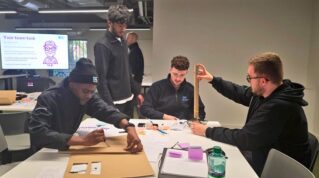
Every student completes volunteering, an industry placement and a structured cultural capital and life-skills programme across the year, often across more than one sector.
At any one time, hundreds of our students are working with employers, charities and community organisations across London.
The programme requires students to source opportunities, communicate with professionals, travel independently and represent themselves appropriately in adult environments.
They sometimes make mistakes and have to resolve them: clarifying expectations, sending the email, making the phone call and putting things right. Much of the learning comes from that process.
If engaging with employers feels difficult while still supported by college, it becomes significantly harder once education has ended. The programme allows students to develop independence while a safety net still exists.
The impact has extended beyond personal development. Students increasingly understand the relevance of their subjects because they can see how learning connects to real workplaces and future careers.
Teachers report stronger motivation and more mature attitudes to study. Some students secure part-time employment through their placements, but more importantly they gain confidence operating in adult spaces.
Crucially, this was not dependent on additional funding. We achieved it through timetable redesign and redeployment of existing pastoral capacity.
The main change was philosophical: we treated preparation for adulthood as a core educational purpose rather than an additional offer.
We describe the model as a passport to independence. Qualifications open doors to university, apprenticeships and employment, but independence, communication, resilience, adaptability and self-management determine whether young people can step through those doors successfully.
FE has always been the final academic step into adulthood. If social mobility is genuinely our mission, preparing students for adulthood cannot sit at the curriculum margins.
For some young people, networks and experience come through family circumstances. For others, the institution must provide them.
Our responsibility is not only to help students achieve, but to help them function and flourish beyond education. Our timetable now reflects that responsibility.






Your thoughts