

MPs have accused the Department for Education of appearing “unconcerned” about the impact on young people when they lose subsidised post-16 transport.
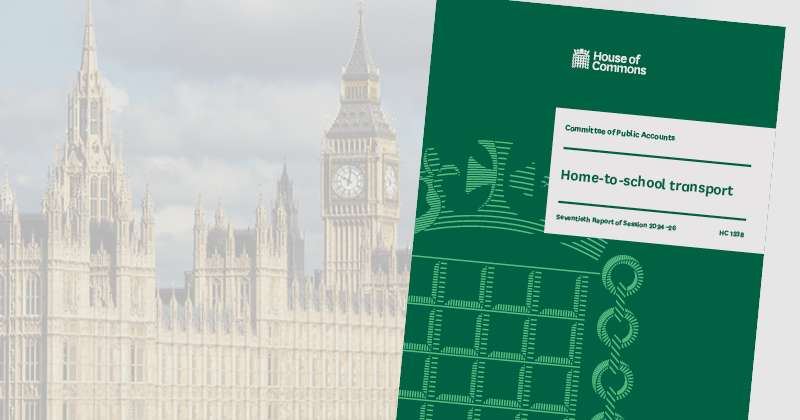
In a report on home-to-school transport, the public accounts committee (PAC) said DfE officials did not understand how access to transport affected student attendance or participation in education, particularly for young people aged 16 to 19.
Parents and college staff told the committee that students had missed learning or failed to start courses because transport was no longer provided or was unsuitable.
And despite the “weight of evidence” about difficulties navigating the system, the committee said officials appeared “unconcerned about the clarity of the offering” for post-16 learners.
However, the committee stopped short of recommending an extension of the legal obligations placed on local authorities to provide transport for pre-16 pupils to post-16 students.
Council discretion
Local authorities are only legally responsible for providing free transport to school for eligible school-age pupils. Once a young person turns 16, councils have discretion over what travel funding, if any, they provide.
The PAC described this change in entitlement as a “cliff-edge” for families. Parents told the committee losing transport support had “huge impacts” on family life, with some reporting having to give up work to manage travel arrangements.
Colleges also reported direct impacts on participation. Evidence submitted to the PAC from Natspec cited one college where 30 students were unable to start their course on time because transport had not been agreed.
Stronger duties
Ruth Perry, senior policy manager at Natspec, said the committee had highlighted a problem specialist colleges had been raising for years.
“We are pleased to see the PAC recognising that 16 to 19-year-olds with SEND have been among the worst affected by local authority attempts to manage rising home to school/college transport costs,” she said.
Perry welcomed the committee’s recommendation that the DfE should investigate links between transport support and rising numbers of young people not in education, employment or training (NEET), but said the report should have gone further.
“We would like to have seen the committee recommend that the statutory duty on local authorities to provide transport be extended to include 16 to 19-year-olds and 19 to 25-year-olds with an education health and care plan (EHCP),” she added.
Department in the dark
The PAC also criticised the DfE for lacking basic data on who received transport support, how they travel or how provision differs between areas, despite annual home-to-school transport costs reaching £2.6 billion in 2024-25.
The committee said this means the government cannot judge whether the system represents value for money or whether support reaches those most in need.
It recommended the department improve data collection from local authorities and set out how it could better understand the relationship between access to transport, attendance and the number of young people who are NEET.
Spending on education transport has increased by around 70 per cent in real terms since 2015-16, driven largely by rising demand from growing numbers of children and young people with SEND.
The DfE had suggested its proposed SEND reforms could help reduce demand for transport in the long term by identifying needs earlier and supporting more students closer to home.
But the PAC said even if the proposed reforms succeed, it was likely to take time before they translated into savings or eased pressure on local authority budgets.
Repeated warnings
The report adds to growing scrutiny of post-16 SEND transport.
Last year, the education committee warned that learners with SEND can lose guaranteed transport when they transition from school to further education and called for clearer funding and transport guarantees for FE students.
And the government’s spending watchdog, the National Audit Office, criticised local authorities’ inconsistent and “insufficient” data collection on SEND transport and said scaling back services could increase NEET numbers.
An FE Week investigation in 2024 found cases where SEND learners missed the start of their courses by up to three months because of local rows over transport services. It also found examples of local authorities charging families hundreds of pounds for services that were previously free.
The DfE was approached for comment.











Your thoughts