Skip to content
30 September 2026

Latest news from FE Week

Outstanding across the board

Two independent learning providers (ILPs), one offering IT and accountancy apprenticeships and the other training the nation’s future tennis stars, have won outstanding praise from Ofsted.

Both Aspire, Achieve, Advance (3aaa) and the Lawn Tennis Association (LTA) were served grade one results in all headline fields.

Ofsted said the 780 apprentices at 3aaa, which has its headquarters in Derby, “make excellent progress which leads to high success rates, outstanding contributions and early positions of responsibility in the work place, and sustainable employment”.

“Apprentices learn well in a highly motivational environment, benefitting from excellent teaching and a strong support culture,” the report said.

The inspection, which took place between October 20 and 24, was 3aaa’s first since it was founded in 2008.

Co- founder Peter Marples said he was “absolutely delighted” by the grade. “This is indeed a reflection of the sheer dedication, hard work and commitment of everyone — staff, employers and partners,” he said.

Co-founder Di McEvoy-Robinson, said: “We have worked exceptionally hard to understand the needs of employers at a local level and fit those needs, so to be recognised by Ofsted for this is such an achievement.”

The LTA’s tennis coaching apprenticeship provision for 16 to 18-year-olds was inspected between October 6 and 10.

The report on the 239-learner organisation, which previously had a good grade, found “learners make exceptional progress in improving their playing and coaching skills and are very well prepared for their future careers as players or coaches”.

Inspectors visiting the London-based ILP also noted managers ensured the apprenticeships “meet the needs of British tennis outstandingly well”. They were the third and fourth outstanding ILP reports published this academic year, after reports on SW Durham Training in August and The Military Preparation College the following month. They were also the eighth and ninth ILPs to be judged outstanding under the current common inspection framework, introduced in September 2012.

No one from the LTA was available for comment.


Engage with colleges, Wilshaw tells employers

Ofsted boss Sir Michael Wilshaw has challenged employers to engage more with colleges in an effort to bridge the skills gap.

The education watchdog chief inspector said businesses should consider apprenticeships as the answer to their vacancies problems.

Speaking to the Confederation of British Industry (CBI)’s East of England education conference in Cambridge on Tuesday (November 19), he said: “The economy is improving, jobs are more plentiful, and there is cross-party agreement on the need for more high-quality apprenticeships.”

But, he said: “Vocational education is still failing to deliver the needs of both young people and of society. There are currently 146,000 job vacancies that employers cannot fill because applicants don’t have the required skills.”
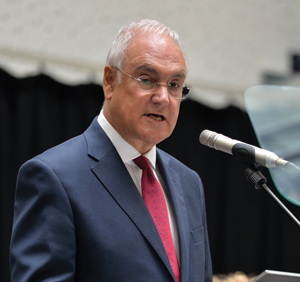
Sir Michael Wilshaw
Sir Michael Wilshaw

He further issued a series of challenges to employers, saying: “Have you made a sustained effort to engage with schools and colleges and let them know what opportunities you offer? What would it take to turn a job vacancy into an apprenticeship?”

He added: “It’s easy to bemoan the lack of qualified youngsters, but what are you doing to help solve that problem?”

Martin Doel, chief executive of the Association of Colleges, said: “Colleges already work with an average of 700 employers in their local area but they are keen to do more.

“Sir Michael is absolutely right to call for more involvement from employers and we hope to see more engagement over coming months and years.

“Employers create apprenticeships and they must be involved in their development for them to be successful.

“However, young people need to be aware of the options open to them. Only a step change in the careers advice available to them will lead to more becoming apprentices.

“That’s why our Careers Guidance Guaranteed campaign calls for the establishment of careers hubs in every local area involving schools, colleges, local councils and others.”

Sir Michael said “a fundamental shift” in educational structures was needed, praising schools and colleges who had come together in “clusters”. “That trend to federation should be encouraged,” he said.

At least one school in a cluster should offer vocational provision to 14-year-olds, such as a specialist college or University Technical College, he said.

“Young people could then transfer across institutions in the cluster to provide a route to high-level academic or vocational study,” he said. This would mean they “would not be stuck in one route”.

Sir Michael said the UK had “been stuck on the same policy roundabout year after year without any clear idea of which direction to take”.

To solve this, he laid out a number of steps to transform vocational education, and to help it match up to schemes abroad.

Neil Carberry
Neil Carberry

“Apprenticeships must have parity of esteem with A-levels,” he said.

“They must be sold aggressively to schools, parents and young people.”

Vocational education “should be seen as a valid option for every student and not as the consolation prize for those who cannot do anything else,” he added.

He also said vocational training must give a clear line of sight to work and employer engagement should be at the forefront of any reform.

Neil Carberry, CBI director for employment and skills policy, said: “Businesses support schools and colleges in many different ways, but can do more. We know that the more interactions young people have with the workplace, the better prepared they are for life outside school and college.

“We want all businesses to increase their engagement with schools, but this cannot just be laid at the door of firms alone. The government must do more and start by reintroducing work experience for Years 10 and 11.”


Lambeth College walkout

Staff at Lambeth College have voted in favour of a new walkout over employment contracts — just six months after launching an indefinite strike only to return to work just before the summer holidays.

The possible action by members of the University and College Union (UCU) includes another indefinite strike, a one-day strike or a series of escalating strikes, said a UCU spokesperson.

No date has yet been set for the strike, although the UCU said it would announce its plans “in the coming days”.

Union members claim contracts for new staff, introduced by the college in April will leave them with longer working hours, less annual leave and less sick pay.

A strike ballot which opened on September 22 was shelved in early October while the union considered an “improved offer” from the college, where existing staff would stay on the original contract until September 2017, or accept a £1,500 “cash incentive” to transfer to the new contract.

Mark Silverman
Mark Silverman

In the latest ballot, 66 UCU members to strike, of a turnout of 80 members, which has a total of 250 teaching staff.

Principal Mark Silverman (pictured), who came to the college two years ago tasked with improving the college’s financial sustainability after it was hit with an Ofsted grade four inspection result, said the new contracts were necessary.

“The unwillingness of UCU to accept that the new contract is for new staff only, and to acknowledge that it still offers new staff better terms and conditions than they could expect to receive elsewhere in the sector, is almost beyond belief,” he said.

“Improvements at the college over the last two years are evident, but we remain in financial recovery and await an Ofsted inspection.

“I call on UCU to acknowledge that to take strike action when only a quarter of our teaching staff support it is reckless, and that irresponsible and unmerited strike action will achieve nothing, other than to undermine those improvements and jeopardise the future of the college.”

A UCU spokesperson said: “We want to resolve this matter as quickly as possible and are ready to negotiate with the college leaders, but the support for renewed action must serve as a wake-up call to the college.

“It is clear that staff remain strongly opposed to the current proposals, and any attempts to railroad them through will meet strong resistance.”


Sector stumps up £11k for charity at conference auction

More than £11,000 was raised for the Helena Kennedy Foundation at the FE Week annual charity auction.

The great and the good from the world of FE were at Birmingham’s Hyatt Hotel on day one of the Association of Colleges (AoC) conference for a three-course meal, raffle and entertainment from college performers.

A 130-strong guest list also saw items auctioned including a private helicopter flight, which sold for £625, and an aerobic flying session that raised £800.

Martin Doel, AoC chief executive, was presented with an ambassador’s bowl by foundation chair Lady Kennedy. Former FE Week editor Nick Linford, now editor of Academies Week, received the honour last year.

Baroness Kennedy said: “The FE sector is truly where my heart is and it is wonderful that everyone pulled together to raise £11,000.”

The evening, sponsored by Tribal and NCFE, provided a brief respite from producing the AoC conference edition of the newspaper from a room on the 22nd floor of the Hyatt Hotel.

From left: Sue Rimmer, principal, South Thames College, Baroness Helena Kennedy QC presenting AoC chief executive Martin Doel with the ambassadorÕs award, David Grailey chief executive, NCFE, Gary Williams, Director of FE & HE Services, Tribal, Nick Linford former editor, FE Week, Shane Mann managing director, Lsect (publisher of FE Week), Christopher Henwood (right), FE Week editor and partner Jo Hamilton,


ETF reviews maths and English

The Education and Training Foundation (ETF) is to review teaching and accreditation of maths and English for learners unable to reach D grade GCSE.

It comes as learners who record a D in English and maths at GCSE will, from next year, have to retake in pursuit of an improved grade, while those who get an E or below can try alternative qualifications in the hope of getting a C grade equivalent.

The ETF will not be reviewing GCSEs, rather, their alternatives, including Functional Skills — already the subject of an Ofqual review. Skills Minister Nick Boles told delegates at the Association of Colleges (AoC) conference on Tuesday (November 18): “I have asked the ETF… to work with employers, colleges and awarding bodies to understand what kind of English and maths qualifications might give those who are not able to pass GCSEs a certificate of real value — something that is emphatically not a soft option, something practical and relevant but demanding.”

An ETF spokesperson said: “There are ways for people to improve their English and maths skills outside of GCSEs and learners and employees following these routes deserve the very best provision which leads to a qualification employers recognise and respect. That is why we welcome Mr Boles’s announcement there will be a review of the best way to achieve and accredit maths and English skills.” She added it would produce preliminary recommendations by the spring..

Martin Doel, chief executive of the Association of Colleges, said: “It is encouraging that there will be a review of the best way to achieve and accredit maths and English skills. A more appropriate qualification should be developed which is understood, recognised and valued by both young people and employers.”

Stewart Segal, chief executive of the Association of Employment and Learning Providers, said: “We should recognise the growing acceptance of Functional Skills with employers, while still aiming for continuous improvement and long-term certainty around the requirements.”

David Hughes, chief executive of the National Institute of Adult Continuing Education, said: “It’s vital the skills system works closely with employers to design English and maths qualifications they value and recognise. But we also need to involve learners in that process.”

He added: “It is great news that the Minister has recognised their value and that he wants to raise the profile of maths and English qualifications other than GCSEs. Our work has shown adults are most readily motivated back into learning when the curriculum is relevant to their lives and work. We know that some of the Functional Skills delivery does that well and that we can learn from some of the employers, including the Army, who have used Functional Skills to rapidly help improve people’s skills.”


Boles in FE loans expansion hint in digital skills hearing

Skills Minister Nick Boles has hinted that the FE loans system was heading for expansion — as the sector awaits results of the government’s FE loans consultation.

Mr Boles told the House of Lords Digital Skills Committee on Tuesday (November 18) the government was “moving towards” making adult learner loans, currently offered to those over the age of 23 to complete a course at level three or above, more widely available.

The Department for Business, Innovation and Skills has not yet published the results of its Future development of loans in further education consultation, which ran from June 19 until August 21, which proposed extending loans to cover some 19 to 23-year-olds and level two qualifications.

Mr Boles told the committee: “If you already have received a qualification of some kind, and you want to update or refresh your skills then we want to make it as easy as possible for you to take out your loan to fund your further learning.”

Committee member Lord Lucas said previous witnesses before the committee had called for “up-to-date industry standard, short, funded courses”, so those who had taken a career break or wanted to change career could develop new skills sets, particularly digital ones.

Mr Boles agreed such courses would be useful, but said: “We’re simply not in a position where taxpayers can fund people to go on doing short courses throughout their working life, that’s just not the reality.

“But I think expanding the availability of the loans system so that they can call it off on roughly similar terms to the student loans is the way that we are moving, but the way that we need to move further.”

Mr Boles acknowledged that the inclusion of 24+ apprenticeships in the loan scheme, a decision which reversed in February — just six months after the loans system was introduced — had been a “bad idea”.

But, he said: “I think the idea of a 35-year-old who’s already got a set of qualifications taking out a loan to do a one month course or a three-month night course to give them a particular set of relevant qualifications, that’s something we should explore and I suspect that will be more successful and will take better.”

The committee has previously heard from Skills Funding Agency’s director for apprenticeships, Sue Husband, and National institute of Adult Continuing Education chief executive David Hughes.

It will meet again for a closed session on December 2.


Colleges should lead skills gap charge

Colleges need to “face up to their responsibilities” and make FE the sector one that “gets people into work,” a principal has said.

Laurence Vincent, chair of The Mindset Group and principal of Bournemouth and Poole College, outlined his “brave new vision” for the role of colleges in terms of learner employability as he spoke to FE Week about a new position paper on the subject.

The paper, Employability in UK Colleges: the uncomfortable truth, has been published by Mindset, a group of FE colleges partnered with Reed NCFE, along with a toolkit for colleges.

The paper sets out how colleges are missing an opportunity to lead a charge to fill the growing skills gap, and in an exclusive interview with FE Week at the Association of Colleges annual conference in Birmingham, Mr Vincent spoke of his ambitions for the project.

He said: “I think to a point, colleges are not quite facing up to their responsibilities in some respects, but also, what a fantastic opportunity this is. I know it seems like an odd thing to say, but I think when it comes to student employability, I think the expectations of colleges have been too low really. I know that’s odd in this era of over-regulation and over-inspection, but I think expectations have been too low.

“I think now expectations are increasing, and colleges are expected to do more in terms of student employability, the sector can go two ways. They could be intimidated by it and think of it in terms of more student outcomes and more pressure on colleges, or they can think of it as a fantastic opportunity to uniquely place themselves as the sector that gets young people into work.”

He denied his suggestions conflicted with the view of FE Commissioner Dr David Collins, who has warned that principals should not be distracted by ventures too far beyond the running of their colleges.

He said: “What I’m advocating here is part of the core business of the college. I am not advocating principals going off and spending all of their time on follies. I am saying what’s good for the local economy is good for the college, and those links and partnerships with business are going to be crucial for a modern college.”

Position Paper by The MindSet

Thinktank calls for policy road map for digital techonology

The FE sector needs a “policy roadmap” to ensure best use of digital technology, a report launched last week has said.

The report, by think tank The Education Foundation and entitled Digital colleges: the journey so far, examined digital best practice in the college sector and what a digital future would look like. It called for FE and policy leaders to “move past the ‘bright lights of tech’” and move towards creating “digital colleges” — “embracing a mindset that utilises digital technology and engagement across its organisation”.

The report looks at the Digital Colleges Programme, which was set up in June to highlight good practice, and share it across the sector.

The authors, Education Foundation co-founder Ian Fordham and associate director Nathan Martin, said there was “no simple recipe for digital transforming institutions or the sector” but called for “a set of clear sector-wide owned definitions of a Digital College and understandings, shared and agreed by principals and senior leaders.”

They also identified five elements for a college seeking to use technology more effectively, including leadership from the front by principals, good infrastructure where technology interacts and integrates well and aiming to be “digital by default”.

The list also included a warning for providers to be ready for the requirement for at least 10 per cent of a course to be delivered online as set out by the Further Education Learning Technology Action group in March and said leadership should have “agility and adaptability” and an “entrepreneurial approach”.

Robin Ghurbhurun, principal and chief executive of Richmond upon Thames College, which was highlighted for its good practice in the report, welcomed its publication.

“Its focus is not on a new paradigm or promise, but on pragmatism, for far too long the digital box has been empty and the challenge for college leaders is to fill it with purpose,” he said.

South Staffordshire College and North Hertfordshire College were also praised for their digital infrastructures in the report.

South Staffordshire College principal Graham Morley said: “We are committed to pioneering new ways of enabling our communities to exploit the opportunities of living in a digital world. The work of the Digital Colleges programme and report is about facilitating this transformation and influencing thinking. It is enriching the debate as we move forward in the digital age.”


Beacons of the sector

Fourteen FE colleges were winners at the Beacon Awards,

They were announced at the Association of Colleges (AoC) conference in Birmingham.

Among the winners were Leeds City College, whose employer engagement initiative has to almost 11,000 apprenticeships, and South Devon College, whose health programme saw an 80 per cent increase in learner and staff exercise.

The award for continued engagement in education and/or training for 16 to 19-year-old learners went to East Kent College, while the award for outstanding leadership of improvement was won by National Star College.The staff development award went to Kirklees College, while Bridgend College won the award for practical teaching and practical learning.

The prizes for transformational leadership by governing bodies and for improvement in teaching and learning through peer coaching were scooped by Abingdon and Witney College, while Heart of Worcestershire College was recognized for its effective use of technology in FE and skills.

Bridgwater College took the prize for inclusive learning for high needs students while Canterbury College won the award for student services.

Forth Valley College got the award for innovation, while Weymouth College won two prizes, one for its careers education and guidance and the second for sport in the curriculum.