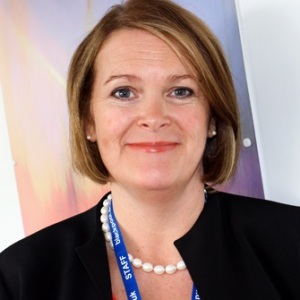
Sally Dicketts, chief executive, Activate Learning

From a difficult start at school to the top of a group of three colleges and two University Technical Colleges (UTCs), the rise of Sally Dicketts has been nothing if not hard-earned.

The Manchester-born and Cardiff-raised 59-year-old has enjoyed a long and varied teaching career in both schools and colleges despite having been written off as “slow” before she was diagnosed with dyslexia.

Scuba diving in Malta

But teaching was always on Dicketts’s mind and the achievement of a childhood goal is evidenced by her chief executive role at Activate Learning — the grouping of Banbury and Bicester College, City of Oxford College, Reading College, two University Technical Colleges in Oxfordshire and Reading and a marketing consultancy — and her chair’s post of the Women’s Leadership Network.

“I always wanted to be a teacher, because I thought that the education I had got was just so demeaning, and made you feel so stupid,” mum-of-one Dicketts tells me as we sit down in her spacious office at Reading College.

I’m friendly and chatty, and that often wasn’t seen as gravitas

“When I did my 11+, I didn’t actually answer any question because I felt so sick, and I was put in a remedial stream in my secondary school because they assumed that I clearly had major learning difficulties.

“I had a very feisty mum who came to the school and said there was no way her daughter needed to be in a special needs stream, and after two months of being in that stream, I was moved up.

“I remember my first day in secondary school. I was in uniform, I had a leather satchel, and I had all my pens because I could write, and I remember my fellow pupils were — not horribly, it was just fascination — they emptied out the whole of my satchel and all played with my pens because none of them had ever seen such interesting implements before.”

With siblings, from left: Richard, Susan, Dicketts and Gerry

In spite of dyslexia, Dicketts did well at school, but was banned by one teacher from taking the maths A-level she wanted. But it wasn’t until her first days at Redland Teacher Training College, in Bristol, that Dicketts realised it was something completely different that was holding her back.

She says: “When I got to college, particularly in economics, it was the first time anybody discovered I had a brain and was lazy, and that came as a shock to the system, so the first assignment I did I had sent back, and was told to rewrite it.

“And I said, ‘You don’t understand – I’ve got problems.’ And I remember the tutor saying to me, ‘No – you just have to work harder.’ It was the first time anybody had ever said that to me.”

After graduating from Redland College in 1977, Dicketts took a job at Tredegar Park High School, in Newport, teaching economics. She stayed for two years before moving to Mount Carmel Girls School in London because her then-husband Stephen Morgan had a business in the capital.

Within two years, she had been put in charge of the fifth form, careers and business studies and began to think about her own future in the early 1980s.

For every training provider that has scammed the system, we don’t look at the 500 that haven’t

Initially passed up for the head of economics and business job at the newly-formed Islington Sixth Form Centre, Dicketts moved to Hackney College in 1984 and began a connection with the FE sector which remains to this day.

Dicketts, aged nine
Dicketts, aged nine

“I absolutely adored it,” she says. “I’m very into curriculum design and development, and designing something for your students, which you could do in FE in those days, which you can’t do now.”

After teaching in schools where the majority of the pupils were white, Hackney College proved a culture shock for Dicketts, who remembers the adjustments she had to make in her own understanding.

“At Hackney College it was 90 per cent black students — so for the student population, they were pretty secure. If you were white you were unusual — but of course the majority of staff were white.

“And it was a huge cross-section, so when I was there in the 80s it was a huge African population, not Afro-Caribbean.

“I can remember a student was failing and he offered to buy my a Mercedes if I passed, and to this day I don’t know whether that was a serious offer, but I can remember being really shocked.

“There were quite a lot of different cultural aspects. There were, even then, knifings, drugs, but it tended to be peripheral to the college. A lot of the students wanted to learn and were hugely positive. They were delightful.

“I had some amazing students who went on and did amazing things, but we had a lot of money to be able to do lots of extra-curricular activities and support, which there is just no way now that you could do. So, although there was a lot of deprivation, there was a lot of money to help mitigate that deprivation.”

In 1988, after initially being overlooked for a head of department job at Hackney, Dicketts was encouraged by several colleagues to apply for a job at Milton Keynes College. One of those colleagues was Lynne Sedgmore, now executive director of the 157 Group, who kindly dropped off her application for her.

Dicketts in Thailand, 1987

Dicketts initially struggles with my question about whether she thinks her gender ever held her back in her career — an issue often considered within her WLN role — given the number of times she was overlooked for management roles.

“It’s always a really difficult question, isn’t it,” she says. “I think, because I was very friendly, often I wasn’t taken up.

“I’m friendly and chatty, and that often wasn’t seen as gravitas. And maybe if I’d then got an Oxbridge education, I could overcome my lack of gravitas. So I don’t know if it was gender, but certainly I think it was personality.”

But Dicketts was to become assistant principal at Milton Keynes, then vice-principal, and in 1996 was chosen to lead the college from the principal’s chair, which she did until 2003 when she moved to the newly-merged Oxford and Cherwell Valley College (OCVC)

Now she heads up Activate Learning, which in March had a Skills Funding Agency allocation of more than £16m.

Dicketts, who lives in Oxford with partner Lee Miao and their daughter Isobel, 19, explains her belief that joint working between colleges, such as that on show within Activate Learning, will become more prevalent as institutions look for ways to supplement government income.

But she is keen to stress that the federation model — perhaps most infamously in the case of Luton’s Barnfield Federation, which is expected to split in November — would not work for everyone.

She says: “One of the things we have developed here is a curriculum and leadership philosophy. If you really believe in a curriculum leadership philosophy and technology, then you need a sum of money to really develop it and trial it, do the research for it, and you need group services — ie your IT, your HR — to also be stunning to support it.

“If you’re a £20m college, you might be able to put it into your curriculum, which is fantastic, but then your group services are going to let you down, or you put it into IT but you don’t develop it.

“I think what you might get more of is collectives of FE colleges that stand together. What we have tried to do is resolve some of the issues. Each of the colleges is a separate college — Reading College runs as Reading College, but the principal of Reading College is a group director of Activate Learning, so we have done it very differently [to Barnfield].

Dicketts with daughter Isabel, now aged 19

“It’s interesting, isn’t it? For everything that goes wrong — like Barnfield — we never look at the things that go right. For every training provider that has scammed the system, we don’t look at the 500 that haven’t.

“I don’t want us to own hundreds of different things, but I do believe in the FE sector and I want to protect it, and I don’t want large commercial organisations taking over, because contrarily, I don’t think the private sector necessarily does do it better.”

It’s a personal thing

What is your favourite book?

A defining book for me, if we’re looking at it from a woman’s point of view, is Woman on the Edge of Time by Marge Piercy. You probably can’t get it now, but it was during my real feminist age

What is your pet hate?

Discrimination. I’ll give you an example. I cannot bear being called a lady. I’m not a lady, I’m a woman. And we have real arguments with the office staff. Some of them like being called a lady, and that’s fine, but I ask that people respect me and call me a woman

What do you do to switch off after work?

I’m an avid reader, which is why your ‘favourite book’ question is one I found really difficult

If you could invite anyone, living or dead, to a dinner party who would it be?

Eleanor Roosevelt and Hillary Clinton. They were both married to people who were the ultimate — supposed — power for people. How do you, as such a very powerful woman, sublimate some of your needs because your husband’s the president? And also Carl Jung. I am fascinated by psychology, and how we think, and the impact we have on one another, and I am fascinated by Jungian psychology

What did you want to be when you were growing up?

I always wanted to be a teacher

The adult literacy and numeracy ‘scandal’

The funding, teaching and organisation of adult literacy and numeracy programmes are in need of government action, says Adrian Bailey.

Problems with reading, writing and maths can have a huge impact on people’s daily lives, including getting and keeping a job, understanding bills, forms and documents, and guiding children through education. It can affect adults in many walks of life, but it also undermines the economic performance of our country.

Much of the paid-for provision is just not good enough — many English and
maths providers need to improve their standard of teaching

It is a scandal that there continues to be an alarmingly high proportion of adults with low literacy and numeracy skills. A survey carried out by the Organisation for Economic Co-operation and Development (OECD) in October 2013 — based on interviews with 166,000 people in 24 countries — found that England and Northern Ireland was ranked 22nd for literacy and 21st for numeracy. This shocking state of affairs was the impetus for my committee to undertake an inquiry into how to tackle this problem.

We found that adults struggling most at English and maths are just not getting the help and support needed. To this end, our report calls on the government to launch a high-profile campaign promote its funding for training and tuition for any adult wanting to study English and maths up to and including GSCE level. This campaign should also help adults in finding the most appropriate and nearest help, with either voluntary schemes or more formal classes.

During our inquiry, we heard of many excellent examples of literacy and numeracy programmes in a variety of settings, from workplaces, community centres, schools and prisons, to those organised by homeless charities.

We heard about the fantastic role that volunteers are taking in providing adult learning schemes.

However, we also found from Ofsted that much of the paid-for provision is just not good enough — many English and maths providers need to improve their standard
of teaching.

Post-graduate qualifications should be reintroduced, to reinforce the fact that adult learning is a specialist job, and to ensure that the best teachers are helping adults to improve their English and maths.

Our report also recommends that the government takes a more flexible approach to adult learning, getting behind what works — both in terms of the funding and the learning offered.

The government should move away from its preoccupation with GCSEs as the ‘gold standard’ of measurement for adult skills and, where appropriate, provide more support for less linear and traditional learning schemes, which are often more effective in engaging adults and improving their literacy and numeracy.

Adult learning can play a vital role in helping people escape the trap of low-skilled jobs or unemployment, yet the committee found there was little rigorous or uniform assessment in place for when adults claim unemployment benefit — despite the fact that this is an ideal opportunity to help adults to gain essential skills needed to get a job.

Again, this is an area where more a coherent government approach is needed. The Department for Work and Pensions, BIS, and Jobcentre Plus and skills providers all need to work closely to ensure there is consistent and thorough assessment of skills at the earliest possible stage of unemployment benefit claims.

Government departments must work together to drive change. Many have adult literacy and numeracy included in their remits, but my committee found that closer collaboration is needed.

In order to deliver more coordinated and effective support for literacy and numeracy programmes and policies, we have called on the government to make sure each relevant department nominates a civil servant to act as a champion for adult literacy and numeracy.

The video we have produced to accompany the report includes a summary of our findings and the committee’s recommendations, but I hope it also acts as a showcase for the positive impact which effective learning can have on individuals’ literacy and numeracy skills.

The government’s positive initial reaction to our report is encouraging and while there is no silver bullet to this problem, if they adopt our recommendations, the government can make a real difference to people’s lives and our economy’s productivity.

Making the right impact on principal appointments

With a number of principal appointments to have hit the FE Week headlines over the summer, Sue Pember looks at the issues all governors need to consider when looking for a new leader.

College governors feel that they have the biggest impact when they are appointing a new principal.

When I was appointed as a principal, it was a two-day process, including several interviews, presentations and an evening reception for stakeholders.

The whole college was involved in one way or another. The process felt robust, rigorous, fair and transparent — although I may have thought differently if I wasn’t the successful candidate. In those days there was a blueprint that governors stuck to which included establishing a sub-committee to oversee the process. They would be responsible for national adverts, interview packs, establishing a long list, references and background checks, and shortlisting candidates.

Governors do need to ensure the college has a senior leader and an accounting officer, but they shouldn’t feel rushed

They would also host the two-day interview programme with governors, staff and other stakeholders, with a small group of candidates taken forward to the last day. The sub-committee then made recommendations to the full board which decided on the appointment. The blueprint was enshrined in the Articles of Association, which provided the statutory framework, and the updated version in 2008 set out the expectations.

The Education Act 2012 relaxed many of the requirements, but most colleges have yet to change their Instrument and Articles, so the 2008 version still stands. The process has served FE well and allowed good candidates to rise through the ranks, while not being closed to those (like me) who came up through a local authority route. This also helped to ensure equality of opportunity, which in turn led to more women being appointed.

It is for the college clerk and HR team to set out what governors need to consider in appointing a new principal. This starts with the pros and cons of whether to run the process internally or externally, and whether to commission full or partial support from an external agency. Keeping the process in-house is sometimes seen as the cheapest option, but that is often not the case. Recruitment takes time and eats up internal resources which are needed elsewhere and so this is a false economy in what is an important investment in the college’s future.

The most important element is determining the skills and behaviours needed from the new principal to take the college on to the next stage. This is may not
provide a clone of the previous principal and
the existing incumbent can provide advice,
but does not unduly influence the appointment panel. At this point governors should seek advice and the thoughts of others including students, staff and other stakeholders, such as the funding agencies.

Whether to allow outside competition is another important consideration. Some colleges find this easy to answer because they haven’t changed their Articles and so they have to go to national advert.

They may also have a college recruitment policy that states all jobs will be advertised externally and nationally. Some consider each job on its merit. This is a difficult
one because governors will not want to upset senior staff who may have aspirations to become a principal but, nevertheless, they must ensure they find the best candidate
for the college and will want to test the market.

There are instances where the principal has to step down, perhaps due to ill health. The governing body may feel they have to take immediate action. This is partly true because they do need to ensure the college has a senior leader and an accounting officer, but they shouldn’t feel rushed.

There must always be a plan in place for this type of eventuality, including a search and appointments committee meeting, confirmation of the temporary appointment of the vice principal or other designated senior leader and starting the ball rolling on the appointment process.

Every generation sighs about where the leaders of the future are going to come from and FE is no different. But they are out there and there is no need to worry.


Inspectors to take closer look at under fire study programmes

Study programmes will be “central to inspections” from this week as Ofsted seeks to challenge a slow response to the initiative.

Lorna Fitzjohn, Ofsted’s director for FE and skills, told FE Week in an exclusive interview that providers should expect to see their ratings fall if they had not made enough changes to curriculum to meet government requirements.

Her comments come after Ofsted released its report on the progress of study programmes — new principles for 16 to 19 study that require learners to demonstrate progression to a higher level of attainment, take part in work experience and study maths and English to level two if they have not done so already.

The report, based on a survey during the first six months of the programmes, found that many providers had not done enough to change their curriculums to fit in with government wishes.

Speaking after delivering Ofsted’s annual FE and skills lecture at the Spotlight youth centre in Poplar, East London, Ms Fitzjohn said inspectors would be looking closely at FE institutions’ performance on study programmes.

She told FE Week: “As of this week, the study programmes are clearly what we are going to be inspecting for 16 to 19-year-olds, whether they be in a sixth form, an academy or a school, whether they be in a FE or skills provider, sixth form college, the study programmes are what 16 to 19-year-olds should be having, so they will be central to inspection.

“We are expecting now to see, six months on from finishing the report, that there really is a difference, at least that’s what we’re hoping.

“It’s bound to have a real impact on their overall grading, because all 16 to 19-year-olds should have a study programme, and if that’s not working it will impact on their overall grade.”

Study programmes were first mooted by Professor Alison Wolf, the Sir Roy Griffiths Professor of Public Sector Management at King’s College London, more than three years ago in her review of vocational education.

They were introduced by the government in order to improve progression into higher education and skilled employment.

But Ms Fitzjohn was keen to avoid laying blame for the slow response to the study programmes at any particular door, and said the government and providers both needed to take responsibility.

She said: “I think all of us need to take some role in this. Colleges, providers, schools, academies all had a year’s notice of the introduction of the study programme, there was an opportunity then to make the step changes they needed to make.

“Many of them haven’t taken a hard look at their curriculum, what’s on offer for young people, so it’s not offering progression routes for young people to move on either through level one, two, three, or perhaps if the programme they start on isn’t the right one what else they might move onto.

“There also needs to be much more work experience for young people, and real life work experience, which takes some organisation. That isn’t happening yet. The English and maths certainly is an issue.

“Many of the providers, schools, colleges we went to hadn’t really been able to recruit the staff they needed to deal with the amount of teaching they now needed to do. There has been additional funding, but I think sadly there aren’t the people out there at the moment to teach.”

Ms Fitzjohn also raised concerns about a “fundamental issue with careers advice and guidance”, and said not enough attention
had been paid to the fact it had to start in schools.

She added: “Maybe it hasn’t been clear enough to schools that that’s what they need to do, but it’s certainly not happening.

“We do look at careers advice and guidance in schools. We will be looking at it far more rigorously from this month. That’s one of the priorities we have this year.”

The report offers 20 recommendations for government, providers, councils, employers’ organisations and Leps, and Ofsted itself.

The recommendations include a plea for government to ensure data about retention, completion of core aims and destinations on leaving the programme are recorded and made available to the relevant stakeholders.

The report also urges providers to ensure that senior leaders are held to account by those responsible for governance for fully meeting the requirements of the programmes, and said councils should work with providers to ensure up-to-date mapping of 16 to 19 provision across the full range of study programmes.

——————————————————————————————-

‘Providers will respond to these challenges’ — AELP

The response to Ofsted’s report on study programmes has been a varied one, with many welcoming its findings.

The Association of Employment and Learning Providers (AELP) said it supported the recommendations, but said in some cases the structure of the study programmes did not support high quality, flexible provision.

Stewart Segal, AELP chief executive, said: “The report raises some very important issues for the future of the study programme. Training providers will respond to these challenges but they will need the flexibility offered by the study programmes without further restrictions placed on the system.”

He added: “The Education Funding Agency has pushed many providers into full time programmes of study. This is not appropriate for some learners. Although the funding rules allow shorter and more intense provision, there is a clear intention that providers should recruit young people on a programme of one year.”stewart-clipson2

Mr Segal said: “The teaching of English and maths has improved considerably in recent years but no one should underestimate the challenge of reengaging young people in these subjects. Many of these young people do not see the relevance of English and maths which is why they sometimes do not progress in levels at this initial stage.

“We also agree that young people do not get effective careers advice at any level within the school system. Training providers and colleges are able to offer more options for young people and often work in partnership to provide the widest range of choices.”

Gill Clipson, deputy chief executive at the Association of Colleges, said: “The move to programmes of study and away from colleges being funded by qualification is a fundamental change.

“So too is the requirement for all young people to continue to study maths and English if they have not reached an acceptable standard at school.

“The intention is right but, as this is such a fundamental change, it is not surprising that there has been variable implementation, particularly since the Ofsted fieldwork for this report took place even before the first full year of implementation was complete.”

A Department for Education spokesperson said: “The report shows positive early signs that schools and colleges are entering young people for more rigorous qualifications.

“In fact, the latest figures show that the numbers of those over the age of 17 taking GCSEs in English and maths are rising, giving thousands more the vital knowledge and skills demanded by employers.

“Following Professor Alison Wolf’s ground-breaking review of vocational education we have scrapped thousands of low-quality qualifications so that only the gold-standard, employer-valued courses remain.

“And providers are now incentivised to ensure young people study valuable courses after we changed post-16 funding from per-qualification to per-student.”

Ofsted-table

GCSE failure as Wilshaw sounds alarm bells

Ofsted boss Sir Michael Wilshaw has told of his shock at GCSE English and maths attainment levels and teaching quality — and just days later figures for 2012/13 revealed nearly half of 16 to 18-year-olds without at least grade C in GCSE English or maths failed to repeat or even study alternative qualifications at the same or lower levels.

The chief inspector warned that “alarm bells” should be ringing over 16 to 19 study programmes, which were launched last year — after the period of the Department for Education figures — and requiring learners without grade C in GCSE English or maths to keep working towards the achievement.

The figures for 2012/13 further showed that of the total number of key stage four learners that did not achieve A* to C GCSE in English (188,365) and maths (211,171) only around 18 per cent were re-entered for either. And in total, just 6.5 per cent then achieved at least C in English and 7 per cent in maths.

Schools Minister David Laws said: “These figures show that prior to our reforms too many young people were allowed to give up these subjects without achieving the levels required by employers.”

But Sir Michael, speaking ahead of a lecture by the education watchdog’s FE and skills director Lorna Fitzjohn, expressed fears that young people were not “well served” by study programmes.

“Too few students make sufficient progress in improving their skills in English and mathematics, because the teaching they receive is simply not good enough,” he said.

He said: “The gap between the good intentions of government policy in relation to this age group and the reality of what is happening on the ground is worryingly wide… our recent surveys of the 16 to 19 study programmes and youth participation, should ring alarm bells for policy-makers and also practitioners.

“The simple truth of what’s happening at the moment is that too many young people, particularly those from disadvantaged backgrounds, and those who want to find vocational pathways, are not yet being well served by these programmes… as chief inspector, I am very concerned.”

Sir Michael also used his speech to talk about the potential impact of not preparing young people for the world of work, claiming that a “sloppy attitude to punctuality” and a “lackadaisical” attitude could stem from poor employability skills teaching.

He said: “Our most recent report on careers guidance, published this time last year, is one of the most damning documents that Ofsted has ever produced.”

He added: “Again, it’s quite shocking that 84 per cent of youngsters who don’t get their GCSE at grade C in English and maths at 16 fail to achieve these grades at 19.

“Above all, I am particularly concerned that education and training is not preparing young people well enough for work. Many employers complain that far too many young people looking for work have not been taught the skills, attitudes and behaviours they need to be successful in the world of work.

“And what does this actually mean on the ground? It means they have a sloppy attitude to punctuality. It means they are far too relaxed in terms of meeting deadlines to produce work. It means that far too many young people are lackadaisical in the way they present themselves for work. If they dress inappropriately, speak inappropriately, and have poor social skills, they are not going to get a job.

“Youth unemployment in our country is far too high, and it is in everyone’s interest to ensure that young people receive the very best education and training to improve this situation.

“And the consequences, if we don’t get this right, are too serious to ignore.”


Editorial

In October last year, we reported how new DfE figures showed the majority of students achieving a GCSE grade D in English and maths were not then being re-entered for the qualification at sixth form or college.

In his editorial at the time, my predecessor Nick Linford was rightly critical of colleges for offering alternative qualifications, such as functional skills, to these learners where achieving the grade A* to C GCSE would have overcome a barrier to employment.

We now know nearly half of all those not achieving the grade C, not just those with a grade D, were neither entered for GCSEs nor functional skills in 2012/13.

In fact, they didn’t even study an alternative entry or level one English or maths qualifications.

The government has acted, as English and maths lessons for those 16 to 18-year-olds without a grade C or above at GCSE became a funding requirement as part of a study programme from this year.

And from 2015/16 a learner leaving school with a grade D GCSE in English or maths will have to retake it.

Yet these new government requirements are worth nothing if the teaching and success rates are poor.

The Ofsted’s verdict on study programmes last year is not good.

So the whole school sixth form and FE sector needs to step up to the challenge.

What must be avoided as a response is the shirking of responsibility and, like many employers, the raising of entry criteria and thus refusing to take on 16 to 18-year-old learners without GCSE Cs and above.

The government needs to be alert to that risk, as it would be an unintended tragedy.

Chris Henwood, editor


College rips up ‘not fit for purpose’ UTC action plan

An improvement plan aimed at turning around the fortunes of an inadequate-rated university technical college (UTC) has been ripped up and rewritten by its new general FE college sponsorship team.

Ofsted inspectors revisited Central Bedfordshire UTC to see how it was getting on after the grade four result, but branded its improvement plan “not fit for purpose”.

However, Bedford College, having been asked by former Education Secretary Michael Gove to step in and take over, became the UTC main sponsor after the revisit — and principal Ian Pryce said a new plan had been drawn up and was now in place.

Mr Pryce, who is also the newly-appointed UTC chair of governors, told FE Week: “Bedford College has a separate plan, which Ofsted said it would consider at its next visit.”

He added: “Since Bedford College became sponsors of the UTC over the summer, we have appointed a new head, new senior team, strengthened the teaching team, revised the curriculum and invested in new facilities including the library.

“The Ofsted visit also took place before the summer exam results came out and these included excellent pass rates in engineering courses and improved A-level results.”

Ofsted’s inadequate rating came in June, with inspectors critical of the quality of leadership, governance, teaching and curriculum.

They also said learning at the 150-learner UTC, which specialises in engineering and design, was “not secure” because teachers “do not always check students’ understanding or how well they have developed skills in lessons”.

The inspectors’ report on the revisit, which took place mid-July, also revealed how “due to too few applications, the college is not expecting to admit any students into year 10 in the academic year 2014/15.

Nevertheless, with the UTC in new hands, Mr Pryce said he was “confident the UTC has a very bright future”.

Of the three other UTCs inspected so far, Black Country and Hackney UTCs got grade three results while the JCB Academy in Staffordshire received a good rating.bakers-dozen-web

However, the issue of low enrolment figures has hit a number of UTCs, including the one in Hackney, which is to close after this academic year having failed to recruit enough students.

Despite this, Shadow Education Secretary Tristram Hunt told
FE Week sister publication Academies Week on Tuesday (September 9) that he wanted “considerable growth” in their numbers.

However, he stopped short of the recommendation in June’s review for the Labour Party by Lord Adonis, called Mending the fractured economy: Smarter state, better jobs, in which the Labour peer proposed 100 more UTCs by 2020.

Mr Hunt told Academies Week at the CBI Education Conference: “There should be considerable growth in UTCs but I won’t put a figure on it.”

Main pic: Ian Pryce

Scotland vote uncertainty for UKCES

The future of the UK Commission for Employment and Skills (UKCES) could be just as much on the line as the United Kingdom, FE Week can reveal.

With voters in Scotland due to go to the polls this week over whether they want independence, it has emerged that the Department for Business, Innovation and Skills has not planned for the UKCES in the event of a split.

A BIS spokesperson conceded the future of the UK-wide research and policy body was not planned for if Scotland was to break away after Thursday’s referendum.

She said: “We will not be making or commenting on plans for the possibility of an independent Scotland before the referendum.”

The organisation, which had a budget of £66.9m for 2013-14 and employs around 100 staff, produces an annual employer skills survey for each of the four UK nations, as well as an overall survey — but much of its work focuses on the UK as a whole.

The Scottish government directly contributes £500,000 a-year to the UKCES to support the development of National Occupational Standards. And the Scottish government claims to have made an “active contribution” to the development of the UKCES.

The Scottish government website says: “Scottish Ministers influenced and agreed the organisation’s remit and year one objectives, ensuring that UKCES focussed appropriately on Scottish issues from the outset.”

A spokesperson for the UKCES, which was created in April 2008, said she was unable to comment on plans for the future of the organisation.

But Sir Charlie Mayfield (pictured front), UKCES chair, speaking in his role as chair of the John Lewis and Waitrose partnership, appeared to express misgivings about the prospect of Scottish independence, warning there would be “economic consequences to a Yes vote”.

And Colin Borland, head of external affairs at the Federation of Small Businesses Scotland warned the future of many projects such the UKCES could be at risk.

“There are many cross-UK institutions who are wondering what’s going to happen to them,” he told FE Week.

“Whether or not a lot of the good work could continue in the event of a Yes vote or a more devolved situation, we don’t know but it’s going to have to be sorted out.”

The BIS spokesperson said: “The UKCES has a commissioner appointed from each of the home nations by their respective governments. Each year, the four nations have the opportunity to influence the work of UKCES through their grant-in-aid letter.”

However, she declined to comment further on the grounds that the government was observing Purdah — an electoral convention where all parties agree not to publish material that could sway the vote just before an election.

But both the Yes and No campaigns have accused the other of breaking Purdah following a host of new policy announcements affecting Scotland.

Principal who stood down amid allegations returns as deputy

A former principal who stood down from the top job at London’s Newham College amid a series of damaging allegations has been given a deputy’s role at another college.

Densie Brown
Densie Brown

Denise Brown (formerly Brown-Sackey) left Newham in January, two months after it was claimed the college had failed to take action over a recording posted on YouTube of former head of drama Dr Mark Walcott seeming to make homophobic comments about gay teachers.

The 20,000-learner college also faced allegations that passes had been awarded to students who did not attend any lectures, or had attendance rates of 40 per cent or less.

Ms Brown was confirmed as permanent vice principal for curriculum and quality at South Essex College, which has around 19,000 learners, this month — six months after taking up the post on an interim basis.

Angela O’Donoghue, principal of South Essex College, said: “Ms Brown was appointed as vice principal for curriculum and quality, on an interim basis, on March 25, before being made permanent earlier this month.

“She went through a rigorous interview and selection process and was considered the most appropriate person to meet the needs of the college by our governors and senior staff.

“She is highly experienced with more than 30 years’ experience in FE, working her way up from being a lecturer to senior manager, vice principal and principal. It is right that we utilise those skills to help take our college forward.”

Ms Brown had served at Newham for almost 25 years, starting as a lecturer in 1988 and working her way up to principal, with a brief stint as deputy principal at Havering College between 1999 and 2002.

Her move to a deputy role is thought to be at least the second time in recent years that a principal has gone from the top job to a lesser role at another college.

Martin Penny quit as principal of Stratford-Upon-Avon College, which has around 6,000 learners, in October.

It was given a grade three Ofsted inspection result the following month, before its financial health was branded inadequate by the Skills Funding Agency, in turn prompting a visit from FE Commissioner Dr David Collins

Mr Penny has since become interim director of finance and corporate services at Devon’s Bicton College.

A spokesperson for Newham said its investigation into the grade massaging allegations was ongoing. It is understood that Mr Walcott no longer works for the college.

Ms Brown declined to comment on her appointment.

Free schools sector poised for more FE college sponsors

Two FE colleges and one sixth form college are expected to bid to open their own free schools when the next round of Department for Education (DfE) bidding opens, FE Week can reveal.

Croydon College and New College Swindon want to open free schools with sixth form provision, while New College Pontefract — a sixth form college — is hoping to open a free school for 16 to 19-year-olds.

Croydon College’s planned New Croydon Academy would be situated on its own campus, taking on 180 students a-year, starting with just the year seven cohort in 2016.

New College Swindon is looking at a free school and sixth form on a separate site, and New College Pontefract wants to open a free school sixth form college for 1,200 learners in Doncaster.

The colleges are expected to hand their free school proposals into the DfE when the bidding window opens, on September 29 — closing on October 10.

If the bids were successful, all three free schools would open in September 2016, adding to the FE sector’s existing free school offer with South Staffordshire College and Hadlow College already running one each. Richmond upon Thames College won permission earlier this year and plans to open a free school in 2017.

Free schools are state-funded schools which are not required to follow the national curriculum, operate outside of local authority control, and answer directly to the Secretary of State for Education.

Frances Wadsworth, principal at Ofsted grade two-rated Croydon College, said: “This is an exciting opportunity for Croydon. Together, we can provide resources, expertise and world-class facilities to benefit the pupils, the community and the future prosperity of the borough and beyond.”

A vision statement on the proposed new free school’s website said it planned to deliver “teaching and learning through the use of digital literacy and science”.

Amanda Walton, head of marketing and customer services at the grade two-rated New College Swindon, told FE Week: “We were approached by the MP for Swindon North Justin Tomlinson and the council and asked if we wanted to put together a bid.

“We felt that having run an FE college we were in a good position to do it and we wanted to help and support learners.”

The new school, which would have capacity for 1,500 students, will have a focus on business and enterprise, but would follow the national curriculum, she said.

New College Pontefract principal Pauline Hagen told FE Week: “We had a few areas in mind, but we chose Doncaster because in many ways it’s very similar to Pontefract — it’s a former mining community where
the manufacturing base has disappeared, leading to worklessness and low expectations.

“We’ve had experience of dealing with that in Pontefract, of raising aspirations of parents and students, and we thought we had a lot to bring to Doncaster, where most existing providers are grade three or four.”

The college, rated outstanding by Ofsted, had been motivated to get involved with the free schools project, she said, because sixth form colleges were in danger of being overlooked.

“Sixth form colleges are not part of the government’s thinking at the moment — we were a 1970s creation, but we are still top-performing providers,” she said.

“We want the secretary of state to notice what we do and appreciate what we do and so we are embracing the government’s agenda.”