London School of Economics to host new Centre for Vocational Education Research

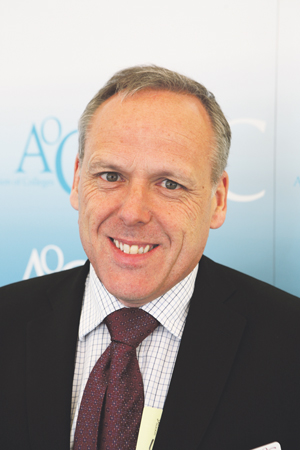
Skills Minister Nick Boles

A new £3m project aimed at researching new ideas for FE will be based at the London School of Economics (LSE).

Skills Minister Nick Boles will today announce that a new Centre for Vocational Education Research (CVER) will be led by Dr Sandra McNally from the LSE and based at its Centre for Economic Performance.

Plans for the centre, which will be funded by the Department for Business, Innovation and Skills (BIS), were first unveiled in October.

Alongside Dr McNally, the CVER will also involve Dr Steven McIntosh from the University of Sheffield, Dr Stefan Speckesser from the Institute for Employment Studies and Dr Gavan Conlon from London Economics and will investigate, research and analyse potential new ideas for skills provision in England.

Speaking at the launch later this morning, Mr Boles is expected to say: “A skilled workforce, able to meet the needs of employers and industries, is vital to our continued economic growth.

“I’m delighted to be opening the CVER, bringing together experts from universities and colleges to build on our work driving up standards in skills and training. Creating new ideas for skills provision, rooted in analysis and rigorous research, will help the UK create a world-class workforce of the future.”

Dr McNally, the founding director of the centre, said: “While there are many excellent routes available to young people in vocational education, many do not get the high quality education they need to fulfil their own potential and to contribute to economic growth.

“The new centre aspires to become a world-class research hub to generate a step-change in our understanding of the nature, significance and potential contribution of vocational education to individuals and the wider economy.”

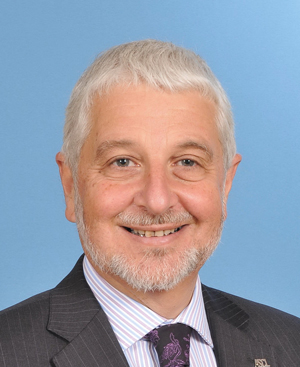
Baroness Wolf of Dulwich

The search for a successful bidder for the £3m, three year contract was headed up by Professor Alison Wolf, the newly-created Peer and King’s College academic whose 2011 review of vocational education prompted some of the largest-scale reforms the FE sector has ever seen, including study programmes for 16 to 19-year-olds.

The assessment panel also included City and Islington College principal Frank McLoughlin, LSE director of spatial economics research Henry Overmann, Nuffield Foundation education director Josh Hillman, BIS deputy director for skills policy analysis Frank Bowley and representatives from the Economics and Social Research Council and the Higher Education Funding Council for England.

Baroness Wolf said: “I am absolutely delighted that the government is establishing this centre. It is an opportunity to transform our understanding of vocational education, and its role in society, and to create better education policy at all levels as a result.”

According to the government, the centre aims to advance understanding of the requirements for vocational education, identify the challenges in provision and develop and strengthen the knowledge base to enable “a more agile, relevant and needs-based vocational education sector to become a driving force for economic growth and social mobility”.

In its research, the centre will try to address how vocational education affects prosperity, productivity, profitability and economic growth, how to improve the amount of high quality provision and how the costs and benefits of vocational education influence individuals’ participation decisions.

BIS is funding the project to the tune of £3m for three years — with an option to extend a further two years with more funding.

Skills Show changes revealed

Potential investors got a sneak peak of what’s going to be on offer at this year’s Skills Show at an awareness raising event today in Central London.

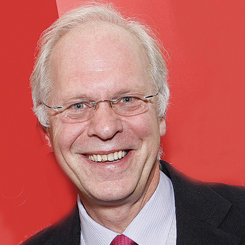
Ross Maloney (pictured), chief executive of Skills Show organisers Find a Future opened the event at Oxo Wharf, looking back at the success of the show, which was held for the third year in a row in November.

“The Skills Show is the UK’s largest skills information event and provides an impressive and incredible platform, and a base from which to support young people, helping them make important choices about their career,” he said.

Mr Maloney pointed to the results of a survey commissioned by Find a Future, asking some of the show’s 75,000 visitors what they thought of the show.

Mr Maloney said: “94 per cent of young people are satisfied with their experience the Skills Show and 86 per cent of adults feel the same.

“Importantly 97 of young people said they were going to take some positive action as a direct result of their experiences at the Skills Show — whether that was about seeking work experience further advice from parents and teachers or undertaking research.”

Ben Blackledge, head of content and experience at Find a Future, told FE Week what the organisation planned to add to this year’s show to make sure young people did actually take that direct action.

“We know people are inspired at the show — when they’re there in the moment they’re really engaged and inspired but the minute they go out it just leaves their heads,  so how can we create a place where they can do it all in one go?” he said.

This year’s show would include a new ‘job shop’ in every sector area.

“So every sector, you go, you’re inspired, and then you can get some careers advice, listen to the spotlight talks and just naturally moving on to taking the next steps,” said Mr Blackledge.

He also shared some more of the improvements the Skills Show team are making “to make sure those three days are as impactful as possible” — such as expanding the resources available to teachers.

“In the last few years the statutory duty to provide careers advice has gone onto schools and so to teachers,” he said.

“So we want to make sure that those people who have got that added as part of their job, are equipped with the right information.”

Find a Future was working with the Careers Development Institute to create resources and a programme of activity to support teachers giving careers advice.

“To create a space within such an inspirational show, where teachers can be upskilled, and equipped to deliver that we think is really important,” said Mr Blackledge.

The team was also looking at how to incorporate the competitions — which will be expanded this year to include squad selection for WorldSkills 2017 in Abu Dhabi as well as the national skills competition finals — into the visitor experience.

“It’s about saying to teachers ‘actually, in the same way you play football on a Saturday morning, and then you got to Wembley and watch England play, that’s like doing competitions in your classroom and then going to see the excellence and delivery of that as part of the show,” said Mr Blackledge.

“There’s also the big issue of how to we treat the offer, of 6,400 square meters of exhibition space, so that it’s accessible?

“We trialled the skills passport last year, where visitors collect stamps from each area to encourage them to explore, and that seemed to work in getting young people out and making connections, so we’ll be expanding that.”

The show will also be moving to from its usual spot in the Birmingham NEC to a larger, different section of the same complex, which Mr Blackledge said would allow the different sections to be better linked together.

“Before we had three big vast spaces but this year it’s going to a corridor, so when you walk in, its narrower but longer,” he said.

“Although it’ll still be 100 metres wide, but it’ll be easier to signpost things to make sure visitors see everything, because there’ll be stuff on your right and your left rather than having things in between you and where you want to be.”

The Skills Show would also be expanding the role volunteers could play in the show, he said, involving college students in activities relevant to their courses to give them work experience — for example retail students offering visitors customer service and performing arts students compering spotlight and showcase events.

“This year we want to make something more meaty for the volunteers — so 500 instead of 800 —doing a bigger role, trying to make sure there’s more benefit for them,” he said.

Chris Darling, head of apprenticeships at Virgin Media, issued at heartfelt plea, from his own experience for employers at the event to get involved.

“When we got involved, I expected would be a great corporate social responsibility policy — tick a box, give them ‘x’ amount of money each year, go and have a look and that’s it,” he said.

“But actually what happened is year on year… we’ve started taking our apprentices to run our stall and actually when you as the employer stand back, there’s something that happens in them.

“The passion you see in young apprentices when they’re talking to other young people about what they do is amazing and the confidence in them — we have a fantastic model here for exposure and confidence building in our apprentices.”

This year’s Skills Show will run from November 19 to 21 at the Birmingham NEC.

College cyclists conquer their own Everest

Mount Everest has nothing on a group of cyclists from South and City College Birmingham (SCCB) who scaled 10,000ft more than the tallest mountain in the world for a challenge that raised more than £30,000 for Teenage Cancer Trust, writes Billy Camden.

Travelling 805 miles from the edge of Cleethorpes in Lincolnshire over to Ireland and back was no easy ride but it was a worthwhile one for SCCB principal Mike Hopkins and his team.

The team’s effort saw them scale 41,000ft — 10,000 more than Mount Everest —as they raised a total of £32,099 for Teenage Cancer Trust.

“I am really proud of what the staff and students at the college and our supporters managed to achieve, not only completing one of the toughest cycle routes I have ever ridden, but also raising such an incredible amount,” said Mr Hopkins.

The event was part of a Coast2Coast challenge which saw over 40 cyclists cycle across the UK taking in the hills of Wales, Ireland and England with each stage being dedicated to a young person who has suffered from cancer.

The 40 included Mr Hopkins and construction lecturer Tony O’Hare from SCCB who rode the entire distance in a total of 55 hours, 47 minutes and 22 seconds over the course of seven days.

SCCB handover a cheque of £32,099 to Teenage Cancer Trust including former Aston Villa footballer Steve Staunton (third from the left) and SCCB principal Mike Hopkins (far right).

Three other staff members Paul Clarke, Stuart Kingscote and Sean Chisholm joined the team at different stages while a backup team of support staff followed in their cars with students filming the entire ride.

An enthusiastic and competitive cyclist, Mr Hopkins has completed other cycle events in the past including a 1,000 miles in 10 days ride from John O’Groats to Land’s End.

But this was his most challenging yet.

“This was the hardest ride I have ever done mainly because of the mileage and terrain which was phenomenally hilly for the whole route,” said the 56-year-old.

“The pain some of the cyclists went through and what they endured is unbelievable.

“There were a couple of days where people were almost in tears and they were physically dying and they still had another 20 or 30 miles to go over big hills but they kept going because they knew they were raising money for charity and everybody pulled together to make sure people got through.”

One of the event organisers and part of the backup team, Steve Dourass, business and community manager at SCCB, said: “It was a good small core group of riders with a lot of camaraderie at the end with everyone egging each other on.

“It was a great experience for us all, not just the cyclists but the backup team as well.”

The college has since handed over the cheque to Teenage Cancer Trust alongside staff and supporters who took part in the challenge which included Steve Staunton, a former Aston Villa football player.

Mr Hopkins added: “Young people’s futures’ is a subject close to our hearts here at the college — whether that is their education, or helping them beat cancer.

“I hope the money we have raised will help improve the experience of young people who are fighting the disease.”

Main pic: Team SCCB ride off on their coast2coast challenge


Telling the Trailblazer tale

New apprenticeship standards are being developed by Trailblazer employers. Hilary Hall outlines how this is proceeding within her sector.

We got involved in the Trailblazer process because it has been clear since I started at the NHF almost two years ago there was a problem with training and assessment within the industry.

Employers complained young people who had completed training programmes were not at salon-ready standard. There were even stories about learners who had never actually cut hair on a real person.

This is a big problem for a sector which, although made up of lots of micro businesses, is a massive employer of apprentices, especially 16 and 17-year-olds.

We were delighted when the Richard Review came out, welcoming independent assessment and grading which would give employers confidence that learners had reached salon-ready.

We were on the phone to the Department for Business, Innovation and Skills (BIS) the day Trailblazers were announced.

We were overwhelmed by the number of NHF members who wanted to get involved, so we put in a bid along with Habia (the sector skills council), jointly supporting the employer-led group.

At first BIS was very insistent that only employers could be involved, especially large employers, and not training providers or awarding organizations.

In a sector where large employers are the exception rather than the rule, it was crucial for small businesses to be represented too.

There’s no funding for Trailblazers but there is a real cost to salon owners for taking time out of their business.

The NHF covered travel expenses for small business members to encourage them to stay on board.

BIS was very insistent that only employers could be involved, especially large employers, and not training providers or awarding organizations

Nevertheless, the dropout rate from the original Trailblazer group was high as timescales were ridiculously tight, information kept changing as policy emerged, and the number of meetings far exceeded our original expectations.

We soon re-organised to have a small strategic steering group, plus working groups for hairdressing, barbering, beauty and for assessment. Even so, from January to March this year alone there have been six meetings of the various groups.

Among the headaches for the group was the issue of level — employers would have preferred one apprenticeship which covered all the skills needed by a hairdresser, probably at level three and lasting three years.

But government policy dictates that level three means achieving Functional Skills at level two and, while employers do not want to perpetuate the myth that hairdressing is only for dummies, Functional Skills are a real barrier for some of the young people attracted into hairdressing.

Even though some of the content would previously have been at level three, the hairdressing apprenticeship is now set at level two.

Duration was another hotly debated issue. Employers wanted a minimum of two years, or even three, training providers wanted to keep it at one year as required by government policy. Announcements about funding reforms were a massive distraction as it became increasingly hard to separate out standards development from funding issues.

Arguments about level, duration and assessment took up a lot of time, but were primarily driven by funding concerns rather than standards, and the uncertainties about future funding models made all these discussions more difficult than they would otherwise have been.

The hair professional Trailblazer standard settled upon has a two-year duration and is at level two.

We do expect that a longer two-year duration for hairdressing and the independently assessed end test will increase costs, which will need to be taken into account with funding bands.

Employers still want learners to progress through a qualification as part of their programme, but we’re calling for fewer assessments to avoid duplication with the end test which would be the final stage of the qualification.

But let’s not forget that over the years hours have been cut back, and the quality of assessment is variable, mainly due to lack of current salon practice, to the point that employers strongly believe standards have been eroded.

And raising standards is precisely the reason employers got involved with Trailblazers in the first place.


Getting the most out of the 2014-20 Growth Programme

Local enterprise partnerships (Leps) outside London were told by central government that they would not be getting Euro skills cash to dish out because of European Commission (EC) rules. Jim Sims explains the importance of this ruling for those in FE.

Regardless of your views about the reasons behind the recent announcement of changes to the way local areas and Local Enterprise Partnerships (Leps) will be involved in the delivery of the 2014-2020 European Union (EU) Growth it’s vital that managers in the FE sector understand the implications of the recent decision to ‘row back’ on a government commitment to give local areas more control over the distribution of EU funding.

Before rehearsing how the FE sector can respond to this issue, it’s probably worth explaining some of the reasons why many European specialists in the Lep Network believe that the outcome of the negotiations with the EC was inevitable and perfectly predictable.

Notwithstanding the fact the UK government appears to suggest it was the EC that railed against their plans for actively involving local areas in decisions about local investment priorities, it’s probably worth recognising that the EC has actually provided member states with some strong tools for devolving strategy formulation and decision making to local areas — in the form of Integrated Territorial Investments (ITIs) and Community-Led Local Development (CLLD).

Under these initiatives, localities are basically able to draw up Integrated Investment Strategies for local areas, nominate local bodies to be Intermediate Bodies (IBs) and then manage the dispersal of EU funding locally, in accordance with EU regulations.

What should the FE sector be doing to best utilise EU funding to deliver future skills priorities?

So, why hasn’t the UK universally taken advantage of these tools? Well, for the UK government — in common with many other member states — it’s all about risk and control. At the outset of the programme, it basically had two policy objectives which ultimately ended up being in conflict with each other. The first — more publicly-stated objective — was to try and devolve more control to local areas, by empowering Leps to have a central role in dispersing EU funding.

The second — less publicly-stated goal — was to minimise the UKs exposure to the risk of non-compliance and claw-back by the EC by effectively agreeing that devolving EU funding was a ‘red line’ not to be crossed.

Ultimately, this second objective won out, and we now find ourselves in a position that can best be characterised as European Regional Development Funding (ERDF) essentially operating to the traditional ‘open call’ model, with the majority of bidders being asked to bring match funding to the table; and European Social Funding (ESF) using a variety of ‘match at source’ models, through the Skills Funding Agency, Department for Work and Pensions (DWP) and BIG Lottery Opt-ins (with the potential for a local call model, in fairly defined areas like Youth Employment Initiative, City Deal etc.). And the European Agricultural Farming and Rural Development Funding (EAFRD) / European Maritime and Fisheries Fund (EMFF) basically uses Department for Environment Food & Rural Affairs core funding as match, but asking private sector bidders to bring additional match to the table.

That said, at the time of going to press only the EAFRD/EMFF Operational Programme has been signed off by the EC — although both the Department of Communities and Local Government (DCLG) and the DWP are hopeful theirs will be signed off soon. So much for a single European Growth Programme I hear you say.

So, given the above, what should the FE sector be doing to best utilise EU funding to deliver future skills priorities? Well, given the highly centralised (supply driven) structures that have been maintained under the ESF Operational Programme (and recognising the increasing government drive towards demand-led funding models) my own view is that the real winners in the sector are likely to be those organisations that are successful in working with Leps to make better use of ERDF and Skills Capital Funding to drive their business engagement and outreach activities.


Learners ready for world of work

Improving employability skills was on the agenda for New College Stamford learners who took part in a programme called Prepare for Work.

Developed by the National Skills Academy for Financial Services, the free programme delivers employability-focused activities to students to raise awareness of entrepreneurship and self-employment.

Sessions focused on topics including CVs and interviews as well as identifying and demonstrating personal strengths during the recruitment process.

Students also learned about the steps to be taken when starting a business and have had the opportunity to enter their business ideas in a national Built for Business enterprise competition.

Sarah Young, director of learning at New College Stamford, said: “The programme is a great initiative, which allows us to deliver high quality employability-themed activities in a way that creates a real buzz in the college and maximises student learning.”

Main pic: A-level biology students taking part in Prepare for Work. From left: Imogen Breen, aged 18, paramedic and former student Thomas Giddings, 22, Gemma Hall, Chantelle Brooks and Niall Graham, all three 18


Apprentices answer DIY SOS call

Two building apprentices from Kirklees College relished the challenge of a TV makeover when they joined the BBC’s DIY SOS crew on a local project.

Thomas Earnshaw, aged 18, and Rory Angus Gibson, 22, donated their time to help adapt the home of former police officer Richard Ford, who suffered a stroke.

The duo helped to convert Mr Ford’s family home to make it more comfortable for him, wife Judy and their three children.

The former officer has extremely limited movement and speech following his stroke and is confined to an electric wheelchair and communicates via an Ipad.

Learner Thomas studies a level two joinery course while Rory studies level three in brickwork.

Rory said: “It was great to learn different skills and meet new people who were able to pass their experience on to us. It really helped boost my confidence and even though it was hard work, everyone had a good laugh.”

The programme is expected to be aired later this year.

Main pic: Kirklees College apprentices Thomas and Rory with the DIY SOS team. From left: Plasterer Chris Frediani, carpenter Mark Millar, Thomas Earnshaw, electrician Billy Byrne, Rory Gibson, builder Julian Perryman and presenter Nick Knowles


Carpenter carves out £1k cash prize for swords

A cash prize of £1,000 was collected by a Huntingdonshire Regional College learner who carved his way to victory in a Dragons’ Den-style competition.

Level one carpentry student Jade Cox won the event that includes a series of Lions’ Den’ challenges for college students to promote themselves and their ideas as well as receiving careers and product development advice from industry leaders.

Jade, aged 17, carved his own designs of swords featured in Anime, a Japanese form of animation.

He pitched his products to local employers at the event and received glowing feedback from the judging panel.

Brian Mussino, Jade’s tutor, said: “Jade is exceptionally gifted – I’ve never seen a student of his age with such talent. When we rang him with the news that he had won, he was lost for words.”

Main pic: Jade Cox with Lions’ Den judges. From left: James Harper, of Twenty eight b, Simon Wheeler, of Provoke Me, Stuart Gibbons, of Le Mark, Michael Gardner, of the Skills Funding Agency, and Richard Wishart, of Delivery Management Ltd


Sculpture success for Adam’s royal bust

A Weston College student is wowing London art lovers with his first sculpture commission.

Adam Rush, who studies a BA Hons in contemporary and professional arts, produced a bronze bust of the Duke of Gloucester which is now on display at the Museum of the Order of St John and at Kensington Palace.

The 21-year-old was invited to create the work after local sculptor Kate Newlyn, who was originally appointed to create the piece, fell ill.

“I was absolutely thrilled when I was asked I’d like to do the sculpture. It was the opportunity of a lifetime,” said Adam.

“Kate is one of the most respected sculptors in the country, so to have been asked to take over where she left off is a real honour.”

Main pic: Weston College learner Adam Rush with his bronze bust of the Duke of Gloucestershire