Row breaks out over quals funding email claims

A bitter row has broken out between two awarding organisations (AOs) over claims one had “lost” public funding for its qualifications.

OCN London has hit out at an NOCN email claiming OCN London’s 24 qualifications approved for 2015/16 meant it had “lost funding”.

The number of qualifications approved was confirmed by OCN London, but it was unclear whether it had sought approval for more.

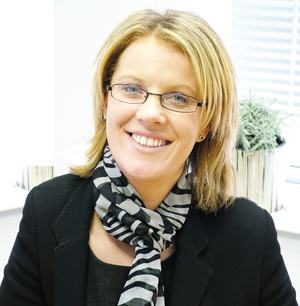
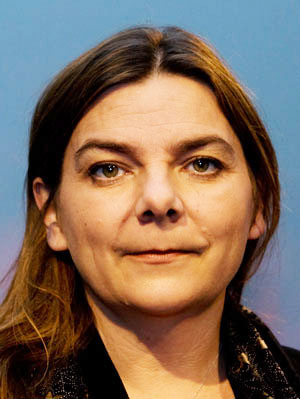
However, OCN London chief executive Jacquie Mutter (pictured) told FE Week the claim OCN London had lost funding was “completely inappropriate behaviour” with another round of applications for 2015/16 yet to close.

The NOCN email, signed by managing director Graham Hasting-Evans and sent to providers last month, was entitled “Are your adult qualifications funded? They could be with NOCN”.

It was sent to FE Week by NOCN, which won Skills Funding Agency (SFA) approval for 152 adult qualifications for next academic year.

The email said: “The SFA catalogue shows many other AOs have lost funding for their qualifications.”

OCN London claims to be a member of the Open College Network of AOs, overseen by NOCN, however the email went on to list a number of “former OCNs” which, it said, were funded for fewer qualifications each. The list included OCN London.Jacquie-Mutter-cutout

The email added: “If you’ve been using qualifications from these organisations for your courses, you might now struggle to get adequate provision unless you move to an alternative supplier, such as NOCN.”

An NOCN spokesperson said: “This year the SFA has reduced the number of qualifications it is funding.

“NOCN has succeeded in getting 152 qualifications funded for 2015/16 but many other AOs have lost funding.

“And so it is inevitable colleges and other training providers will move provision to awarding organisations that have had their qualifications funded.”

Under new SFA rules, AOs had an opportunity to submit applications for qualifications to attract public funding before March 6 and the 406 successful qualifications were announced last month.

However, providers have another opportunity to submit applications before June 4, with the results announced on July 1 — and OCN London said it planned to submit qualifications for this window.

Ms Mutter said: “Until both reviews looking at the applications have taken place and been finalised, no awarding organisation can claim, about any other organisation, that they’ve lost funding.”

She also hit back at claims OCN London was no longer part of the OCN.

“It’s our name and you can’t claim someone is not in the OCN when they are,” she said.

However, the NOCN spokesperson said: “In 2013 the London OCN left the membership of NOCN’s OCN network.

“Due to an on-going legal dispute over the use of OCN we are unable to comment further.”

In the application window, 779 submissions were made by AOs, of which just under 60 per cent were for qualifications previously rejected for not meeting SFA specifications.

Of the 406 approved, 190 qualifications were below level two, of which more than 70 per cent were resubmissions, and 216 were
at level two or above, of which 40 per cent were resubmissions.


Famed Paralympian opens centre for disabled students

Britain’s most decorated Paralympian Lady Tanni Grey-Thompson officially launched a new centre for learners with learning disabilities at Barnet and Southgate College.

The 11-time Paralympic gold medallist was given a tour of the facilities and also met with students who will be using the purpose-built centre.

Proceedings opened with a speech from Lady Grey-Thompson, who also unveiled a plaque marking the launch.

“The development is inspiring and inclusive and even life-changing, offering amazing support to the students to help them lead independent, active lives. I believe that every student there will have the opportunity to fulfil their potential,” she said.

Facilities at the new centre include a hydrotherapy pool, sensory room, a range of specialist classrooms, sports hall, catering café, drama room, training flat, sensory and recreational garden.

Main pic: From left: Barnet mayor Hugh Rayner, principal David Byrne, David Burrowes MP, Barnet and Southgate College head of supported learning Charles Nelson, student Jaia Melvin-Gibbonsthe, aged 19, Lady Grey-Thompson, Ann Zinkin, college governor and Patricia Ekechi, deputy mayor of Enfield


Award-winning Joe over the ‘technical wall’

A Bury College student is building a successful career after claiming first prize in the Northwest Guild of Bricklayers competition.

Level-two bricklaying student Joe Higginson, aged 18, competed in the junior category of the annual contest held in Preston, where he was challenged to build a ‘technical wall’ in five hours.

He credited the college with helping him win the competition and said: “I have learnt a lot during my time here. I have always received great support from my tutors.”

Construction tutor Andy Wales said: “Joe has made myself and the college very proud of his commitment and hard work on his studies.

“This has resulted in him gaining an apprenticeship with JS Serridge, a sub-contractor for Barratt Homes, which is a fantastic opportunity for him.”

Main pic: Joe Higginson holding his winners shield


Learners’ balloon effort takes off

The sky was no limit for students and staff from the science, technology, engineering and maths (Stem) departments at Chichester College who launched a balloon into the stratosphere.

Armed with a “payload” of three cameras, a black box and seeds, the team released the high-altitude weather balloon as part of the Global Balloon Challenge, where winners can land prizes for highest altitude, best images, best videos and best team.

After several hours in the air the balloon, flying at about five metres per second, flew over the New Forest before picking up the strengthening winds of the jet stream high in the stratosphere.

It then blew in a north-easterly direction before bursting — just when the team had predicted it would.

Andrew Chater, head of engineering at Chichester College, said: “With all equipment intact and with the data already looking impressive I think we can safely say that we have had a 100 per cent success rate for the mission.”

Main pic: From left: Level two diploma in engineering student Gill Krymcevas, aged 18, Steve Scanlon, engineering lecturer, level two diploma in engineering student Luke Guy, 17, Kevin Twine, motorcycle lecturer, Mick Belt, engineering lecturer, Rik Tooley, engineering lecturer, Chris Hartley, motorcycle lecturer and Carl Lillywhite, motorcycle lecturer


Sector politicians are all bookies’ favourites

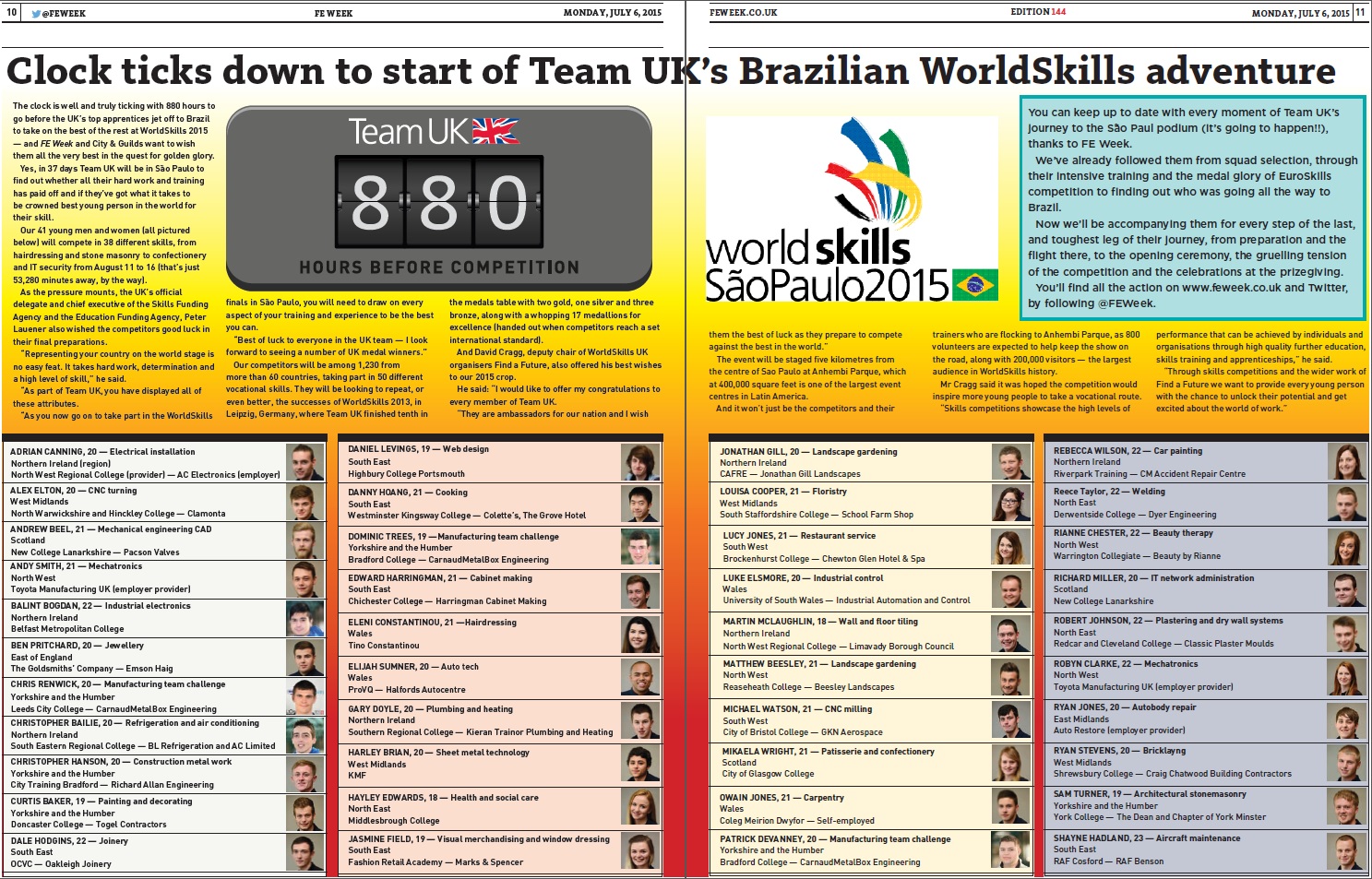
These are the political faces we’ve come to know in the world of FE and skills — but how likely are we to see them in the sector again after the General Election?

The good news for our current MPs is, at time of going to press, bookmaker William Hill said they were all odds-on favourites to win their constituencies.

But that doesn’t mean they can relax — other candidates are hot on their heels, and of course there’s no guarantee they’ll take up FE and skills posts after the election even if they do win.

Most likely to keep their seats in the Commons, according to the bookies, are Shadow Skills Minister Liam Byrne, MP for Birmingham Hodge Hill, and Shadow Junior Education Minister Yvonne Fovargue, MP for Makerfield, both with odds of 1/200.

Both won their seats with large margins in 2010, with Mr Byrne winning by a majority of 10,302 votes and Ms Fovargue with 12,490.

Next we have Skills Minister Nick Boles seeking re-election in Grantham and Stamford on the back of a 14,826 majority last time, Shadow Business Secretary Chuka Umunna, MP for Streatham, with a 3,259 majority, Education Select Committee chair Graham Stuart, in Beverly and Holderness (majority 12,987), and Business, Innovation and Skills Select Committee chair Adrian Bailey (majority 5,651), fighting West Bromwich West. They are all priced at 1/100.

Behind them, Shadow Education Secretary Tristram Hunt has odds of 1/66 of keeping his Stoke-on-Trent Central seat where he enjoys a 5,565 majority. Looking slightly less comfortable are Business Secretary Vince Cable and Education Secretary Nicky Morgan. Dr Cable, who had a 2010 majority of 12,140, is still favourite to win in his Twickenham constituency but has shorter odds of 1/8. Ms Morgan, meanwhile has odds of 1/3 to win following a 2010 majority of 3,744.

So who are the favourites for next Business or Education Secretary? Wisely, William Hill said with such a high chance of another coalition, and so many possible line-ups, the the odds were impossible to calculate.

odds

Football frenzy as Walsall winners lift colleges’ cup

Walsall College’s supported learning football team shot to victory at the Association of Colleges (AoC) National Sports Championships.

The team of 12 learners with a variety of disabilities had to win a regional round to qualify for the finals of the Football for Students with a Disability tournament, which was part of the AoC sports championships that took place in Bath.

They then finished ahead of sides from Tyne Metropolitan College, in North Tyneside, Bridgwater College, in Somerset, Blackpool and the Fylde College, Lincoln College and Newham Sixth Form College, in London after winning four out of six matches and scoring 10 goals.

Their college’s sports development co-ordinator Mark Howard said: “The team’s commitment, desire and attitude have been fantastic and their performances were truly outstanding.”

Main pic: From left: Winning team members Matthew Hurd, aged 17, Dean Degville, 18, Ryan Williams, 17, Stuart Foster, 19, Tom Hargroves, 18, Shaun Eldon, 20, James Beardsmore, 17, Jonathan Garratt, 18, Michael Gladstone, 23, Omar Myers, 23, and Ryan McNicol, 17


Exam papers ‘could be lost’ after ‘technical error’

A “technical error” in collecting Functional Skills papers has left learners across the country unsure whether their City & Guilds exam papers have been lost.

The glitch was said to be in the scanning equipment of un-named contractor, which meant papers were not uploaded to the marking system.

City & Guilds has ordered the contractor to rescan every single paper, but admitted originals may have been lost. It was not clear how many learners were affected.

N&B Training Ltd, based in Guildford, Surrey, is among the providers affected and is waiting for the results of around 40 Functional Skills maths, English and ICT tests taken by learners between January and March.

Sam Clark, owner, said: “We do not know if any papers submitted after March have been lost.

“We have been given all sorts of excuses from City & Guilds as to why we haven’t received the results yet. These range from changes in their policies and procedures; they have employed new markers and a whole cacophony of other excuses.

“Some of the results we are waiting for are for learners on our EFA study programmes. These are vulnerable learners for whom it was traumatic enough to sit the exams first time around. It will be devastating to have to tell them their papers have been lost and they need to sit the exams again.”

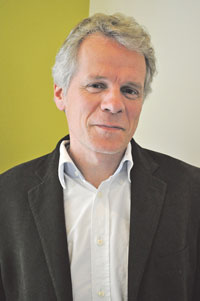
City & Guilds UK managing director Kirstie Donnelly (pictured below) apologised for the problem.

“I am deeply sorry for the difficulties and concerns this has caused our customers and our learners — many of whom I’ve been talking to over the past few days,” she said.

“I can reassure all of our customers that we are working extremely closely with our supplier to resolve this situation as quickly as possible.”

She said City &Guilds started using a new marking system for paper-based Functional Skills tests in January and had noticed a delay in results getting to providers by the end of the following, sparking an investigation.

She said: “Unfortunately, what became clear was that there had been a technical error in the supplier’s scanning system. This resulted in some papers not being uploaded into the marking system, which is why some results were delayed leading to concerns over missing scripts.

“At this stage, we cannot give a final figure because we’ve requested that our supplier rescan every single paper they have received. This way, we will be able to reconcile how many papers, if any, are permanently lost.”

Ms Donnelly said a number of papers had since been found, but that City & Guilds would work with providers to set up re-sits for those whose tests did not turn up.

City & Guilds said its online tests – which made up the majority of its Functional Skills offering – were unaffected.


‘Our education system should be an enabler and not a blocker’

Dame Asha Khemka issues an impassioned plea for FE and the benefits it can bring as the countdown to voting day nears its end.

There has been something quite worrying about the discourse in this General Election campaign.

Aside from the usual political point-scoring, we’ve seen something more sinister — an undercurrent of fear. Fear of the foreign, the stranger and the immigrant.

At a time when we need to be open to an ever-shrinking world and the opportunities international trade brings, we seem to be retrenching backwards into our small island.

People are afraid the stranger may take their job. They are sceptical about Europe, and worried about the impact of immigration on our already-stretched public services.

If we build a society based on strong employment, this anxiety will no longer exist. Instead of throwing rocks at the EU from the outside, let’s try and change things from the inside. And by creating the capacity to invest more in services and infrastructure — and a culture that doesn’t expect everything for free — people will feel less threatened by immigration.

It’s time to inject a sense of positivity back into our great nation, regardless of where we’re from, which side of a border we reside and where our political allegiances lay.

Our collective challenge is to create a country where opportunity flourishes and people can achieve their ambitions, no matter what their starting point.

Often it is easier for somebody from the outside to see the positives — and I believe the foundations are already in place.

We are an infinitely accepting and tolerant nation. I know, because this country and the people in it welcomed me and my family with open arms more than 35 years ago. Let’s not allow the rhetoric of fear to change that.

Rather than spending all our time trying to fix what isn’t working, let’s look at what does work and replicate that

Our country is one of promise and opportunity for those willing to seize it. I can testify to its life-enhancing opportunities. Let’s work together to instill in the next generation a sense of hope and create a society where people are willing to invest in their education — because in gaining skills, they gain their futures.

We are a society where people can be themselves and, because of it, innovation thrives and creativity flourishes. Let’s allow people to innovate, and have trust in those who work tirelessly in public service to put the interests of their communities first rather than meeting targets or quotas set from a distance.

Every day in my own college I see young people filled with hope and ambition, just like I was all those years ago.

I am a firm believer in allowing that ambition to flourish; in providing our young people with the skills and the personal tools to turn their dreams into reality.

Whether that is through apprenticeships or academic qualifications, our education system should be an enabler and not a blocker.

We start from the stand point that every single student has the potential to make a success of their lives and, in so doing, will go on to contribute to their communities and society as a whole. Positivity breeds positivity.

Our nation is filled with people who want to make a difference. I know because some of those people have helped me along the way. That, in turn, has made me want to give something back. The more we push people to the outside, the less they feel part of society and the less they give back in return. Negativity breeds negativity.

We have many challenges ahead — on controlling our borders, on balancing the books and repairing our fractured society.

We cannot achieve any of this with a deficit model. Rather than spending all our time trying to fix what isn’t working, let’s look at what does work and replicate that. Let’s learn from each other.

If there’s anything my many years in the FE sector has taught me, it’s that whatever our age, background or culture, we never stop learning.


Sandra McNally, director, Centre for Vocational Education Research

They’re questions that will have kept many others in the FE sector awake at night. They include how do you guarantee good quality vocational education? How do you measure success when there’s no simple FE outcome measure? How are the steps to address low levels of literacy and numeracy working?

And then there’s how do you equip people already in the workforce with said skills and how much of an impact does it have to get those skills later in life, as opposed to when they were younger?

And, as director of the new Centre for Vocational Education Research (CVER), it’s going to be Sandra McNally’s job to help answer them.

The centre, based at the London School of Economics (LSE), was launched in March to start filling the gaping hole in research into the sector.

Historically there’s been much less research on FE than there is on schools and universities


As we sit in McNally’s airy office in the LSE’s buildings in Central London, I am struck by how mammoth the task facing her and her colleagues is.

“Historically there’s been much less research on FE than there is on schools and universities — there is some, but not as much really good research that gets published in really good places,” she says.

“The data hasn’t been as good either, but that is changing and we’re accessing data for the first time — linking the individual pupil data base to the national records which has only just become available and we’ll get even better data sets soon.

“One of our roles is to use that data ourselves to answer important research questions, and the other role is to try and get other people in the wider academic community to use the data and help facilitate that.”

Softly-spoken McNally, aged 43, is someone who is clearly more comfortable talking about her work than herself.

“I’m quite private and introverted,” she lets slip. But, she tells me, she’s “well-suited” to research.

“I didn’t decide to be an academic when I was young, but looking back I don’t think it’s terribly surprising that this is where I am,” she says.

“I’ve always been somebody who’s interested in research as well as current affairs and politics.”

Clockwise from top: from left: McNally’s half-brother Mark, stepmother Jackie, father John, sister Jennifer, brother Hugh, baby nephew Will, aunt Margaret, McNally and her sister-in-law Gill

And while most people wouldn’t connect those interests, McNally insists they’re vital to each other.

“Because I’m working in such an applied area, education and skills, you can’t do good work in that area without being clued into what’s going on around you,” she explains.

“You just have to be well informed and interested in what’s going on or you research won’t be very good.”

McNally was born in Dublin, and describes her childhood as “a very happy life”, with her parents John (a banker, who, McNally jokes, “retired a long time before the financial crisis”) and Annajane as well as siblings Hugh and Jennifer.

Sadly, Annajane died from breast cancer in 1987, when McNally was 15.

“That was obviously very painful,” says McNally.

“It does have an impact, losing a parent when you’re young has a profound impact on you for the rest of your life — I miss her hugely.”

“She was only 40, and at that time a lot people died from breast cancer. At that time it was at its peak in Britain and Ireland.

“But now, although it’s still as prevalent as it was the treatment has improved, people don’t die from it as often as they did back then.”

McNally with her father John last year

At 18 McNally went to Trinity College Dublin to study economics before moving to London to study an MSC in environmental economics at UCL.

“I absolutely loved London,” she says. “It was just so different from my life before that and it was the first time I became friends with people who weren’t Irish.

“I lived in international halls and I had so many friends of different cultures and doing different things — I just thought London was a fantastic place.”

After graduating, she found a job in Cambridgeshire at the Centre for Ecology and Hydrology as an environmental economist.

Pretty soon however, she realised she was going to need to expand her research skills and started a PhD.

“Doing the PhD alongside my job was a challenge. Although my job was very related to what I was doing for my PhD so I think it really helped me do my job because before that, I wasn’t highly skilled enough to be a really good researcher,” she concedes.

“I was using the skills I was learning in college to do my work so it was a little bit like an apprenticeship — an unusual sort of apprenticeship.”

In 2001, McNally started her career in education research, when she moved to the LSE’s centre for economic performance and centre for the economics of education.

The move, she admits, was largely “opportunistic”.

“I really wanted to work in an environment where there was sort of a public policy issue and education just happened to come up,” she says.

“But working here is fantastic, the projects I was working on were really very interesting and gradually I came to know a lot about education in the UK.

“I think what I like about working in education is that as somebody who’s been through education yourself you can relate to a lot of the issues — that wasn’t the case when I was working in environment and agriculture where I didn’t really have much personal background of that although it was quite interesting.

Jen_Sandra_Hugh_2013
McNally’s sister Jennifer, McNally and brother Hugh in 2013

“I do like the sense of focussing on a research area that I really believe is very important to try and improve things for people — that‘s a very attractive part of it.”

McNally now splits her time between LSE and the University of Surrey, where she started teaching two years ago — the first time in her career she’d had any interaction with students.

“That was quite difficult, actually,” she says.

“It was quite a steep learning curve and it is very strange to see the university from that other perspective and to engage with other people is a very different thing.”

McNally’s father remarried, and now has two sons in his second marriage, Mark aged 17, and Stephen, 19.

“It’s funny, when I’m teaching all my students stats in Surrey I think they all look a little bit like Stephen and his friends,” she says.

But, she adds: “It’s been very good as well — it’s nice to engage with young people and be involved in teaching.

“And it’s affected my research because you have to know subjects so well in order to teach them, I feel it’s probably deepened my own knowledge of the areas that I’ve been teaching in and also extended my knowledge because I have to go into other areas of labour economics apart from education.”

However, it looks like McNally will be scaling back her teaching to focus on the CVER, which will have be designing its first project at a steering group meeting in May — working out which of those earlier questions will be answered first.

Losing a parent when you’re young has a profound impact on you for the rest of your life — I miss my mother hugely


“We’re hopefully going to be designing an interesting programme of research,” she says.

“Initially we’re looking around few main themes. Like what are the returns on vocational education for individuals and society more generally? How do you improve quality? And what’s good?

“What are the broad benefits and how can you improve careers advice through what is a very complicated system?

“That’s about where we’re starting at and that will evolve over time.”

So what does she hope will come of it?

“Really good quality academic research — but that’s very policy-relevant and very motivated by what’s important to the country,” she says.

“I’d like the research to facilitate better, evidence-based decision-making at policy level and thereby improve things for people, especially for young people coming through the system.”#

It’s a personal thing

What’s your favourite book?

Anna Karenina by Leo Tolstoy. I like the character development of it — the main character is a portrayal of Tolstoy himself and I like that it tells you what he’s thinking and the phases he goes through in his life

McNally, brother Hugh, sister Jennifer, father John and mother Annajane

What do you do to switch off from work?

I read a lot and I like walking. And I watch TV miniseries — I’m watching Poldark at the moment and I love Downton Abbey and the Swedish ones like The Killing and The Bridge

What’s your pet hate?

I don’t like people who have long conversations on their phone on the train and speak twice as loud as they need to

If you could invite anyone, living or dead, to a dinner party, who would it be?

Seamus Heaney [Nobel Prize-winning Irish poet]

What did you want to be when you were growing up?

I went through various phases, but I wanted to be a journalist at school and ran the school magazine and it was great experience. I suppose some of the research I do now uses similar skills