


Two regional authorities are ditching the skills bootcamp training model after gaining greater freedom over adult skills plans in new devolution deals.
Under a gradual roll-out, the government is lifting ring-fencing rules for mayors around funding for courses and training programmes such as bootcamps.
West Yorkshire Combined Authority (WYCA) has confirmed it will phase out the courses, worth around £2.5 million of its £65 million total skills budget, once it is handed a single “integrated” funding settlement in April.
The mayoral authority is following Greater Manchester, which decided to cease all funding for skills bootcamps when it gained integrated settlement freedoms last April.
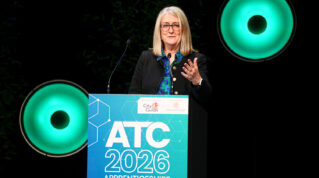
WYCA, led by Labour mayor Tracy Brabin, said it would evolve the employment focused training it funds into locally tailored programmes that avoid some of the strict rules imposed by national government.
Brabin told FE Week: “Devolution is working for West Yorkshire. It’s enabling us to do things differently and empowers us to build a region of learning and creativity, where our communities and businesses can flourish.
“By co-designing targeted employment programmes with local firms, we’ll drive up employment, fill vital gaps in the local labour market, and ensure more of our young people are either earning or learning.”
Greater Manchester quietly scrapped the courses last March. Its website now states the authority has transitioned to a more “integrated, place-based funding approach”.
It is unclear how the authority has chosen to spend its share of the skills bootcamp budget allocated via the integrated settlement, which was £6 million in 2025-26, and will be £4.6 million per year between 2026 and 2029.
Integrated settlements
Under plans started under the previous government and continued by Labour, mayoral authorities with a “strong track record of delivery” can ask for a “deeper level of devolution” in the form of an integrated settlement.
The settlement means each mayor is handed a single sum of money for each year of the spending review period, which now runs to 2029.
This replaces the system of giving mayors a collection of ring-fenced funding lines for training such as skills bootcamps, adult education and free courses for jobs, a budget aimed at increasing level 3 qualification levels.
Under integrated settlement rules, the authorities have the “discretion” to move up to 10 per cent of funding between seven “themes” of policy delivery, which include adult skills. They also have “full flexibility” on how funding is spent between years.
From April this year, five more mayoral authorities are set to be handed integrated settlements running up to 2030: West Yorkshire, South Yorkshire, Liverpool City Region, the Greater London Authority, and North East.
However, in exchange for this flexibility, mayors will also be asked to agree “outcome targets” with central government.
For the first two authorities to go through this process, Greater Manchester and West Midlands, targets include reducing the number of residents with no qualifications and increasing working-age residents qualified to level 3 or above.
Liverpool City Region told FE Week it had no plans to axe bootcamps.
Other authorities had not responded at the time of going to press.
Well-trodden path
Skills bootcamps were introduced by the Conservatives in 2020. They offer learners intensive, industry-focused training for 12 to 16 weeks, followed by a “guaranteed” job interview.
National funding for the courses, which aim to help adults into work, a new job or a better paid role, increased to a peak of £350 million this financial year.
While the courses have proved popular with some learners, data for 2023-24 shows 43,000 of the 60,000 starters completed their course, and less than half had a positive job outcome.
Training providers are paid for bootcamps in three “milestone” instalments based on learners’ performance.
The final payment is conditional on whether positive outcomes, such as a new job, have been achieved.
Evaluations have also suggested some training providers treat the “guaranteed” job interview aspect of the course as a “tickbox” exercise.
In April, Labour announced changes to skills bootcamp commissioning, which included restricting funding through its national contract to construction-focused courses, and increasing the funding granted to councils and mayors from £170 million to £248 million.
But the government appears to have shrunk its skills bootcamp budget for the next financial year, with West Yorkshire suffering a 68 per cent budget cut to about £2.6 million per year for the next three years.
West Yorkshire’s approach
WYCA plans to review and eventually phase out skills bootcamps in favour of targeted employment programmes (TEPs), which are modelled on the Department for Work and Pensions’ sector-based work academy programme (SWAPs).
The authority says its TEPs model shares several features of both SWAPs and skills bootcamps such as intensive training, a focus on local job demands and a guaranteed job interview.
However, TEPs – which it launched in 2023-24 – have more flexibility on course length, do not strictly require a work placement, and may not include a qualification.
This means the training can be tailored to the needs of the sector it is focused on.
Stephen Evans, chief executive at Learning and Work Institute, said: “This seems like a sensible approach to test, the combined authority have identified changes to existing models like bootcamps that they think will get better results.
“As with all provision, a proper independent evaluation will be needed to show whether this does, in fact, work better so I hope they’ve planned for that.
“And with the adult skills fund [being] a fixed pot from government, they will need to be clear which provision will be reduced to pay for this.”








Your thoughts