

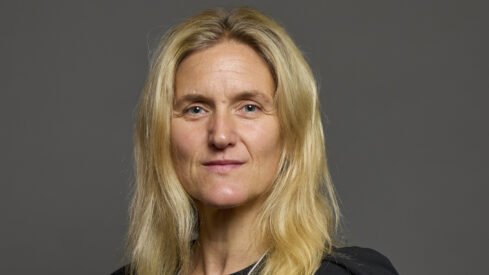
Sport-mad MP Kim Leadbeater, who entered politics after the murder of her sister Jo Cox, tells Jessica Hill she hopes to draw from her career in further education to champion the sector
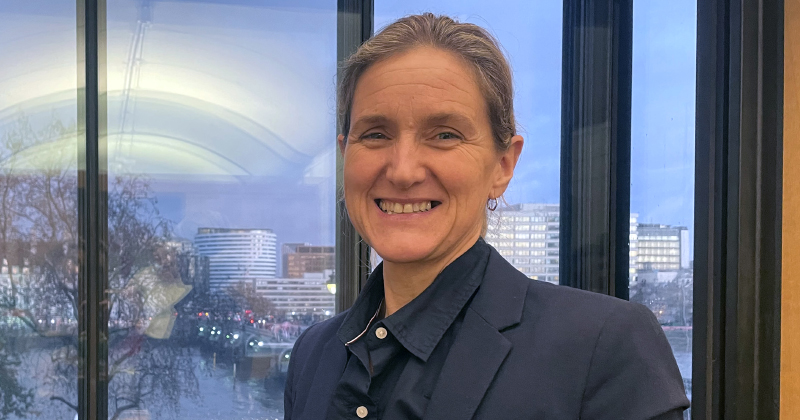
Kim Leadbeater offers me a can of Coke from a small fridge hidden away in her Westminster office, and cracks open one for herself.
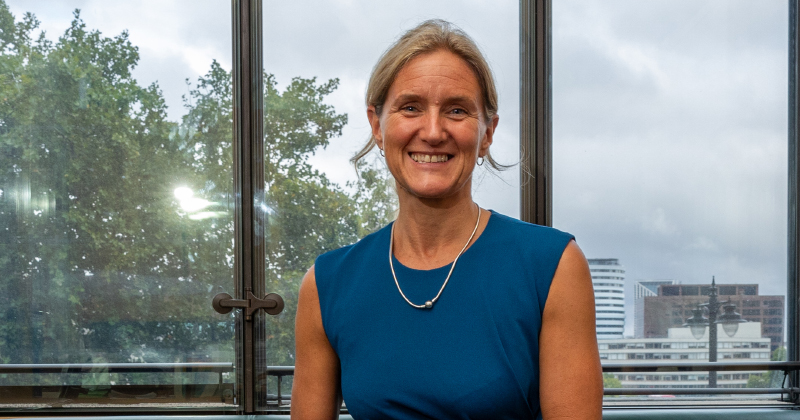
Leadbeater, who is best known for spearheading the terminally ill adults (end of life) bill, is a rare species these days as an influential politician who has also experienced life on the coalface of FE. She is refreshingly down to earth for an MP, perhaps because she never intended to become one in the first place.
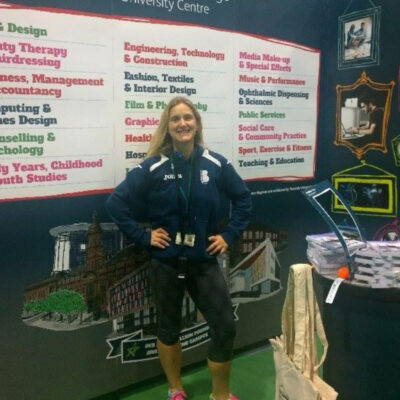
After taking a degree in exercise and fitness at Dewsbury College (now part of Kirklees College), Leadbeater spent 10 years teaching at Bradford College and describes herself as a “passionate advocate for FE”.
Her route into Parliament followed the murder of her sister Jo Cox, propelling the unassuming college lecturer into the national spotlight.
Horrific attack
It was seven days before the EU referendum, and Leadbeater had taken the day off from her Bradford College job to look after her partner who had just had an operation.
As keen football fans, the pair were about to watch a match on TV. Leadbeater had just dashed out for a run to collect her car from a service when she received the call about her sister.
Cox, who was married with two children, was leaving her constituents’ surgery when she was attacked by a gunman who shouted ‘Britain first’ as he stabbed and shot her.
Leadbeater had been lecturing on an exercise course three days a week while teaching “cheesy eighties aerobics classes” on other days, but planned to quit her college job to start a Master’s degree.
Cox’s death “changed everything forever” for her, and she instead took on the mantle of championing the causes of community cohesion and civility in politics that had been so dear to her sister.
Joining politics
Cox had entered Parliament for Batley and Spen the previous year. Her first Commons speech, in which she said“we are far more united and have far more in common than that which divides us”, struck a chord with those who felt the country had become uncomfortably polarised in the run up to the EU referendum.
Leadbeater worked with others who knew Cox to set up the Jo Cox Foundation, to continue her sister’s work of bringing communities together.
She spent the next five years working on initiatives like the Great Get Together campaign, in which community events take place across the UK each year on Cox’s birthday weekend in June.
Then in 2021, Tracy Brabin, who had replaced Cox as MP for Batley and Spen, stood down to run for mayor of West Yorkshire. When it was suggested Leadbeater should stand in her place, “absolutely not” was her initial response.
But she also felt strongly that as a lifelong resident of the area, the seat should not go to someone who “didn’t care about the community in the way that I did”.
“My view was that it would always be Jo’s seat, and it would be very upsetting for us as a family if somebody without the emotional connection and loyalty to the area was doing that job.”
The Labour Party “wasn’t in a great place at the time”, having lost a byelection in Hartlepool. Leadbeater ran against George Galloway and his Workers Party of Britain in a “very toxic” campaign. At one point she was chased to her car and required police protection.
“It was a really poor example of how politics should be done, which is precisely what I didn’t want,” she says.
She won by 323 votes and sees her victory as a “triumph of good over evil”.
Sidelining education
Since Labour came to power in 2024, being in the party of government has created “a whole set of new challenges” for Leadbeater.
She believes Labour has “really prioritised healthcare”, and “we need to start looking much more at education and what we can do”.
She credits prime minister Keir Starmer with being “pretty open and honest” that Labour needs at least two terms in power to “turn things around, after such a long time of being allowed to go into decline”.
But she also acknowledges that “nowadays, people don’t have any patience” to wait for change.
The prospective impact on communities of having a Reform government “terrifies” her.
She is vice chair of an all-party parliamentary group on compassion in politics, which is “all about setting civil and respectful political discourse”. She fears that “if we can’t show political leadership on that, then the country’s got no chance”.
The group is pushing for an amendment to the Hillsborough Law currently making its way through Parliament, which would make it a criminal offence for politicians to mislead the public.
In the run up to the next general election, Leadbeater believes it is “really important” for colleges to become “arenas where young people can debate subjects and not feel like they’re being blocked”, and can “listen to people who they might disagree with”.
As a lecturer, she did not shy away from encouraging her learners to debate controversial topics in their professional development lessons – a “classic” debating topic being “all fat people are lazy – discuss”.
Votes at 16
Leadbeater is a “very big supporter” of the government’s decision to lower the voting age to 16, but “as long as it’s accompanied by political education”.
Public First research on young people who will be the first under-18s eligible to vote at the next general election indicates that much more needs to be done. None of those interviewed knew the voting age was being lowered, and right-wing figures such as Nigel Farage and the late Charlie Kirk were found to be more widely recognised than the prime minister.
Leadbeater is concerned about Reform UK’s dominance on TikTok, and speculation that the party is receiving funding indirectly through far-right groups in America.
Some of the rhetoric used by senior leaders of Reform against teachers has been “really dreadful to hear”.
She believes colleges must be enabled to do more to “educate young people on misinformation, disinformation and media literacy… so when they do make that decision on who to vote for, they’re making it based on facts, not on a 30-second clip on Tiktok”.
Assisted dying
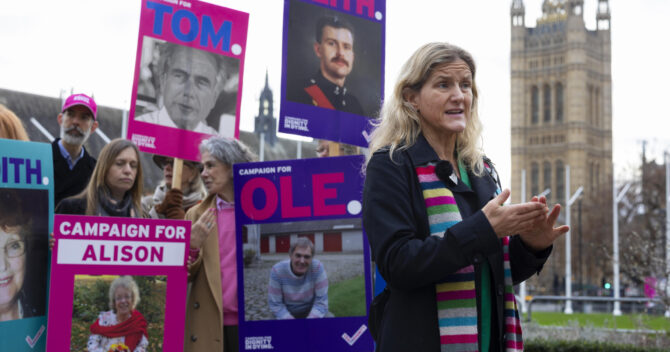
Much of Leadbeater’s time has been spent working on the private members’ bill she put forward last year proposing that adults with less than six months to live can be helped to end their lives.
It is now facing heavy scrutiny in the House of Lords, with peers tabling more than 1,000 amendments to the legal text, and could run out of time for a vote to pass before the end of the Parliamentary session.
Despite the challenges involved in getting the bill through, she believes this “massive piece of work” has been “the best example” of “genuine cross-collaboration”.
As a vote of conscience there were no party-political lines drawn, and Leadbeater worked with colleagues from other parties including the Conservatives and Reform. Reform’s deputy leader, Richard Tice, was a keen supporter, she says, having “lost a loved one under very horrible circumstances”.
She believes this kind of cross-party engagement happens a lot more in Westminster than people realise, particularly on select committees.
What most people see of politics is “a combative 45 minutes of PMQs on Wednesday lunchtime, or stuff in the papers and on social media which generally gets two people with opposing extreme views to fight it out”.
But Leadbeater claims most MPs are “somewhere in the middle” politically and “there’s a lot of genuine friendships, and certainly professional relationships across political divides”.
I joke it must feel strange for her to be talking to a journalist about issues beyond euthanasia.
But she is keen to point out her other political interests, particularly around social cohesion, women’s equality and – harking back to her days in FE – health, fitness and wellbeing.
Leadbeater is a member of the women’s parliamentary football team, made up of cross-party MPs (including sports minister Stephanie Peacock), parliamentary staff and journalists.
For two years until 2024 she was chair of the all-party parliamentary group for sport and still champions health and wellbeing in Parliament “as much as I can”. But she concedes (while sipping her Coke) that “in terms of my own health and wellbeing, I’ve probably never been less healthy”.
The rebel
Leadbeater was a keen hockey player while a pupil at Heckmondwike Grammar School, and performed well academically. But she was also “a bit of a rebel”.
Whereas Cox went on to Cambridge University to study anthropology then social political science, when their headteacher told Leadbeater that “we’d like you to go to Oxford or Cambridge”, she thought “well, I’m not doing that then”.
“It’s hard growing up as the younger sibling because you always get compared… I thought, ‘I want to do my own thing’.”
Instead, Leadbeater went to work in a laboratory analysing carpet yarn.
She later embarked on a law degree at Leeds University, then switched to philosophy and politics. But after becoming disillusioned with that course too, she became a commercial trainee at a bed manufacturing firm.
During her 12-month programme she worked in all parts of the family-owned business. While there was no formal educational element to the programme, she saw it as a “really valuable model for entering the workforce”.
Leadbeater was quickly promoted to national sales manager, but after a stint at another bed manufacturer she decided to return to the world of education.
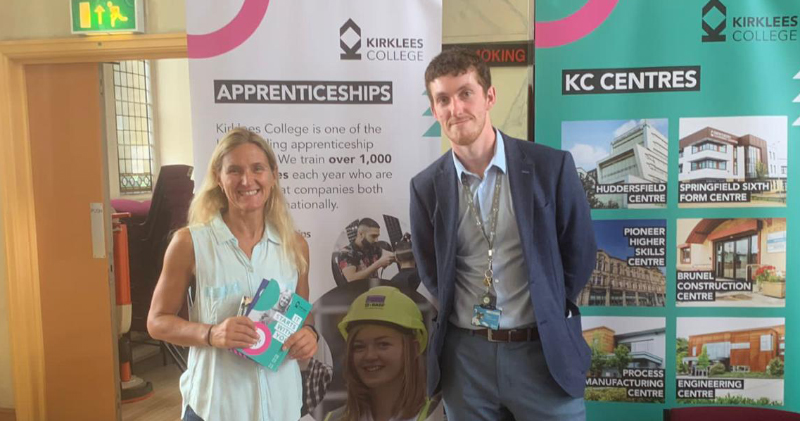
She admits her “friends thought I was mad” for quitting her “very well-paid job and company car” for an NVQ level two in health and fitness at Dewsbury College.
“FE actually was what I needed, when I needed it,” she says.
Championing FE
Leadbeater appreciated the small class sizes she experienced on her NVQ and subsequent foundation degree, rather than the “lecture theatre of 200 people where you can’t ask questions or might be embarrassed because you don’t know the answer”, which was her experience of university life.
She did her teacher training at Wakefield College before she started teaching at Dewsbury, then at Bradford College.
Once the assisted dying bill is “done and dusted”, she hopes to focus more of her attention on education issues. She believes FE provides “a second chance for so many” but remains “the forgotten relation within education”.
She concedes that “Labour’s not getting everything right” on education; she has friends in the sector who are “really unhappy about some things”, including the government continuing to make schools and colleges pay national insurance contributions on staff earnings.
But she also detects “a lot of satisfaction” around the recent changes proposed in the curriculum and assessment review.
She agrees with its recommendation for a “broader” curriculum, and thinks more focus should be placed on developing interpersonal skills and health and wellbeing.
However, Leadbeater is wary about putting more pressure on school and college teachers to support young people. “There’s a role for us all in raising our children and young people, particularly parents but also wider families and communities”.
She fondly recalls how her experience of coaching the girls football team at Bradford College on Wednesday afternoons was about “friendships and teamwork” more than anything.
She would like to see colleges supported to provide more extracurricular activities, but not if it creates “more pressure for teachers who are already extremely stressed trying to be the social workers, counsellors and life coaches”.
Bonkers, beautiful place
One extracurricular activity she strongly believes all FE colleges should do is bring learners into Parliament for guided tours.
“Every single young person should get the chance to come” she says. “Every decision that’s made in this place affects young people’s lives. They should see what actually happens here and see the history, because it’s an amazing, bonkers, beautiful place.”
Politics was not a career Leadbeater “sought out”. She finds it “all consuming” and on most days, she regrets ever becoming a politician.
The scathing comments to a recent post she made on her Facebook page, announcing more support for the Armed Forces, illustrates the challenge she is up against; one featured an AI-generated coffin full of nails. But Leadbeater sees her role as being “very much like teaching”, in that the satisfaction comes from “making a difference to people’s lives”.
She recalls how during lockdown, Zach Eagling, a boy in her constituency with cerebral palsy and epilepsy, was trolled online while doing a fundraising walking challenge in his garden. People sent him flashing images in an attempt to bring on an epileptic fit.
Leadbeater helped Zach and his mum campaign against this “outrageous” type of trolling against those with epilepsy, and succeeded in adding an amendment into the online safety bill to make it illegal.
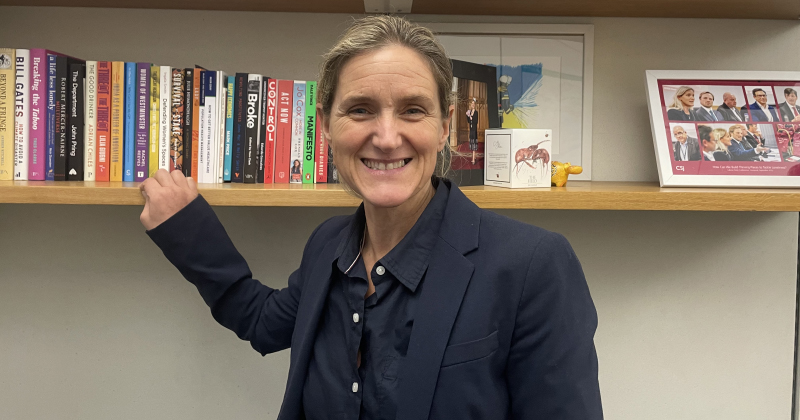
Leadbeater shows me the picture on her wall of Zach, who is now campaigning for better public transport access for those with disabilities. “He’s an absolute legend,” she says. “The most satisfying part of my job is when you can help people make a difference.”
On those days, she does feel glad to be a politician.




“She concedes that “Labour’s not getting everything right” on education; she has friends in the sector who are “really unhappy about some things”, including the government continuing to make schools and colleges pay national insurance contributions on staff earnings.” And ITPs? Doing the same things on the same funding…