

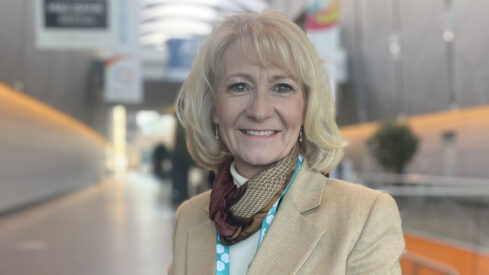
Kerry Boffey helps FE providers navigate Ofsted inspections as boss of FIN – and she tells Jessica Hill the new inspection framework isn’t a reason to drop your guard
Kerry Boffey woke up every inspection morning with stomach ache during her 18 years as an inspector of independent training providers.
She believes every Ofsted inspector should wake with that sort of tension as it reflects an intense passion to “get the grade right because it matters”.
“If I ever didn’t have tummy ache in the morning, it would mean I didn’t care enough,” she says.
Nowadays, Boffey carries the same determination into helping others achieve successful inspection outcomes as chief executive of the Fellowship of Inspection Nominees (FIN).
And though Ofsted has launched a new inspection framework in the wake of headteacher Ruth Perry’s death in 2023, she points out that many of its inspectors are the same people as before, deploying the same methods for scrutinising evidence.
“They’re more polite about it now, and so they should be, but the fundamental aspects of triangulation of evidence haven’t changed,” she says.
Boffey’s team have been analysing the latest inspection feedback to help nominees get their houses in order under the new regime.
Ofsted inspectors (HMI) have played down the need for more inspection preparation, with one telling nominees at this year’s Apprenticeships and Training Conference that “you don’t need to produce reams and reams of documents, we just want you to talk to us”, and that “there are lots of things people think they’re supposed to do for inspection that they really don’t”.
But Boffey warns it would be “naïve” for nominees to believe Ofsted’s “smoke and mirrors” rhetoric. “It’s really unfair to some providers who then go into inspection unprepared. That sets people up to fail. You need to be more realistic.”
She asserts that Ofsted’s new inclusion drive cannot be achieved unless inspectors ask “difficult questions” to get the evidence they need to show that disadvantaged learners are being supported.
Rural roots
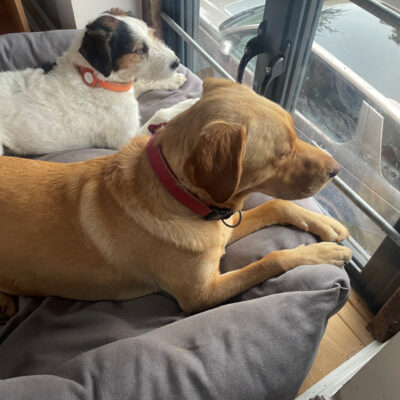
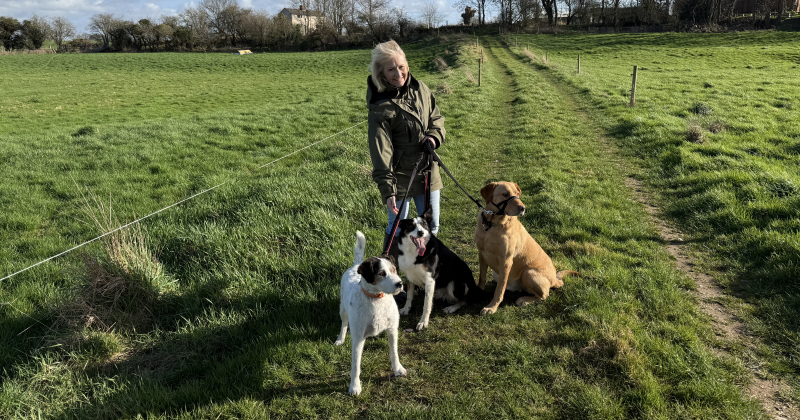
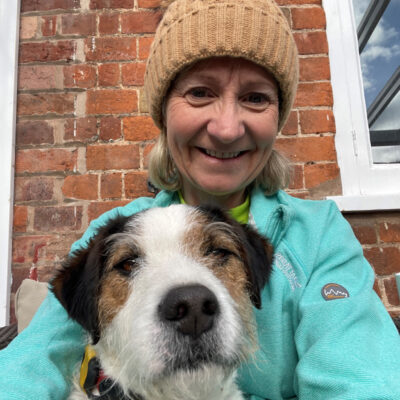
FIN’s 600 members usually encounter Boffey via a screen from her farmhouse home, where her scruffy Jack Russell, plus a labrador and collie that belong to her daughters, sit just out of view.
“Anyone on a Zoom call with me often hears a dog who’s seen a squirrel through the office window – when all three see a squirrel, I’ve got no chance!” she jokes.
Boffey is a farm girl through and through. She was born and raised on a farm and married a farmer. Three years ago, her husband suffered a stroke, so her two daughters are often close by to lend a hand.
Boffey disliked school and recalls a careers officer in a tweed jacket with patches on his arms and an egg stain on his lapel, telling her she wasn’t “bright enough to work in an office”.
But at 16, she thrived on a work placement with a retailer, and thus began her deep appreciation for vocational training.
After she later trained as a dispensing optician, she found her “spiritual home in further education” as a retail and warehousing tutor for an ITP. She also became an external verifier for City & Guilds in Northern Ireland, and managed her own team in the West Midlands.
Inspector Boffey
In 1999, Boffey became an associate inspector for the Training Standards Council (TSC), and then for the Adult Learning Inspectorate which replaced it and subsequently became part of Ofsted.
She quickly learned just how pedantic inspectors can be. One remarked without irony how an organisation had 22 policies, but lacked “a policy to review the policies”.
Despite the tummy aches, she came to love the “total immersion of a week getting to know a provider” that inspections gave her.
She was “taken aback” by some of the “absolutely bespoke support” she saw. One tutor drove a homeless learner to court for a hearing, which was “not what they’re paid to do” and their actions proved to be a “game changer”.
Boffey started a consultancy in 2003, the Adult Learning Improvement Network (ALIN), providing services such as coaching, quality improvement and management development programmes for providers. She still runs ALIN today as a vehicle for governance work and quality reviews.
‘Don’t moan – get stuck in’
She noticed through ALIN that many inspection nominees were “struggling to drive quality”, as they were “a lone voice that could not be heard above the drive for business growth until the threat of inspection drew close”.
Boffey’s life mantra is that “if you don’t like something, don’t moan about it – get in and change it”. So she gathered current and former inspectors she considered as “experts in their field” to change the culture around quality improvement.
FIN was created as a collaborative community on the principle that “if providers place their focus on delivering high quality and put robust systems in place, then inspection will look after itself”.
Boffey claims it is still the only FE membership organisation focused solely on quality.
FIN includes serving Ofsted inspectors among its ranks, although they “have to be very careful what they can do”.
Its experts make themselves available to nominees in the run-up to inspections, so a remote meeting on a Sunday afternoon to run through a presentation, with feedback at 9pm, is “a regular occurrence”.
They give FIN members “unbiased and honest opinions” in “the heat of the moment” over whether they can complain about what an inspector has told them.
But more often they provide the “calm voice of reason”, with “tangible ideas on how to approach or evidence a forming judgment”.
Lobbying behind the scenes
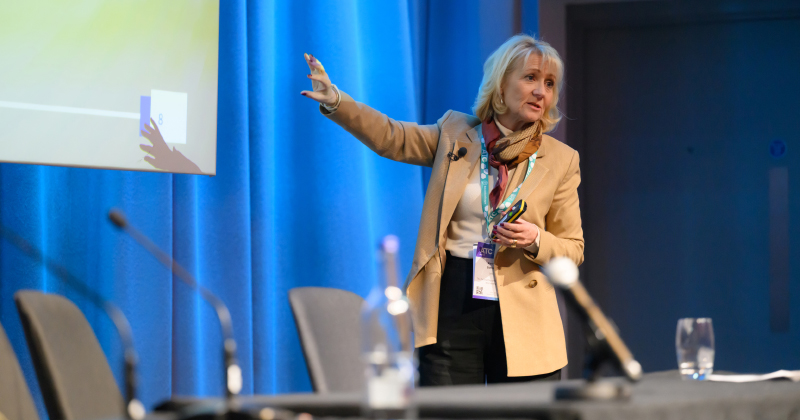
Much of Boffey’s work is done “in the background” and involves highlighting the inspection challenges that providers are experiencing with the watchdog.
Last year, FIN led a successful campaign calling for all providers, “regardless of size or complexity”, to be given a five-day notice period (instead of two) for inspections.
Boffey believes FE leaders face less anxiety over inspections than their school counterparts because the burden of judgment is shared more widely within their teams, with a shadow often appointed to support nominees.
She recently helped persuade Ofsted to allow schools to appoint nominees for the first time; before that, a headteacher was also the de facto nominee. Boffey is now “looking at getting much more involved with schools”.
The lull in inspections during the pandemic made things “quite difficult” for nominees who lacked that “external driver” to compel their provider to focus on quality improvement.
Boffey reminds her nominees they have the most influence in the aftermath of an inspection, when they can put the necessary processes in place to achieve a good result next time.
She thinks it would be helpful if Ofsted could tell providers post-inspection that “we could come back at any time” to prevent them from taking their eyes off the quality ball.
She would like to see more regular and less intense Ofsted inspections involving smaller teams, rather than one large team descending on a provider once every four years.
Boffey also believes it would be beneficial for all full-time HMIs to return to the coal face on secondment to the most challenging providers every three years, to help them “fully understand provision”.
Their “untapped talent pool” could also benefit the sector in return.
“Unless, of course, some HMIs would actually be out of their depth? Hopefully not,” Boffey adds.
Meeting Martyn
It is surprising, and perhaps a sign of the aloofness of Ofsted’s central command, that Boffey has never met any of its chief inspectors. Given she has spent her life reflecting on how the inspectorate could be improved, you would think its chief inspector would be biting her hand off for a meeting.
Boffey is not offended by this. But if she could sit down with Martyn Oliver, she would tell him that Ofsted has “missed the boat” by not measuring every provider against local and national skills needs, given that this is such a government priority.
“The true value” of an apprenticeship lies in its “impact on a business” and “a company’s ability to retain staff”, she explains.
To make time for this assessment during an inspection, Boffey suggests Ofsted could stop judging providers on some of the Prevent and safeguarding training, and English and maths provision they are now expected to deliver, but which they are not paid for.
A professional services provider was recently criticised by inspectors for not having enough sexual health training. Boffey says as a customer, it would not be her “first priority” to choose an accountant who had had sexual health training.
“Maybe if [Ofsted’s] focus was the difference the provider is making to industry, the government wouldn’t be looking at removing some of the funding because they’d see the true value of this provision,” she adds.
Inclusion balloons
Unlike schools, FE providers have always been “really good at inclusion” – just not at proving it.
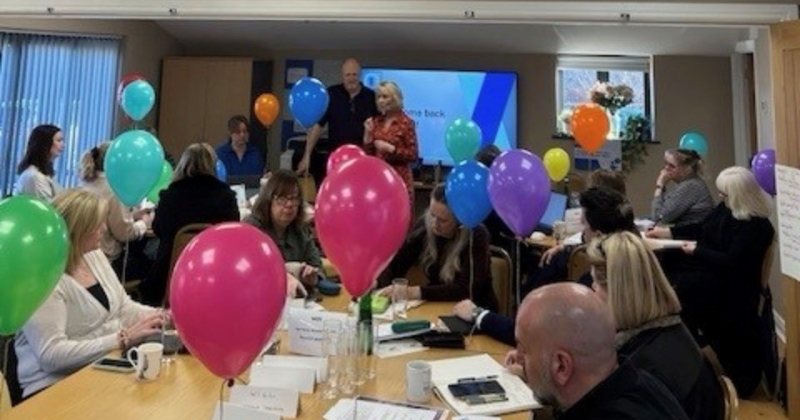
At the last two-day intense ‘inspection bootcamp’ that FIN held for its members, Boffey handed everyone a balloon representing learners with difficulties to illustrate inclusion; those who left their balloons unattended lost them.
Ofsted’s new data portal, FESIT, helps providers to evidence their disadvantaged learners. But it is not perfect; for example, someone on free school meals with a care background and from a disadvantaged postcode has three different indicators of need and could be counted three times within the data, which “could be distorting to a provider”.
Boffey would also like to see much greater recognition of the progress made by each individual learner, rather than inspectors’ reliance on achievement data.
Inspections in some ways replicate the checks DfE makes on providers. And HMIs are still far more interested in finding flaws than finding good-practice “pots of gold” to share across the sector.
“Collecting the floating rot is easy, digging for gold takes time and determination,” says Boffey.
Ofsted has also made it harder to attain the top inspection grade (‘exceptional’), which Boffey decries as “taking away aspiration”.
FIN charges all its members £960 a year plus VAT (just over £20 a week), regardless of their size, because “the smaller providers need the support from the bigger providers to share ideas”. Every resource created for one member is shared, so everyone can access it.
Quality reviews (essentially a mock inspection) are the most popular service among the providers who approach Boffey, but she warns them it is like “fishing for you for a day, as opposed to teaching you how to fish” which is what FIN’s full membership offers.
The reviews are a part of the job that the straight-talking Boffey clearly enjoys. “If I see a lesson that isn’t good, I’m not afraid to pull punches,” she says.
Her favourite moments are “when you can see that through the work you’ve done, those learners are getting a better experience”. Her most challenging reviews are when “a team aren’t listening to you”.
Overcoming adversity
Boffey and her husband’s own resilience was put to the test when their herd of 150 dairy cows, calves and 350 sheep were slaughtered in a cull during the foot and mouth disease outbreak, after some pigs on a nearby farm caught the disease.
Boffey’s husband would not allow the cull until a vet came to confirm their cattle were in fact “perfectly healthy”.
He sent his wife and their two daughters away and sat in the house alone, counting the shots as the animals fell onto the fresh straw he had laid down for them that morning.
“They’ve not just taken away my today, they’ve taken away my tomorrow,” she recalls him commenting.
Boffey learned from the incident that although she could not control what happened, she could control how she reacted to it.
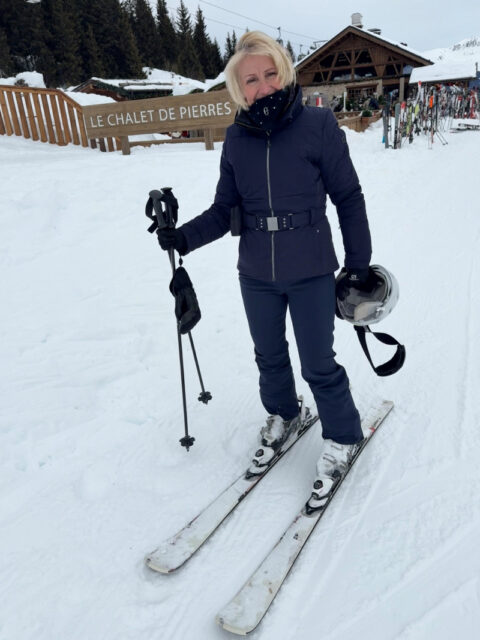
In 2022, Boffey’s husband had a stroke, and then she was diagnosed with multiple myeloma (bone marrow cancer). This caused her to give up a sport she loved – rowing – but it did not stop her from working throughout much of her treatment.
She coached a provider over the phone from hospital, just moments before going in for her stem cell transplant.
Looking on in despair, her daughter turned to the nurse, shook her head and said, “I’ll be taking her phone off her!’”
Boffey did not tell her members about her illness and returned to work after treatment in a “great wig”. (Her fabulous hair has since grown back).
“It was a tough time, but adversity gives us an opportunity to rethink and find a way through it,” she says.
Boffey is now a grandmother to twin boys, and talks of “sharing the responsibility” more with her team in the future.
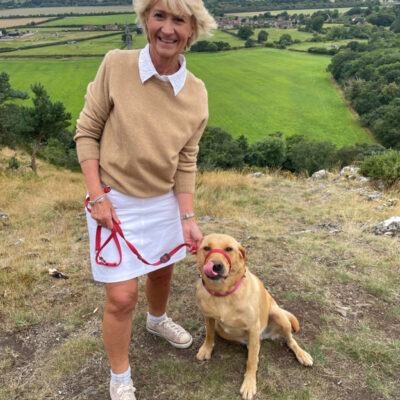
But she still goes skiing several times a year, and is keen to keep working to pay for those holidays.
“If I’m young and fit enough to ski, then I’m well and fit enough to work!” she asserts.
And Boffey clearly still deeply enjoys the day job. “How many people can actually say, ‘I think I made a difference today’ – that’s a great feeling,” she says. “ And if I don’t, then I need to do it better.”



Your thoughts