
I recently bought my first pair of off-the-peg reading glasses. I have now reached peak middle age. My adult daughter, however, has suggested that won’t fully arrive until I attach the glasses to a cord around my neck. From then on, there’ll be no looking back.
I now stand at a clear two generations’ distance from my students. Firmly anchored in the glories of Generation X, I am surrounded by colleagues who are millennials, together facing students from the far shores of Gen Z.
In another few years it’ll be Generation Alpha kids in our classrooms. There will then be three generations separating me from my students. That’s a lot. I have learned the hard way that the generation gap is real and very much alive in my life.
There’s a saying that teaching keeps you young and in a way it does, no doubt. But it can also make you feel very old indeed.
I have to admit the scale of the generation gap. When life is changing as dramatically as it is today, we must ask some serious questions about what we are about.
An education revolution which most teachers haven’t even begun to spot is already racing towards them. Some of us are like the dinosaurs who were blithely grazing within the growing shadow of the meteor that was hurtling towards them.
I don’t think the coming change is necessarily all about the STEM drive which recent years have seen. Or not primarily so, at least. Rather, what is ahead may well involve a complete change to the social world and the world of work far more profound than anything which was faced by previous living generations.
So we may soon be forced to consider if our inherited categories even work anymore. The traditional subjects might have had their day and we may soon have to consider which subjects to continue with and which will best equip our students for the coming AI-led workplace.
Supply and demand will do some of that. Some traditional subjects may be facing a significant change. But for those subjects that the AI revolution leaves behind – humanities, arts, languages, et al – there may still be cause for considerable hope.
I for one recall the forlorn promises that advances in technology would free us all up, releasing time from tedium and providing leisure opportunities for everyone. If such a situation were to be realised, then perhaps the more academic, abstract or ethereal of subjects might enjoy a resurgence, embraced once again not for any apparent utilitarian gain but simply for the sheer love of learning and its edifying influence on the human soul. One can dream, at least.
Before all this change hits home, there will be some serious and unpleasant upheaval for us all.
I may think I can advise students on future progression routes simply because I have done this job for so long. That’s the point of professional experience, after all. But maybe I have to admit that I am not seeing things so clearly anymore.
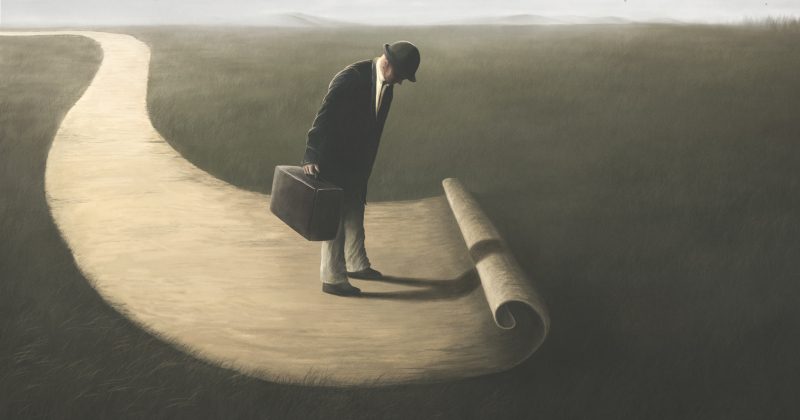
The world I think I understand is not the world my students are going to live in. They are entering a workplace that is still in the tumultuous process of being born.
So I’ll be doing them a disservice if I don’t admit I’m short-sighted here. I can see that clearly now. I have to admit the lenses I used to see through may need to dramatically change. My view of the future is rooted firmly in my own past.
Forget the rose-tinted spectacles. In a time of such change as we face today, I may just as well be blind.
Around college buildings all over the country you will often find posters which proudly list all the jobs particular courses could lead people to. But I do not know if those jobs will even exist in 10 years’ time.
So we educationalists have to think it all up from scratch, and do so soon.
I’m starting to get used to my new glasses. I can pop one extended arm thoughtfully between my pursed lips as I ponder.

Your thoughts