


On Social Prescribing Day today, the national conversations focus on the vital role of the voluntary and community sector in supporting health and wellbeing. But there’s a critical gap that risks limiting its impact, just as the NHS seeks to redefine prevention.
The government’s health mission aims to create a fairer Britain where people live well for longer, recognising that health is shaped by more than clinical care. Tackling inequalities requires collaboration across sectors, including organisations like WM College, London embedded in the communities most affected.
Social prescribing reflects this shift.
It recognises that loneliness, low confidence, poor mental health and economic inactivity cannot be solved through medical intervention alone. They require sustained, community-based responses that rebuild confidence, connection and purpose.
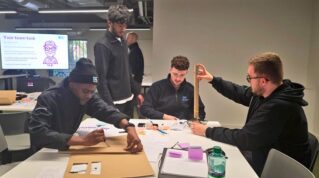
FE colleges already deliver this every day, at scale. At WM College, we see this first-hand: adults referred through wellbeing networks rebuilding confidence through creative learning, often taking their first steps back into structured activity after periods of isolation.
So why do colleges remain largely absent from the systems designed to deliver health and wellbeing?
At a time of unprecedented NHS pressure, this is no longer a minor oversight.
The NHS 10-year plan places prevention and neighbourhood health at its core, with Integrated Care Systems (ICSs) tasked with shifting from reactive care to earlier intervention and joined-up provision.
But intent alone will not deliver this shift.
Social prescribing pathways rely heavily on the voluntary sector which is vital, but often constrained by short-term funding. If social prescribing is to operate at scale, the system must draw on existing infrastructure.
Colleges are exactly that.
They are anchor institutions with the space, workforce and reach to deliver high-quality provision – already engaging many of the individuals social prescribing is designed to support.
For many, entering a college is not seen as a health intervention, but as a positive step forward. That distinction reduces stigma and enables re-engagement – particularly important given rising economic inactivity.
Social prescribing helps stabilise wellbeing. But too often it lacks a clear onward pathway, meaning impact can plateau.
FE provides the missing link connecting wellbeing to skills, confidence and employment.
NHS England recognises that people with little or no English are more likely to experience poorer health outcomes. Only 65 per cent of people who could not speak English reported good health in the 2011 census, compared to 88 per cent of those who spoke English well. They’re more likely to face healthcare inequalities, including significant barriers and delays in receiving care.
ESOL classes do more than teach language – they build belonging, reduce isolation and prevent mental ill-health. Yet this impact is rarely funded through social prescribing.
As Integrated Care Boards shift toward strategic commissioning for population health outcomes, excluding FE is a failure to align delivery with policy intent.
Where partnerships do exist, they’re often fragile – reliant on individuals and vulnerable to bureaucracy and staff turnover – rather than embedded in system design.
Integrating FE fully into social prescribing would mean recognising colleges as core partners within neighbourhood health models, embedding them in commissioning frameworks and aligning health, skills and employment funding to support joined-up outcomes.
Funding remains a critical barrier. When patients cannot afford medicines, the NHS subsidises them. The same principle should apply to social prescriptions. If a GP refers someone to a wellbeing activity, colleges are often expected to provide it free, absorbing the cost. A prescription is a prescription – and it should be funded as such.
The need for preventative support is growing, and national conversations – including the ongoing inquiry by the All-Party Parliamentary Group for Further Education and Lifelong Learning – increasingly recognise the role of adult education in driving health, wellbeing and economic resilience.
These agendas are converging. But policy has not yet caught up with practice.
If we fail to act, we risk maintaining a fragmented system where health, education and employment operate in parallel – missing a critical opportunity for individuals, communities and the public purse.
Further education is not simply a pathway to skills. It is part of the UK’s health infrastructure.
And it is time our systems were designed to reflect that.










Your thoughts