

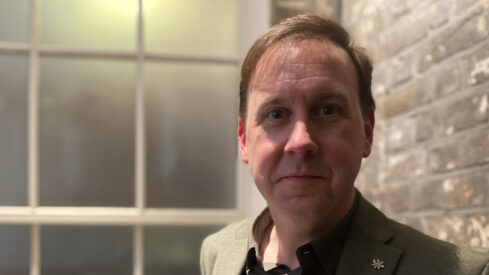
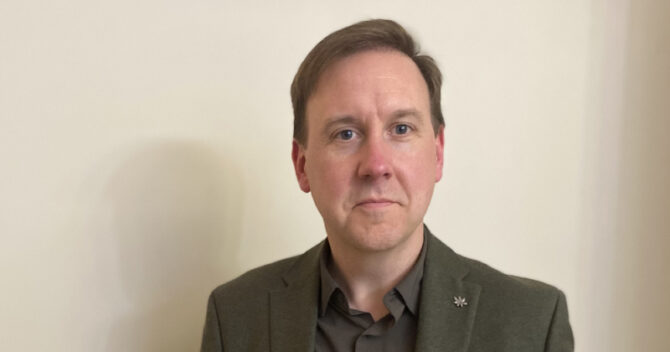
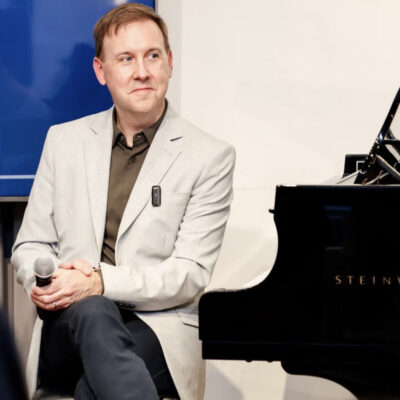
The new chair of the Federation of Awarding Bodies, Tim Bennett-Hart, comes across as the perfect English gentleman, with his self-professed “posh accent”, refined demeanour and royal connection (last month he played guitar in Saudi Arabia for the country’s Crown Prince).
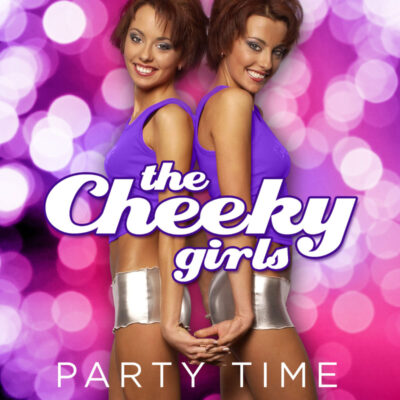
But he has a cheeky side too. As a teenager he was in a band with such a naughty name – referring to a body part – that he dare not say it aloud, and later was part of a team that wrote songs for noughties TV pop talent show stars, including The Cheeky Girls.
Bennett-Hart’s eclectic musical background paved the way for him to become chief executive of RSL Awards, a specialist awarding organisation (AO) for the creative arts.
He is very deliberate in his choice of location for our interview. We meet in the grand interiors of London’s Royal Society of Arts, a precursor to modern awarding bodies. RSA Awards offers graded exams in performing arts such as dance, drama and music, the first of which he says were created in this building more than 150 years ago. Much of what AOs still do stems from that era; NCFE was created in 1848 and City & Guilds in 1878.
But unlike any other time in its history, the awarding sector is facing a crisis of purpose over what assessment should look like, given the impact of AI, acute skills shortages and a mental health crisis some blame on exam pressures facing young people.
On top of this, AOs have lately felt like a “political football being kicked from one place to another”, caught in a fast-moving tide of reform announcements: new V Level qualifications, the lifelong learning entitlement, the growth and skills levy, apprenticeship units, the Office for Students regulating higher technical qualifications, functional skills adjustments and the end of EPAs.
Bennett-Hart shakes his head at the upheaval. “You’re thinking, ‘how much of this do I actually pay attention to, or do I just keep on my trajectory and see where we go?’”
He is particularly concerned that the government should apply the brakes on V Levels, currently set for rollout in 2027. Revisions of GCSE and A Level content, which are “just an evolution of standards”, are not expected to be completed until 2031.
“If we’re doing a revolution of qualifications, giving it more than 18 months would be wise,” he says.
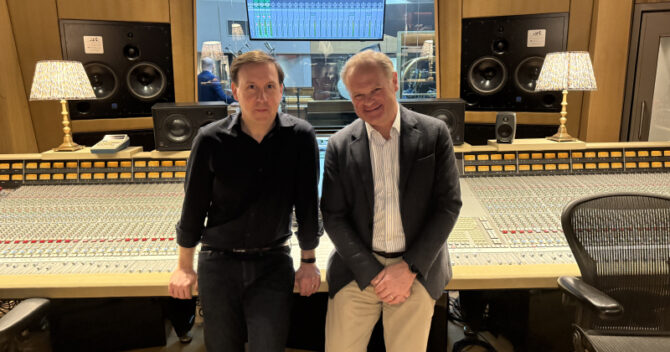
It has also been a period of change for FAB’s leadership. In 2024 the body took on its third chief executive in under a year with the appointment of Rob Nitsch, who Bennett-Hart believes has been a “really constructive agent of influence” for awarding bodies.
FAB’s chair since 2024, Lifetime Training CEO Charlotte Bosworth, had been set to hand the baton to NCFE chief executive David Gallagher until he stepped down last month for health reasons.
Bennett-Hart praises Bosworth for doing a “really good job at keeping things calmer”, because when it comes to qualifications there is a “real tendency to get a bit uncalm about things sometimes”.
He hopes to use his voice through FAB to change perceptions of AO qualifications as being “just about BTECs”, which he says is a hindrance for niche AOs like his. Around 1.5 million people take graded music or performing arts exams each year, all Ofqual-regulated, but they “get lumped in with lots of other things”.
In contrast to RSL Awards, his new vice chair Kelle McQuade is COO of the AQA-owned Training Qualifications UK, which boasts more than 240 qualifications.
“Between us, we feel like we really cover the breadth of awarding,” he says.
Musical roots
Bennett-Hart spent his formative years in the Surrey village of Chobham, which explains his accent, although he assures me: “I’m not as posh as my voice makes out”. His dad was a land surveyor – a maker of “very detailed maps” – and his mum a teacher.
At school he “struggled quite a lot” with English language and was placed in a remedial group. Rather than putting him off, it made him determined to express himself well through language. He began writing poetry and later discovered songwriting, having played the violin since he was four.
As a self-conscious 14-year-old he sold the violin “in a fit of panic” over friends’ perceptions and bought an electric guitar. His first band’s name cannot be uttered because it refers to a “really rude, anatomically interesting part of the body”.
“We were trying to be rebels at the time but failing miserably,” he explains.
At 15 he submitted a mixtape of his songs to a competition for young musicians on Radio 1’s Jo Whiley and Steve Lamacq show. He was picked to attend a residential course run by Norton York, founder of RSL Awards, who had set up the AO after feeling irked that funded university pathways were available to classical musicians but not electric guitarists or drummers.
Bennett-Hart had forgotten about the course until, after joining RSL Awards as a director in 2018, he spotted a familiar photograph in the office and realised the scruffy teenager pictured with York was him.
He had long been convinced his destiny lay in becoming a rock star and spent four years as a “jobbing musician”, involving “staying up late” and “sleeping in the back of a van”.
It was hardly glamorous, but touring Europe with a swing band specialising in Glenn Miller songs was “brilliant – my gran came to see me”.
Crazy Frog
At 22, Bennett-Hart experienced the first of two “epiphany” moments. While spending six months in India learning the sitar and living at a spiritual retreat, he realised he wanted to become a teacher – partly, he admits, because “you can’t just sleep in the back of a van forever”.
He went on to study music at the University of Surrey, where he began writing songs seriously, partly as a way “to tell girls that I fancied them”.
This led to work with Jiant Productions, composing songs for contestants on talent shows including Pop Idol, Popstars, The X Factor and the BBC’s Fame Academy.
He specialised in the kind of pop music that sticks in your head all day – like it or not. Jiant’s credits include the Cheeky Girls’ album Party Time.
He also wrote music for the computer game Crazy Frog Racer.
“That was a low point in my life if I’m honest with you!” he says with a smile. “We made some music that we loved, and some resigned to the ‘what was that about?’ category.”
He later wrote music for TV adverts, including reworking Food, Glorious Food into “Chips, glorious chips” for McCain oven chips.
But the industry was changing: instead of being paid to write, songwriters increasingly had to pitch songs and were only paid if they were used.
Lecturing life
Bennett-Hart returned to his ambition to teach, first at Brooklands College in Weybridge and later at the University of Sussex. Academic life was a “shock” after freelancing, far slower paced, and he observed a “clash” between academics focused on research output and students concerned about their futures.
Then life took a dramatic turn when he was diagnosed with stage-four kidney cancer, which was initially thought could be terminal. Coming close to death shifted his outlook and made him, he says, “an eternal optimist”.
He later worked at the Academy of Contemporary Music in Guildford, helping expand its provision from music into media industries and computer games, eventually supporting the launch of campuses in London and Brighton.
Bennett-Hart argues specialist arts colleges often use degrees primarily as a mechanism to access funding rather than as “their paragon of what they believe somebody needs for that industry”.
He is also an advocate of accelerated two-year degrees delivered through trimester models, although institutions currently receive only two years of funding for them.
“If the outcome is the same as a three-year degree, you could give a really great experience. But at the moment the institution has to bear the financial brunt,” he says.
Global footprint
Since joining RSL Awards in 2018, Bennett-Hart has travelled widely. The London-based organisation operates in more than 50 countries and certificates over 100,000 candidates a year in music, performing arts and creative subjects.
But these days he is reluctant to spend too long away from home – he has a nine-year-old son.
He was recently in Shanghai launching a partnership with China’s state-controlled People’s Music Publishing House, and shortly before we met was in Saudi Arabia, where he played an original blues composition for Crown Prince Mohammed bin Salman.
AO market movements
Back in England, the AO market appears buoyant at first glance. The number of Ofqual-regulated awarding organisations has risen steadily from 164 in 2019-20 to 255 in 2023-24.
But a growing minority are loss-making, and offshore investors are gaining a foothold in both training providers and the AO sector, highlighted by the purchase of City & Guilds.
Bennett-Hart says RSL Awards is approached “all the time to sell up”. “That’s lovely,” he adds, “but we don’t need to.”
He worries consolidation could erode specialist expertise.
“If only large generalist AOs deliver most UK-funded qualifications, we’ll end up with privately funded people going down one route and publicly funded people forced down another. That won’t lead to the fairest system.”
He notes that Ofqual is increasingly scrutinising governance and financial sustainability. In recent years, the regulator’s annual compliance checks have involved “more questions about financial sustainability than about the validity and reliability of assessments”.
Given market turbulence, Bennett-Hart believes government policy must provide greater stability.
“Assurance and stability are exactly what our customers expect from AOs.”
AI optimism
When it comes to music qualifications, the declining numbers taking GCSE and A Level music contrast sharply with the growth of vocational music courses.
“It’s not that music or the creative arts are dying in schools,” he says. “Teachers are moving away from GCSEs and A Levels because they’re not relating to the students they’re working with.”
While headlines about AI and the creative industries often sound bleak, Bennett-Hart remains upbeat.
He believes AI is “more helpful than harmful” in creative work because it speeds up processes such as music mastering, enabling more people to produce their own work. AI-powered engines are also speeding up visual effects and other creative processes.
If AI eventually replaces some jobs, he suggests it might even trigger a wave of creativity as people search for new meaning.
“In the pandemic when everybody had loads of free time, people painted and learned instruments. Music sales tripled.”
Bennett-Hart believes awarding bodies are right to be cautious about using AI to mark work, but warns that if AOs fail to adapt, colleges could replace them with their own AI assessment systems.
Although the rapid growth of AI short-course platforms feels like “a bit of a Wild West”, he believes most people in the awarding sector are technology optimists.
After all, he says, “it’s inevitable” that qualifications will have to assess the use of AI.
The challenge now is embedding AI skills into qualifications and moving away from assessment questions that can easily be answered by chatbots.
“Those AOs thinking successfully about AI are thinking about the methodology of assessment in the first place,” he says.



Your thoughts