
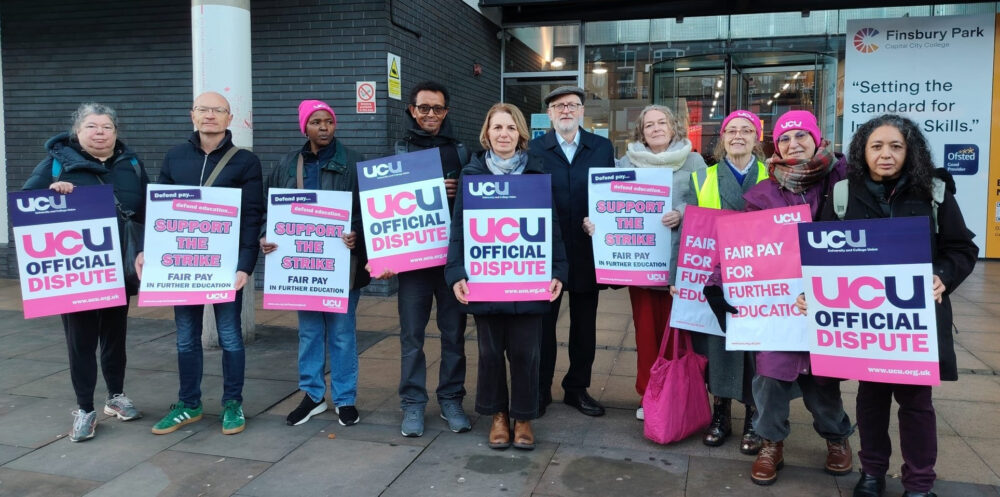
Strikes at three colleges have been called off after teachers agreed to pay awards of between 4 and 7 per cent.
Thousands of University and College Union (UCU) members had voted to down tools this January over pay, working conditions and a demand for national pay bargaining.
But lecturers have in recent days settled their disputes at Lakes College, Runshaw College and York College.
It means 30 colleges are left facing strikes on January 14, 15 and 16, when several vocational and technical exams take place.
UCU opened a nationwide ballot in October after the “disappointing” 4 per cent pay rise recommendation from the Association of Colleges earlier this year.
Union members at 33 of the 54 balloted colleges passed the legally required 50 per cent turnout threshold and backed strike action, demanding pay parity with school teachers, a national workload agreement and binding national bargaining.
Twenty-one colleges failed to meet the threshold, and now 20 colleges have settled their disputes with deals worth up to 8.7 per cent.
Staff in the north step back…
The strike at York College was called off shortly after the ballot results were published in late November. Members accepted a 5 per cent pay award, as well as joint negotiations over workload for 2025-26.
An agreement for a 7 per cent pay rise at Runshaw College, in Leyland, Lancashire, shortly followed.
UCU and Unison members, who represent non-teaching FE staff, will see their pay packages rise in line with sixth-form workers in the new year.
Clare Russell, Runshaw College principal, said: “This uplift brings the top of the main teacher pay scale to £51,714, aligning salaries with those in sixth form colleges, first achieved when we introduced our current teaching staff pay scale in 2023.
“This award has been made possible through strong financial management, buoyant student recruitment and efficient curriculum planning. More than 80 per cent of our income comes from 16- to 18- provision, an area that has benefited from increased national investment.
“We recognise that many colleges rely far more heavily on adult funding, which has been constrained for many years, and we fully support the sector’s national campaign for improved investment in adult education.”
The latest agreement, made earlier this week, was a 4 per cent salary increase for teachers at Lakes College, in Workington, Cumbria, backdated to August.
Chris Robinson, UCU northern representative, said staff had voted to strike through “frustration” that no pay offer was on the table before the national ballot.
“Lakes College only put something on the table just as the ballot was about to close and just as we got over the threshold,” he told FE Week.
Mark Fell, principal of Lakes College, told FE Week that discussions on workload agreements were ongoing.
Jo Grady, general secretary of UCU, said: “We have now resolved our dispute at 20 colleges and, to avoid disruption on campus come the New Year, leaders at colleges where we are still in dispute need to make meaningful offers and show they value their staff.”
…but strikes go on in Capital City
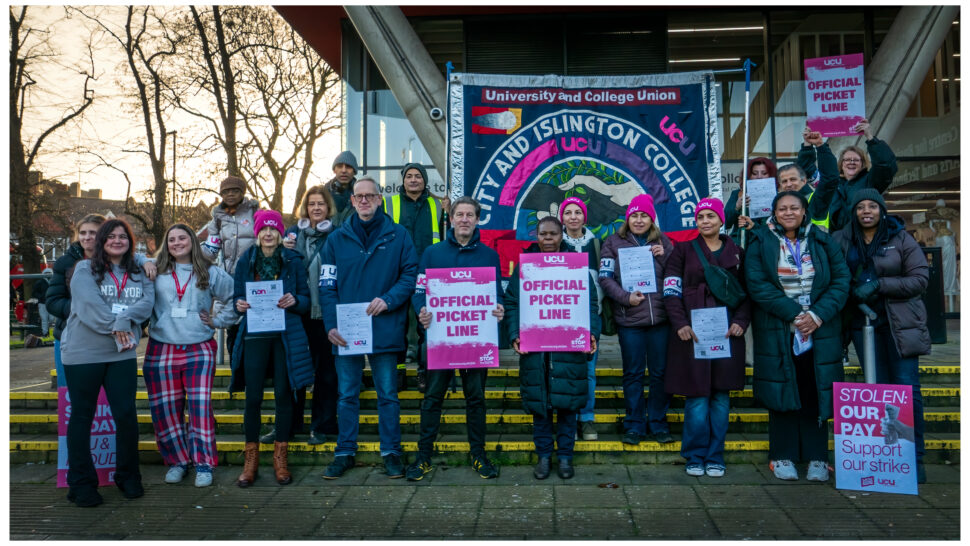
Meanwhile, FE and sixth form staff at Capital City College (CCC) walked out this week as tensions with senior management escalated over pay and “ripped up” legacy sixth form conditions.
UCU and NEU members, who represent around 60 sixth form lecturers at CCC’s Angel campus – formerly known as City and Islington College, conducted a coordinated two-day strike across the group’s 11 sites in London.
NEU members have had 14 days of industrial action since October over CCC’s “intolerable” plans to freeze sixth-form teacher salaries for two to three years to bring them in line with FE lecturers.
“For the last 30-odd years, we’ve had these conditions despite being part of a bigger further education college,” said Nick Lawson, NEU rep at CCC.
“The college has unilaterally ripped those up, and we want to be returned to our national pay and conditions.
“We’re marching separately but striking together.”
Jeremy Corbyn also attended the picket line at the college group’s Finsbury Park campus, which is located in the MP’s Islington North constituency. Corbyn also lent his support to the UCU’s recent Parliamentary lobby efforts to seek a reversal of adult education funding cuts.
Meanwhile, UCU rep Mustafa Turus said the union’s branch had sought additional industrial action before the end of term.
Members rejected a pay offer of 4 per cent, a 4.5 per cent rise for those on a salary of £25,000 or less, and a one-off payment of £200-250 for those earning £34,000 or less.
Leaders also offered to set up a workload committee, which Turus said was not a tangible solution.
“We cannot wait months and months, if not years, for a workload committee to come to address our urgent concerns,” he said.
CCC declined to comment.








Your thoughts