


For over three decades, the education charity and awarding organisation ASDAN has worked to bridge the gap between education and employment. Today, that mission is being strengthened through a renewed commitment to digital learning, skills development and equity for all learners.
Providers face persistent skills gaps, rising employer expectations for work-ready, digitally confident learners and increasing demands on staff capacity. Alongside this, digital workloads linked to assessment, tracking and compliance continue to grow. In this context, ASDAN’s focus on flexible, accessible digital solutions and meaningful skills development supports both learners and practitioners to meet labour market needs, whilst ensuring no learner is left behind.
Digital learning designed for self-directed learners
ASDAN’s new digital learning platform, Equitas, has been purpose-built to support self-directed learning within post-16 education, apprenticeships and work-based settings. Rather than replicating traditional classroom models online, the platform embeds learning within meaningful activity, reflection and evidence.
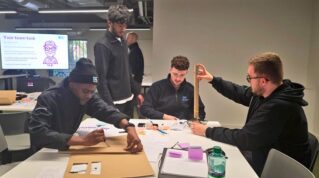
At its core is ASDAN’s long-established plan, do, review cycle – a pedagogical approach that mirrors real-world learning and workplace practice. Learners plan an activity, carry it out independently or collaboratively, and then review what they have learned, the challenges they faced and the skills they developed.
Within Equitas, this cycle becomes a clear digital workflow. Learners upload evidence, respond to structured prompts and reflect against assessment criteria, building a personal record of learning that demonstrates both achievement and progression over time.
“Plan, do, review isn’t just a teaching method, it’s how learning and activity actually happen in the workplace,” says Tori Farren, ASDAN Education Development Partner. “Equitas allows learners to practise decision-making, problem-solving and reflection in a supported environment, which is exactly what employers expect.”

Supporting equity through flexible digital frameworks
Equitas has also been designed with inclusion and equity in mind. Its flexible, evidence-based approach enables providers to tailor learning to different contexts, pathways and learner needs, making it particularly effective in FE colleges, alternative provision and apprenticeship programmes.
Because progress is demonstrated through practical activity rather than time-limited exams, learners who may have struggled in more traditional academic settings can show what they are capable of. Digital access allows learning to take place across classrooms, workplaces and home environments, supporting blended delivery while reducing administrative burden for staff.
“Equity is about recognising different starting points and valuing different strengths,” Tori explains. “When learners can evidence real skills and experience, rather than just written performance, you unlock confidence and observe progression.”
A skills-led bridge between education and work
ASDAN’s approach is underpinned by a strong focus on employability skills. Across its programmes, learners develop and evidence six core transferable skills that employers consistently value:
- learning
- communicating
- decision making
- thinking
- team working
- self-awareness
These skills are embedded into all learning activity on Equitas, ensuring they are taught explicitly rather than assumed. Learners apply them through practical tasks, reflect on their use and gather evidence that can be shared with employers or progression providers.
This model complements both academic learning and apprenticeships. In work-based settings, Equitas provides a structured digital framework for recording skills development, supporting reflective practice and evidencing competence over time.
“Employers want people who can explain what they’ve learned and how they apply it,” says Tori. “ASDAN’s skills framework helps learners articulate their value, which is critical for interviews, progression and long-term success.”
Michelle Storer is the Senior Business Director for Partnerships & MATs at Hays Recruitment. She shares how employers are increasingly prioritising transferable skills:
“We’re seeing a clear shift in what employers across the labour market need from young people entering the workforce. They consistently tell us that what truly sets candidates apart are the transferable skills that enable them to adapt, communicate effectively, and make sound decisions in fast‑moving environments.
With 93% of employers reporting skills shortages in the past year according to the Hays Salary & Recruiting Trends guide 2026, there is growing recognition that education must focus not only on subject expertise but on building confident, capable learners who can apply their skills in real‑world contexts.
When learners can articulate their experiences, demonstrate progression and evidence these behaviours, they transition into work more smoothly and contribute more quickly. Embedding skills‑led learning across FE will be essential in building a workforce ready for the realities of tomorrow’s labour market.”
Qualifications that support progression and independence
ASDAN’s qualifications further strengthen the link between education and employment by developing independence, project management and reflective learning.
Their Extended Project Qualification (EPQ) supports learners to undertake in-depth independent projects, developing research, planning and presentation skills valued by universities and employers alike. Recently refreshed, ASDAN’s Personal Effectiveness Qualification (PEQ) incorporates a focus on employability, enabling learners to evidence workplace skills through practical experience.
ASDAN is also preparing to introduce the Foundation Project Qualification (FPQ, Level 1) and Higher Project Qualification (HPQ, Level 2) to it’s portfolio, extending this model to a wider scope of learners and opening new progression routes aligned with both academic and professional pathways.
As ASDAN develops these qualifications, they are inviting feedback from across the sector to help inform their design and delivery. Education professionals with an interest in skills development and post-16 pathways are encouraged to share their views in a survey, exploring how FPQs and HPAs could support progression, independence and employability.

Strengthening impact through leadership and growth
ASDAN’s commitment to employability is being further strengthened through the appointment of Gareth Reynolds as Director of Impact and Growth.
Gareth brings extensive experience across FE, HE, awarding organisations and professional bodies, with a proven track record in product leadership, digital transformation and improving learner outcomes.
He will focus on developing new digital solutions, strengthening partnerships and translating policy ambition into inclusive, high-impact provision.
“As the education and skills landscape continues to evolve, there is real potential to create meaningful, lasting impact for learners,” says Gareth. “I’m energised by the opportunity to work with ASDAN to ensure innovation and growth translate into genuinely inclusive opportunity.”
With FE providers looking for approaches that are flexible, inclusive and aligned with employer needs, ASDAN’s skills-led, digitally enabled model offers a clear route forward – supporting learners not just to achieve qualifications, but to become confident decision-makers ready for the world beyond education.
To explore how skills-led learning can be implemented in further education settings, complete this expression of interest form to speak with an ASDAN curriculum expert.









Your thoughts