


A “mitigation fund” has been created to continue level 7 apprenticeships in health and care professions for three years following the government’s decision to scrap public subsidy for the master’s level programmes.
The news follows last month’s publication of the government’s 10-Year health plan for England amid concerns about the impact that withdrawing funding for level 7 apprenticeships for those aged 22 and over would have on NHS staff numbers.
Details of the “level 7 health and care apprenticeship mitigation fund” were released in a briefing sent to stakeholders by NHS England and the Department for Health and Social Care (DHSC).
Level 7 apprenticeships in five health professions will continue to be funded until 2028-29, rather than losing access to funding from January 2026, as planned in all other sectors.
The professions are advanced clinical practitioner, specialist community public health nurse, district nurse, clinical associate in psychology, and population health intelligence specialists.
A total amount for the fund has not been released but FE Week understands it could be in the region of £20 million.
The total cap on the number of starts available through the fund is also not yet known.
The briefing said: “These five apprenticeships have been identified as being vital for the delivery of the government’s 10 year health plan and will support the continued professional development of staff to better care for patients and the public.
“Funding distribution will be across the country and based on workforce need, training provider capacity and the priorities set out in the 10 year health plan. There is a finite amount of money available, and places will therefore be capped.”
Funding, which will be the same as current level 7 apprenticeship rates, aims to “contribute” to the government’s social mobility agenda by supporting “under-represented groups” such as working-class, coastal, and rural communities.
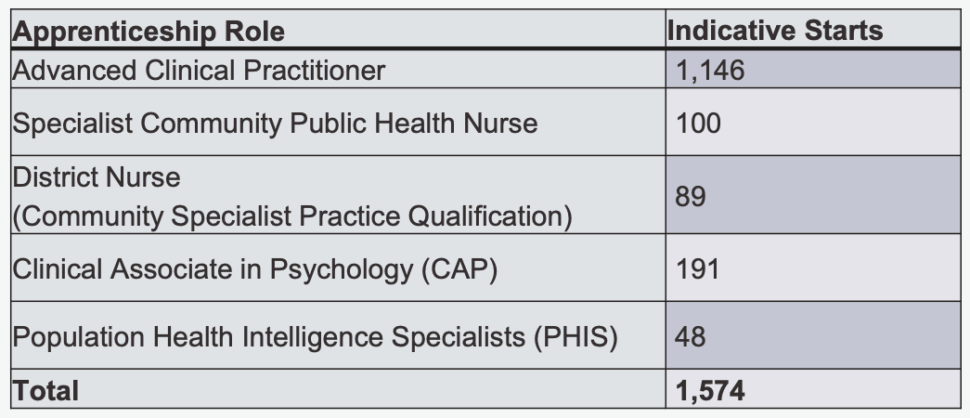
Indicative starts per year total 1,574. The majority – around 1,146 – will be on the advanced clinical practitioner standard.
Employers eligible to receive the mitigation funding are “national organisations, integrated care boards, NHS trusts and providers of NHS and public health services”.
Vanessa Wilson, CEO of University Alliance, said: “Level 7 apprenticeships have played an essential role in developing the advanced skills our health and care sectors urgently need.
“The scale and scope of the mitigation fund must meet the NHS’ workforce needs, and the devil will be in the detail in that regard.
“But we hope this fund will provide sustained support for upskilling experienced professionals to meet the evolving needs of the workforce, and will be expanded and secured beyond 2029.”
In a question and answer section, the briefing said the NHS is exploring “alternative options” to continue to offer popular senior leader apprenticeships through the NHS Leadership Programme’s Elizabeth Garrett Anderson programme.
The DHSC and NHS England have been contacted for comment.













If this is being paid for by the NHS themselves then why deliver these qualifications as an apprenticeship at all now? The first thing any rational employer would do is drop all the added in “apprenticeship baggage” and petty rules that is making the rest of the apprenticeship system “crash and burn”!