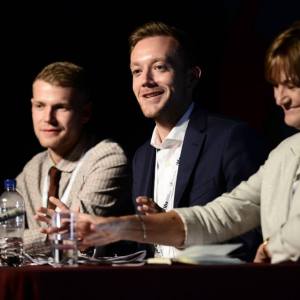
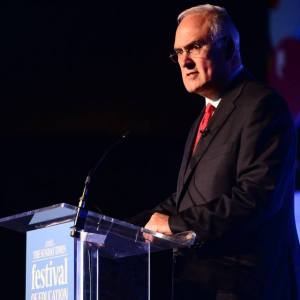
Reflecting on day one of the Association of Colleges conference

A review of English and maths accreditation is welcome, but should not result in new qualifications, says Charlotte Bosworth.

In the Skills Minister Nick Boles’ introduction to his speech he mentioned a moment full of risk, his analogy was to make a party political point about the choice the electorate face in May’s general election, but for me the analogy works well for the place we find ourselves in as a sector.

In my foreword to the FE Week Reader’s Manifesto, I mentioned the political football nature of reform and constant churn that has affected our sector for too many electoral cycles.

I believe that although relatively policy light, the two inputs we had on the first day of the AoC Conference from the Skills Minister and his Shadow Cabinet counterpart suggested that this initiative churn shows no sign of abating.

Nick spoke of English and maths and the need to review the best ways to accredit these, including in said review employers, providers and exam boards.

But we must not rush to create new qualifications or assessments nor must we rush to re-title something that as a qualification type is still in its infancy and beginning to gain credibility with employers.

Liam Byrne spoke of three shifts needed in FE — for FE to become the new spine of professional and technical education, to have as many people going into apprenticeships as university, and for FE to become closer to business.

These are laudable aspirations, but we must ensure we continue to provide services through FE that cater to the needs of the entire cohort and we must avoid the rush to an apprenticeship arms race over numbers of starts.

The quality of provision is still more important than the quantity. But Liam also spoke of his party’s vision for Institutes of Technical Education, and this for me is an area of concern.

We must look at how we create capacity in the institutions that we already have, rather than creating further complexity to layer onto our already complex system

Through policy churn we have, in some places, lost a sense of the purpose of different types of education and provision.

If Institutes of Technical Education is a plan to create another layer of different types of institutions then we must resist it.

We should be able to look critically at where we are as a sector and if there is a gap to fill to meet the technical education needs of learners, then we must look at how we create capacity in the institutions that we already have, rather than creating further complexity to layer onto our already complex system.

The Skills Minister also spoke of the outcomes of the traineeships funding consultation that the government ran in the summer.

The announcement signals a greater parity between arrangements for traineeship funding between 16 to 18-year-olds and 19 to 24-year-olds.

Our response to the consultation had argued for greater consistency in programme management.

One of the key issues is that in the way that the government department’s responsibilities are split, there is an artificial policy divide at 19. We are pleased that the announcements in the government response to the consultation address this in both learner eligibility and approach to funding.

I was also pleased that, in the announcement, the government is looking at an “evolutionary” approach rather than a revolutionary one in the move to a greater focus on outcomes.

In the simplest terms, the answer to the consultation’s central question about whether there should be a greater focus on positive outcomes was ‘yes’. However, I think we must be clear about what behaviours we want to drive.

In schools policy, we have seen the all-pervading effect of performance tables and their ability to drive school curriculum offer and qualification choice.

But the often hidden message is that education is broader than just the exam syllabus. So we must ensure that in this evolutionary approach we keep in mind and guard against the introduction of a new set of ‘performance measures’ that to help those easiest to help and to forget those young people who need time and support.


A sea change in evidence?

Andrew Morris looks at how problems affecting FE practitioners are being a tackled with an appreciation of the need for evidence, and how this evidence might be used to bid for research funding in tough economic times.

South Staffordshire College and Thurrock Adult Community College are anything to go by, a significant change in the use of evidence is taking place.

Teachers and managers from these and many other organisations discussed the practicalities of using research at the latest workshop of the Learning & Skills Research Network (LSRN).

The What Works Centre for Local Economic Growth, the College of Policing and the Alliance for Useful Evidence — all established in the last five years — bear witness to this recent upsurge.

In education, the remarkable success of the Education Endowment Foundation’s ‘Toolkit’ of evidence-based practices in teaching and learning has been used by more than half of secondary schools in its three years of existence.

Numerous organisations are now helping get the right kind of evidence in the right format to those who need it most — practitioners and decision-makers at
the frontline.

What this means in practical terms for the learning and skills sector is illustrated by the work of Michael Smith and Paul Roberts, team leaders at Barking and Dagenham College.

Having identified an important college-wide issue — initial assessment procedures that assigned too many students to the wrong level — they set about collating information, looking at existing research and proposing a new approach to the senior team.

With their support a pilot scheme was developed and carefully tested. As Michael said: “We were then able to move forward with knowledge and understanding from
the testing.”

Innovation requires a degree of risk-taking and leaders have to weigh this up in allocating budgets

Chris Davies, director of curriculum at South Staffordshire College, reinforces the importance of first identifying a serious college-wide problem and then taking an evidence-based approach.

A study he had undertaken revealed that 40 per cent of staff non-teaching time was spent on activity not related to teaching. On the basis of this changes were made, such as aligning central administrative staff with curriculum areas on each campus.

From the many examples of evidence-use brought out at the workshop, some idea of the practicalities began to emerge. “Stop waiting for government initiatives” was one piece of sound advice; “stop counting beans” was another, equally pithy.

The key message, repeated in case after case, was to start by identifying a key problem that seriously affects student learning and then arm yourself with knowledge and evidence.

To do this, requires space and time for reflection and experimentation. Finding these scarce resources was a recurring theme.

The solution demonstrated in many successful initiatives is to make use of existing structures such as professional development days and to focus on problems that will help the organisation move forward.

No doubt the new grants announced at the workshop from the Further Education Trust for Leadership will help, providing financial and professional support for a number of new practice-based studies.

Encouragement from leadership teams proves an essential ingredient in the view of most project leaders. But for budget-holders it is not easy to decide where to invest.

Research does not generally provide simple answers guaranteed to improve outcomes — by definition it addresses unknowns.

Innovation requires a degree of risk-taking and leaders have to weigh this up in allocating budgets. So what can project leaders do to persuade a reluctant leadership team? Be pragmatic seemed to be the advice from participants — if the leadership team is accountancy-minded, base your research on the data they collect. If a research investment carries a big risk, look for previous studies first, then pilot it on a small scale.

The overarching message from initiatives in different parts of the sector is that evidence-use is not just an individual affair — it flourishes when a collaborative approach spreads across an organisation. Trust is the key — trusting relationships in which sound evidence and professional judgement justify the risk of investing in innovative approaches.

In such an environment an evidence-using culture can develop which, over time, offers the prospect of better outcomes for both learners and the bottom line.


Vocational system progress — despite what Clegg says

Deputy Prime Minister Nick Clegg fleshed out his idea, first revealed in February, for a UCas-style system for post-16 vocational learning this month. Mary Curnock describes the progress UCas has made with its system that already meets such requirements.

The Deputy Prime Minister called again for a ‘UCAS-style’ system for younger students who need to make decisions about their post-16 education choices. He joins a list of senior politicians and leading commentators who have made the same call at various times over recent years.

The benefits of the UCas centralised admissions service for higher education have long been recognised. It provides a single point of information, a comprehensive course search, and a common, fair and streamlined admissions service which is available for a generation that expects to use digital interfaces for almost everything it needs.

A highly valued benefit of the service is the rich data it provides about progression to higher education.

UCas has now deployed its expertise to provide a similar service for post-16 progression.

UCas Progress (UP) lists all post-16 learning opportunities in England and Wales and students can search for subject, by course-type, by geographical location or provider type.

They can apply for courses online, and they can access plenty of information and advice to help them make informed choices about post-16 studies.

More than 100,000 courses through 4,550 providers display GCSE, A-level, vocational, work-based and apprenticeship courses.

Swansea local authority working with UCas Progress more than halved its Neet numbers

Currently, we’re registering more than 2.5 million page views per month and our advice pages received 350,000 views alone in the last four weeks.

The service is free of charge for students, whether they register through a school or self-register at home. Course listings are also free of charge for providers.

A modest subscription — typically £500 to £2,500 a-year — is made for providers who want to be switched on to receive, track, monitor and report on online applications.

More than 1,000 providers are using the application service already and more are being added all the time.

One user is Etone College, in Warwickshire, which found that UP not only enables them to streamline the application process and track outcomes, but also to increase awareness and aspiration for progression to higher education through UCas in the future.

In many cases, the UP service has been adopted at a Local Authority level, where our tracking services provide aid planning, track and reduce Neets, manage the September Guarantee, and ensure that RPA requirements are met.

For example, Swansea local authority working with UP, more than halved its Neet numbers from 6.9 per cent in 2009 to 3 per cent in 2011 and has sustained that level since.

It has used UP to track and report on student progression, enabling limited numbers of outreach staff to target their interventions where most needed.

Ensuring that young people stay in some form of education or training until they are 18 requires consistency of approach and UP ensures that learners get all the information and advice they need to make informed decisions, with a simple application process.

UP also supports those working with students; giving teachers and advisers dedicated tracking tools, as well as the reports, insight, and data needed to fulfill their statutory obligations.

UCas already provides a range of similar services for undergraduate admissions, post graduate courses, teacher training, and conservatoires. In each case, we develop our services around the needs of users — students, those who support them, and education providers.

Our services are developed and enhanced with the guidance of user groups so that it is our customers who dictate their content and scope, and have a stake in the success of the service.

As an independent charity, we are happy to work closely with government departments to ensure our data conforms to common standards, but it will be our service users who dictate how our services develop, including UP.

We welcome the Deputy Prime Minister’s support for this initiative but we have no reason to delay until September next year. UP is available now.


Pragmatism not evangelism needed on shift to digital

The march towards a digital future is not in doubt, but how colleges stay on course is the cause of many a sleepless night for those in the FE sector, explains Ian Fordham.

There is a critical mass of factors coming together around the digital agenda in the UK that has the potential to disrupt and change the way the organisations operate and do business, as well as having far-reaching consequences for FE colleges and providers on the ground.

Numerous reports, including the Government Digital Strategy and Digital Inclusion plan, working groups and other forums have been set up to understand the implications of the digital world, culminating in the much-heralded Further Education Learning Technology Action Group (Feltag) report.

But despite the promise of that report, and the now aspirational 10 per cent online learning requirement, we are hearing from many principals and senior leaders that they are frustrated and struggling to get to grips with where to go next on tech and the digital agenda.

From our work on the Digital Colleges programme, set up by The Education Foundation and Penny Power, chair of Digital Business Britain, we have found that there is a growing distance between the ‘promise of digital’ and frankly too much tech evangelism, and the reality on the ground, in terms of implementation and sustainable change.

In addition, leaders are looking for a much clearer roadmap to become Digital Colleges, and a digitally driven sector, rather than being sent down “technology cul-de-sacs”.

There is a growing distance between the ‘promise of digital’ and frankly too much tech evangelism

In our report, (visit www.digitalcolleges.co.uk to download a copy of the Digital Colleges report) launched at the Association of Colleges conference, we showcase the digital journeys of FE leaders who are delivering high quality digital solutions across their institutions and sprinting past other sectors in terms of innovation and impact in their use of digital.

We also set out a framework for digital colleges that brings together all areas of provider practice and administration, from HR to finance to the engagement of small and medium-sized enterprises and the community to harnessing the potential of social media for the good of the whole of the organisation.

By starting with a much broader definition of digital, we argue there is a much better chance of the vibrant FE and skills sector achieving its ambitions.

And while the lights dim on Feltag and the new cross-Whitehall Education Technology Action Group reports its mostly school-related findings in January 2015, it is vital that the FE sector is on the front foot in the digital arena and there is a clear policy roadmap from government to ensure this transformation is not cut short.

Like many pragmatic colleges and leaders, we as an organisation are not dazzled by the bright lights of technology — but the digital economy is here to stay and growing at a frenetic pace.

The digital economy now accounts for almost 9 per cent of total GDP and between 2009 and 2012, 83,000 new technology and digital industry jobs were created, while the number of tech and digital companies has almost doubled from 50,000 to 88,000.

The FE and skills sector must harness its potential and be at the forefront of its development of this important sector, not technology for technology’s sake, but rather technology for all learners, staff and the wider community.

Now is the time for FE and policy leaders to move past the “bright lights of tech” and see the systemic change happening in this space.

It is vital that the leaders and ideas identified in our Digital Colleges report become the norm and not the exception.

As one FE principal said at the launch of our report, the Digital Colleges programme challenges the FE and skills sector to consider the digital agenda across the learner journey, across our businesses and between our stakeholders.

Its focus is not on a new paradigm or promise but on pragmatism, for far too long the digital box has been empty and the challenge for college leaders is to fill it with purpose.

We couldn’t agree more and welcome dialogue from the sector about how we can work together to achieve this vision.


Secret Principal Edition 119

The principal of a large and well-established FE college writes about life at the top — the worries, the hopes, the people and the issues they have to deal with every day.

So it’s Association of Colleges conference time again. I think this is my fourteenth year of coming and to be frank not much has changed over the years.

The usual scene through the course of the three or so days is a few hollow-eyed and grim looking faces following the late nights being entertained by delights of the Hyatt bar for instance late on Tuesday evening is an exhibition in itself.

We were treated to a fairly predictable and heavy political assessment of our world punctuated with some talk about skills and education

But conference does provide some respite to the long and hard first term we all have to deal with.

Let’s face it, conference provides a mix of serious and intelligent debate together with some light-hearted fun too. The exhibition stands and staff from over 130 exhibitors this year vying for the attention of principals, FE is big business for many of them and they have a captive audience.

On Tuesday, we were treated to a fairly predictable and heavy political assessment of our world punctuated with some talk about skills and education. Talk of men in white coats got my attention early on and there were a few raised eyebrows later in the day when Gaganomics entered our psyche. I wonder how many people are now going to try and explain that one to staff on their return to work? Seriously though, it was thought-provoking and reminded me of a recent headline from this paper and a principal who didn’t quite get it right on social media. Bet he had a poker face (pun intended) when that presentation was going on.

Dr Collins had the majority of the audience eating out the palm of his hand in a way only he can do

Martin Doel gave in my view a good speech urging conference to challenge the politicians on differing fronts. Well that would be good but for some reason when Nick Boles sat on the sofa with Emily Maitlis following a rather dull and uninspired speech it simply didn’t happen. Emily failed to get the audience engaged and allow us to question him. Mr Boles started by saying how vital and important education is to the economy both short and long term but when pressed about ring fencing funding for 16 to 18 he became more non committal than ever. Shame, literally.

On the other hand Liam Byrne gave in my opinion a far better account of himself. Then we had Dr David Collins interviewed about his role as FE Commissioner and the lessons learned over the past year. A few minutes in and he had the majority of the audience eating out the palm of his hand in a way only he can do. I predict a knighthood within two years.

Because of print deadline I can’t comment on what Vince Cable and others will say but it will probably if not definitely be his last time addressing conference, I think without his firm stance and belief that FE transforms people’s lives and is fundamentally good for business and the economy our sector would be in a far worse state. Thanks Vince.

Finally, it was especially good to hear FE Week described by Emily as the “bible” for the sector. A little controversial maybe but pleasing none the less.

Thai boxer wins double-gold in world championship

An East Durham College level two sport student has returned home from Italy with two world championship gold medals for Thai boxing.

Leigh Newton, aged 16, who took up the sport two years ago, fought in the World Kickboxing Association (WKA) finals in Tuscany this month.

She won the 48kg weight category and picked up gold in a second discipline, K1, which incorporates elements of karate and kung fu.

“Just to get to the world championships was a fantastic opportunity,” said Leigh.

“It was great being part of the England team and going out there to compete on behalf of my country. I am really proud to have brought these medals home.”

“I look forward now to continue to work hard and improve in the sport with the help of the boxing coaches at the college.”


Picture caption: Leigh Newton with her medals

EMPRA_banner-for-web

Singer finds his way to Walsall College… via Facebook

Singer Tony Christie found his way to Walsall College to pose for a portrait photo taken by a student who contacted him through Facebook.

Mr Christie, who topped the UK singles chart in 2005 when his signature tune Is this the way to Amarillo? was re-released, lives 10 miles away from the college in Lichfield.

Student Kristofor Green, 32, sent a message to the singer via his Facebook page asking if he could pose for a portrait and was thrilled when he agreed.

He said: “Our tutor set us the difficult challenge of taking a portrait photo of a famous person. I always try my best to complete a challenge, so I did some research about local celebrities and came across Tony Christie.”

“I was amazed when Tony said he would be ok with being photographed.”

Photography tutor Bryn Griffiths said: “In completing this task, Kristofor has shown a lot of passion and determination, two attributes of a great photographer and I’m confident he will have a successful career in the industry post college.”


Picture caption: from left: Singer Tony Christie with photography student Kristofor Green

EMPRA_banner-for-web

Agriculture studies return to college after 13 year absence

Berkshire College of Agriculture (BCA) invited local farmers to a celebration of the re-launch of agriculture into its syllabus after a 13-year absence, writes Paul Offord.

A college that stopped offering agriculture courses following an outbreak of foot and mouth disease is now helping tackle the problem of farming’s ageing working population.

There were farming-based courses taught at the 1500-learner Berkshire College of Agriculture (BCA) for more than 50 years until they were stopped in 2001.

The college was even rebranded — it is only called BCA on its website — to avoid confusion after it stopped teaching agriculture, but carried on offering a variety of FE courses including sport, equine studies, science, floristry and horticulture.

But it launched a level three extended diploma in agriculture in September which was celebrated this month with an official launch party.

It was attended by more than 20 local farmers, past and present students and representatives from the Country Land Owners Association and the National Farmers Union.

Victoria Beckwith, head of horticulture, countryside and agriculture, said: “Our slogan for the launch event was ‘putting the A back into BCA’ as it was obviously a shame that a college with our name had stopped teaching agriculture.”

Current learners celebrated the return of agriculture to the syllabus at the launch event by restaging black and white photos taken of students in 1949.

Mrs Beckwith said: “The college first opened in 1948 when we were the Berkshire Institute of Agriculture and mainly prepared servicemen returning from the Second World War to work in farming.

“We were sadly forced to stop teaching the subject after an outbreak of foot and mouth in 2001 because farmers weren’t sending their children to train with us any more, as they weren’t certain there was a future in livestock and arable farming.”

Ms Beckwith-King said the outlook for the farming industry was now far more positive and they took the decision to launch the new course following a number of enquiries from local farmers.

She said: “We are seeing an ageing population among the agriculture workforce and decided we needed to do something to help train the next generation.

“The course itself covers livestock and arable farming, estate management which involves things like managing fencing and hedgerows, and tractor skills.”

Local farmer and college governor Colin Rayner turned 54 acres of grassland on college grounds into a working arable farm over the summer which the students will now train on.

Mrs Beckwith said: “They will gain hands’ on experience of things like growing crops and how to work a tractor.

“They will also work at local farms which run dairy and livestock herds and help with looking after them and things like milking.

“We used to have Friesian and Jersey herds of cattle, but sold-off our old working dairy farm to developers after we stopped running the course.”

A total of 11 women and seven men, aged between 16 and 28, have signed-up for the course so far.

Mrs Beckwith Smith said: “Farming used to be quite male-orientated but our first intake reflects how that is changing.”


Picture caption: Current agriculture students outside the college

EMPRA_banner-for-web

‘Rioting’ learners help to train the police

Level three public services students from Chichester College attacked the police with rocks and wooden planks in a riot re-enactment.

The event at Longmore Army Camp, near Petersfield, was organised by Sussex, Surrey and Kent police forces to give officers experience of how to deal with large-scale public disorders.

Public services lecturer Rob Giles said: “Every single one of the 36 students [who took part] got into character and really played up to the role of rioters in a way that would be valuable experience for the police.

“They replicated a full-on civil disturbance by throwing bricks and wooden blocks, while controlled petrol bombs and pieces of rubber were also used make the ‘disturbance’ look as realistic as possible.”

Sussex Police sergeant Helen Dunkling said: “The students appeared to throw themselves into their roles and made for an excellent and realistic cross section of society.”


Picture caption: Learners hurling rocks

EMPRA_banner-for-web