


Admissions might sit in one application, assessments in another, progress reviews elsewhere, and finance, procurement, and governance in separate tools. Staff spend hours switching screens and re‑entering data; managers wait for reconciliations before acting; compliance teams piece together spreadsheets for audits. The result is lost time, blurred visibility, and added stress that no one can afford.
The problem: why fragmentation costs FE time and clarity
Evidence across the sector highlights the challenges of disjointed technology. For example, the Department for Education’s 2024–25 Technology in Schools survey revealed barriers FE teams know well: difficulty integrating systems, uneven digital strategies, and infrastructure gaps that add workload and slow adoption of new tools. Similarly, Jisc’s transformation work notes that fragmented estates and duplicated processes are among the biggest obstacles to efficiency, recommending shared services and common data models to cut duplication and standardise practice.
These constraints don’t reflect a lack of effort or skill. FE staff consistently go the extra mile to keep learners supported and employers engaged, often juggling complex timetables with quality activity and pastoral care. Yet when the learner record is split across platforms, early interventions come later than they should. Reviews take longer because attendance, off‑the‑job (OTJ) hours, and assessment outcomes are pulled from different sources. Funding teams wait for reconciliations across separate dashboards, so deadlines tighten and audits become a scramble. In short, energy drains away from teaching and coaching, and time – the most valuable resource – is lost to chasing data rather than acting on it.
A 2024 study by EDUCAUSE showed that manual processes and legacy systems absorb hours that should be used for service improvement, with staff reporting significant time lost to rekeying, duplicative tasks, and tool sprawl. FE providers face the same reality, amplified by evolving policy demands and inspection cycles that expect timely, routine evidence rather than special reports created at short notice.
When data is scattered, risk grows. Leaders need coherent, real‑time views of achievement, retention, in‑year QAR (Quality Achievement Rate), and employer engagement to steer programmes effectively. If information is slow to compile or inconsistent between systems, reporting becomes reactive, and weak signals are missed. Jisc’s 2024–25 Digital Experience Insights findings underline the wider implications: digital maturity is not just about access to tools, but about how consistently and coherently processes work together over time.
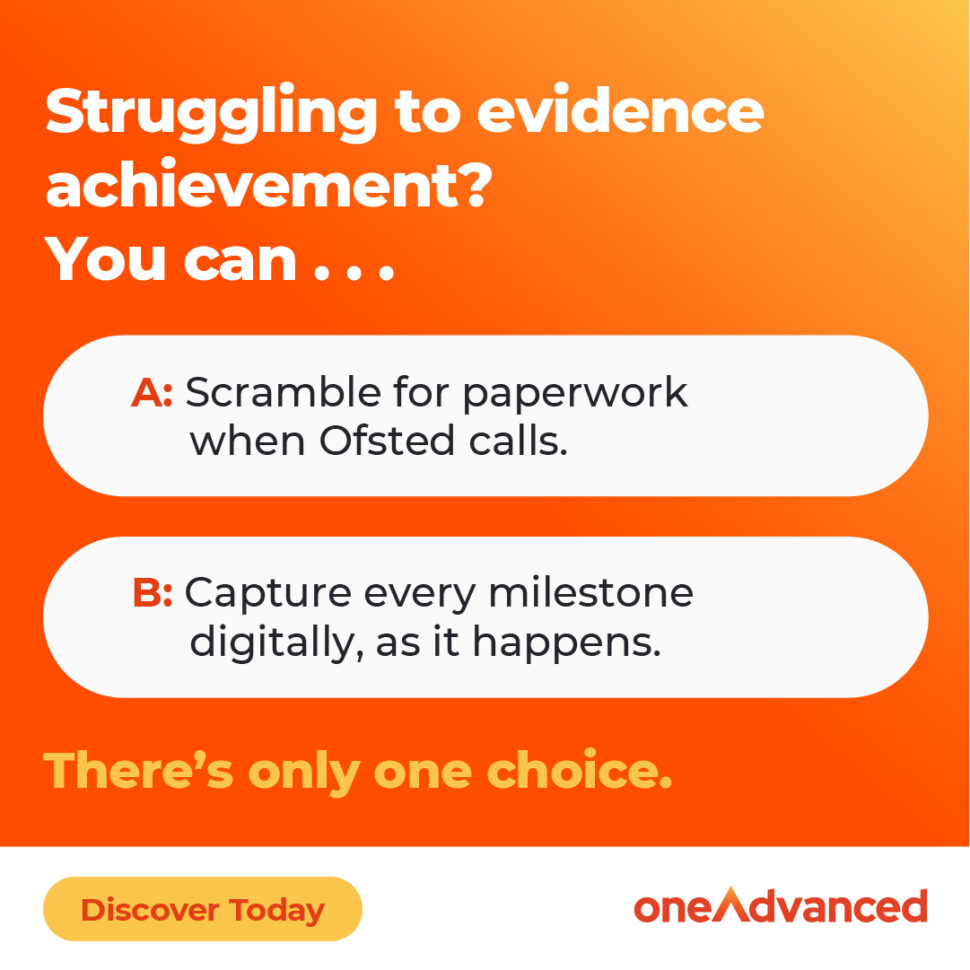
This has implications for inspection readiness. Ofsted’s FE and Skills approach asks providers to show impact using evidence that emerges from everyday practice: how curriculum intent translates into implementation, how inclusion is embedded, and how safeguarding works in reality. That means the systems staff already use should surface the right information without extra effort. If key documentation and data sit in different places, teams spend days piecing a story together, even when the underlying practice is strong – an avoidable burden in a sector where capacity is already tight.
Funding compliance adds further pressure because requirements are precise and timelines unforgiving. The DfE’s 2024–25 Apprenticeship Funding Rules set clear expectations on initial assessment, recognition of prior learning, progress reviews, and training plans. Alongside this, the Individualised Learner Record (ILR) specification requires providers to record OTJ hours at the end of the practical period – to the nearest hour, fully evidenced – a task that is straightforward in a unified system and brittle when hours live in spreadsheets or separate trackers.
The direction of travel raises the bar. From August 2025, the DfE began phasing in minimum OTJ hours per standard, decoupling OTJ from time on programme and shifting emphasis to planning and evidence at the level of the apprenticeship standard. Providers relying on different tools for OTJ logs, KSB evidence, and gateway checks will face additional reconciliation work at exactly the point when staff need to be supporting learners and collaborating with employers.
Learners feel the impact of disconnected systems every day. Research consistently shows that while access to digital tools matters, learners value consistency and usability just as highly – and both depend on joined‑up processes rather than systems pieced together at review time. When induction, initial assessment, plans, and reviews run in one place, learners can see progress and act on feedback quickly. But when information is scattered, things slow down: actions sit in one system while plans live in another; attendance gets updated after reviews; and notes hide in email chains instead of the learner record. Those small delays add up, and timely support slips through the cracks.
Employers notice the same friction. They want a clear picture of progress, OTJ training hours, and skills development – and they need to know what’s next to support on‑the‑job learning. Without a single source of truth, conversations turn into a cycle of manual updates and spreadsheets. When everything sits together – the commitment statement, training plan, review notes, and milestone evidence – employers can make decisions confidently, and tutors spend more time coaching instead of compiling.
Capacity is one of the biggest challenges for FE teams. Every extra login, every mismatched report, and every manual update adds pressure to already busy schedules. When systems work together, those small frustrations disappear. Staff spend less time chasing data and more time focusing on learners and employers. The result is a calmer, more productive environment where energy goes into teaching and support rather than administration.
Security and governance tie these issues together. As estates grow more complex, each system becomes a potential point of vulnerability and a different set of practices for identity, logging, retention, and audit. The National Cyber Security Centre advises public services to strengthen governance, manage supply‑chain risk, and reduce exposure through better architecture; the National Audit Office warns the threat to public services is “severe and advancing quickly,” with legacy systems and skills gaps compounding risk. Consolidation is therefore not just about convenience – it is about resilience: fewer systems to secure, clearer accountability, and simpler evidence that policies are being lived in daily practice.
Any modern strategy depends on up‑to‑date, real‑time insights rather than looking back at old, aggregated data. Leaders need in‑year QAR, attendance trends, cohort risk, and funding indicators at their fingertips to adjust intent and implementation before impact is locked in. If analysis requires multiple exports and manual joins, it arrives too late to change the outcome.
The solution: OneAdvanced Education – built for FE, not around it
To tackle fragmentation without complexity, OneAdvanced Education provides a full apprenticeship management suite, Education Analytics, finance, spend and governance solutions, and intelligent AI capabilities – all held in the cloud and integrated back into our on-premise ProSuite applications. And, as ProSuite functionality progressively moves into the cloud, this will deliver a future-ready, comprehensive environment that simplifies delivery even further, with one version of the truth.
Many FE providers will already recognise bksb (now Assessment and Learning), PICS (now Learner Management System) and Smart Assessor (now ePortfolio) – all are widely used across FE. Within OneAdvanced Education, these sit inside one interface with a single login. For apprenticeship delivery, the workflow brings onboarding, ILR data, initial assessment, progress reviews, OTJ tracking, KSB alignment, gateway checks, and employer engagement into a coherent journey. Evidence is captured once and stays current; employers see progress without chasing; and audit trails reflect real work rather than reconstructed paperwork.
With OneAdvanced Education, everyday tasks are shaped around the realities of FE roles, but now they flow more smoothly and take less effort. In practice, bringing information together reduces back‑and‑forth and helps staff act sooner. It also makes conversations with learners and employers clearer, because everyone can see the same up‑to‑date picture.
For leadership and quality teams, OneAdvanced Education brings Education Analytics, replacing manual compilation with live, accessible insight. Key measures like in‑year QAR, retention trends, and provider health update automatically, so improvement discussions start with the latest data. Predictive tools highlight learners who might need extra support, while clear cohort views show where teaching strategies are working best. Scenario planning helps set achievable targets and avoid last‑minute surprises.
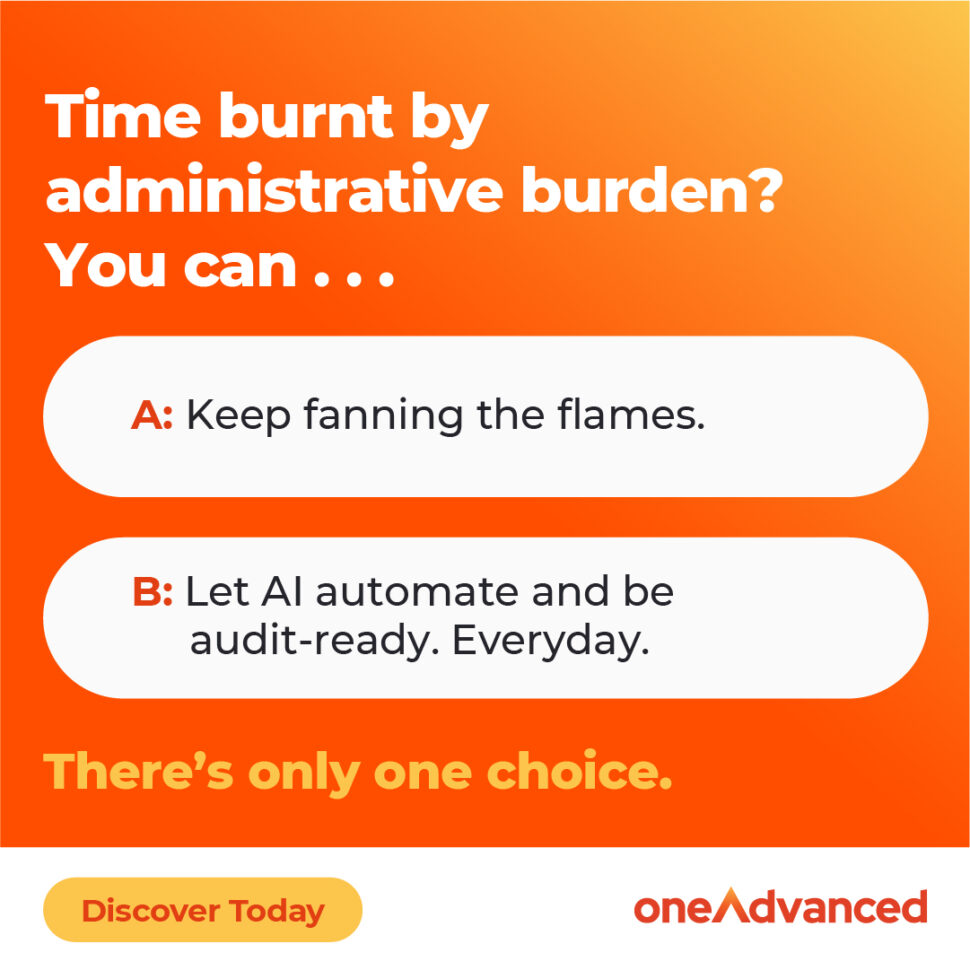
Intelligent automation within the platform is designed to make everyday work easier while keeping staff in control. Instead of repeating manual steps, reviews automatically pull in the latest attendance, OTJ hours, and assessment data, with prompts for missing evidence and reminders appearing in context. AI adds helpful support by summarising notes and highlighting patterns that need attention, while all outputs remain visible and editable. Compliance guardrails are built in, so tutors gain time without losing oversight and leaders benefit from consistency without sacrificing flexibility, aligning with DfE guidance on responsible AI in education.
A further advantage is that compliance sits inside everyday workflows. Because onboarding, plans, reviews, and evidence live together, DfE funding rules are easier to apply consistently and ILR returns are more straightforward to reconcile. Actual hours for OTJ are captured accurately over the practical period; reviews document progress against the plan; and adjustments linked to recognition of prior learning are recorded at the point decisions are made. When policy evolves, configuration changes centrally, so teams adapt once and carry on. That all means fewer Friday‑afternoon fixes and stronger assurance during audit.
Security and governance are embedded within OneAdvanced Education rather than bolted on. Cloud delivery with UK data residency, role‑based access, auditable actions, and consistent retention policies give leaders confidence that the platform supports obligations as well as operations. Fewer systems hold learner and employer data, so the attack surface narrows; processes happen in one place, so training and adoption are easier to sustain. These are exactly the kinds of measures public‑sector guidance promotes to strengthen resilience and reduce exposure.
Building on these embedded safeguards, FE organisations also need dedicated tools to manage governance and risk. Our Risk Management solution tracks and mitigates risks with clear dashboards and alerts, while Meetings and Board Management replaces paper packs with a secure digital workspace, making agendas, actions, and compliance evidence easy to manage. Together, they reduce admin and strengthen accountability.
Finance is another ‘admin-heavy’ area in which manual input can waste significant time for staff members. OneAdvanced Financials brings accounting, reporting, and forecasting into one intuitive platform, using real-time dashboards and automation to eliminate repetitive tasks. Self-service access gives budget holders instant visibility, enabling faster decisions, stronger compliance, and less time lost to manual reconciliations.
Conclusion – clarity, time, and confidence for FE teams
Fragmentation is not merely inconvenient; it consumes hours, introduces risk, and slows the responsiveness that defines effective FE practice. The evidence and lived experience point to a clear route forward: integrate systems, standardise data, and prioritise usability so information flows to the people who need it – leaders, tutors, coaches, employers, and learners. OneAdvanced Education makes that possible: a unified platform that respects FE complexity, consolidates trusted tools, and gives providers a consistent and comprehensive view across teaching, apprenticeships, and operations. Staff gain time, leaders gain clarity, and learners benefit from joined‑up support.
To see OneAdvanced Education in action, don’t miss our Launch Event on January 29 – register today.











Your thoughts